



Venue hire minimum spend in London: a planner’s guide
A venue hire minimum spend is a contractual guarantee: you commit to spending at least a set amount on food and drink, and that commitment secures the private space. If your guests fall short on the night, the venue charges you the difference. According to Hire Space, filtering by minimum spend is now a standard discovery tool for London planners, which tells you how common the model has become.
Quick London price bands to benchmark against:
- Small bar areas and semi-private spaces: from around £250
- Private pub rooms and informal event spaces: £500–£2,000
- Restaurant private dining rooms: £1,000–£5,000
- Premium central London whole-venue hire: £5,000–£15,000 with top dates pushing well beyond that
The model suits food and drink-centric events well: celebratory dinners, cocktail parties, corporate drinks receptions. It works less well for low-consumption gatherings, family events with many non-drinkers, or any booking where budget certainty matters more than flexibility. Venues London notes that five pricing models dominate the London market, and minimum spend is one of the most widely used, but headline figures are rarely comparable until you know exactly what is and is not included.
Key takeaways
A venue hire minimum spend is a contractual F&B revenue guarantee: always apply a 1.35–1.45 multiplier to the headline figure to estimate your true all-in cost before signing.
| Point | Details |
|---|---|
| Verify net or gross | Always confirm whether the minimum spend is quoted exclusive of VAT and service charge before signing. |
| Run the per-head arithmetic | Multiply guests by expected spend per person and compare to the quoted minimum before committing. |
| Plan for a shortfall | Model a conservative scenario (10–15% lower consumption) and pre-order add-ons to cover the gap. |
| Negotiate off-peak dates | Weekday and lunchtime bookings can reduce the minimum spend by 30–40% compared to weekend evenings. |
| Lost And Found Taproom | Offers transparent minimum bar-spend venue hire in Brighton with itemised quotes and menus available online. |
Table of Contents
- How venue hire minimum spend works in practice
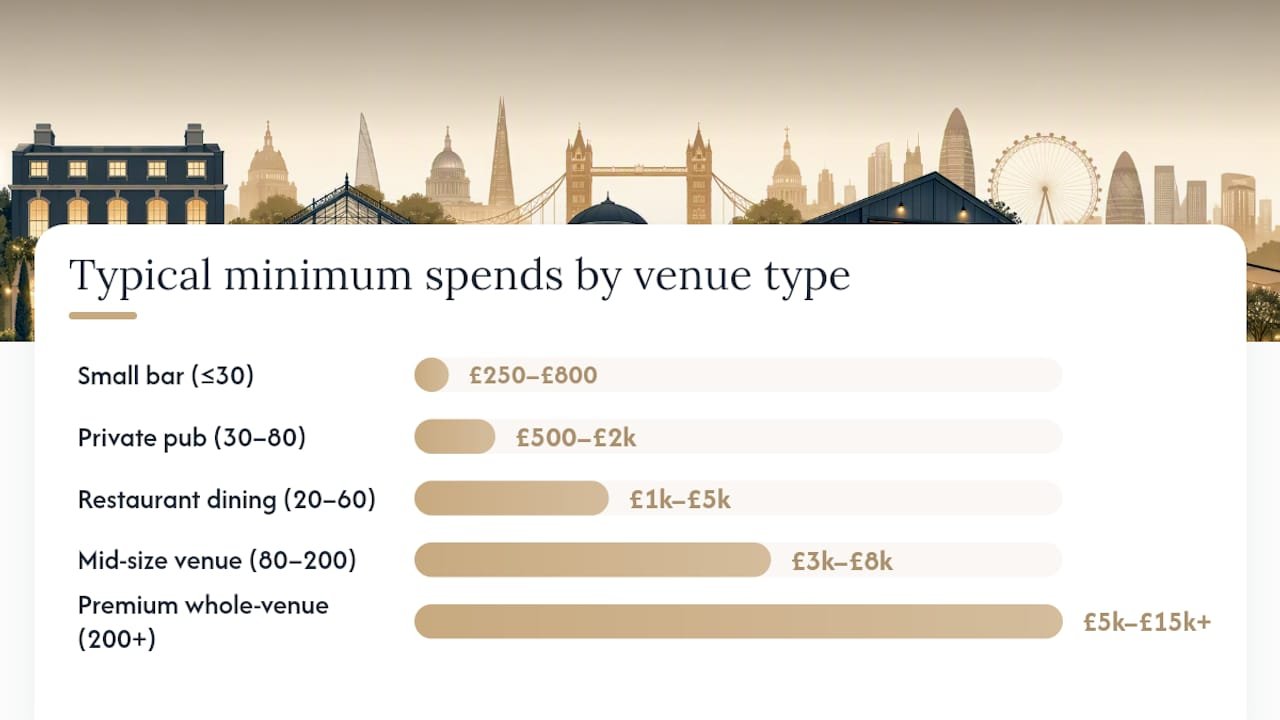
- Typical minimum-spend ranges in London by venue type
- What minimum spend usually includes and what it usually excludes
- When a minimum spend booking suits your event (and when it doesn’t)
- How to estimate whether you will meet the minimum spend
- Contract questions and checklist to confirm before you sign
- Where to find minimum-spend venues in London
- What we see when organisers request minimum-spend bookings
- Lost And Found Taproom: transparent venue hire near Brighton
- Sources
How venue hire minimum spend works in practice
The contractual commitment is straightforward: you guarantee the venue a floor of food and drink revenue. If your guests spend more, no problem. If they spend less, you cover the gap. SquareMeal’s event planning guide outlines three common enforcement methods:
- Pre-order packages: you select menus and drinks packages in advance, and the pre-ordered value counts towards the minimum. Common for seated dinners and weddings.
- On-the-night bar tally: the venue tracks live bar spend throughout the event and presents a shortfall invoice at the end if needed.
- Hybrid approach: a portion of the minimum is locked in via pre-orders (canapés, set menus, wine packages), with the remainder expected from bar sales on the night. Frequently used for larger celebrations.
The distinction that catches planners out most often is whether the minimum spend replaces a room hire fee or sits on top of one. Some venues charge both: a room hire fee to secure the space, plus a separate minimum spend on food and drink. Others waive the hire fee entirely and rely on the minimum spend as their revenue guarantee. A third variant inflates the room hire fee and then “offsets” it against the minimum, which can look like a deal but changes the true cost significantly. Always request an itemised quote to see exactly what you are committing to, as Venues London advises.
Pro Tip: Ask the venue directly: “Is the room hire fee included within the minimum spend, or charged separately?” Get the answer in writing before you proceed.
Typical minimum-spend ranges in London by venue type
London pricing varies sharply by location, day of week, and venue type. The figures below reflect typical market ranges rather than any single venue’s tariff.
Small bars and semi-private areas (up to 30 guests)
Minimum spends start from around £250 for a semi-private section of a bar on a weekday. Weekend evenings push that to £500–£800 for the same space. These work well for informal birthday drinks or small team socials.
Private pub rooms and casual event spaces (30–80 guests)
Expect £500–£2,000 depending on the day, the area of London, and what is included. East London and south of the river tend to sit at the lower end; Mayfair, Soho, and the City command a premium.
Restaurant private dining rooms (20–60 guests)
The £1,000–£5,000 range covers most private dining rooms, with the higher end reflecting central postcodes, set-menu requirements, and Saturday evenings. Some premium restaurants set their Saturday minimum above £5,000 for a full room.
Mid-size party venues (80–200 guests)
Whole-floor or whole-venue hires in this capacity band typically run £3,000–£8,000 on a weekend evening.
Premium central London whole-venue hire (200+ guests)
£5,000–£15,000 is the standard range, with flagship venues in Covent Garden, Shoreditch, or the South Bank regularly exceeding that on peak dates.
Day-of-week and seasonality
Weekend evenings carry the highest minimums. December is the most expensive month across almost every category. January and February weekday bookings often attract the lowest minimums of the year, sometimes with a hire fee waived entirely. Tickts’ venue pricing guide confirms that off-peak date flexibility is one of the most reliable levers for reducing the headline figure.
| Venue type | Typical guest count | Typical minimum spend range |
|---|---|---|
| Small bar / semi-private area | Up to 30 | £250–£800 |
| Private pub room | 30–80 | £500–£2,000 |
| Restaurant private dining | 20–60 | £1,000–£5,000 |
| Mid-size party venue | 80–200 | £3,000–£8,000 |
| Premium whole-venue hire | 200+ | £5,000–£15,000+ |
What minimum spend usually includes and what it usually excludes
The headline minimum spend figure covers food and drink revenue. That is usually it. Everything else is worth confirming explicitly.
Typically included:
- Food and drink purchased on the night or pre-ordered as part of a package
- Basic front-of-house service staff
- Standard glassware and tableware
- Sometimes: basic AV (a screen, a microphone, a Bluetooth speaker)
Typically excluded:
- VAT (usually 20% on top of the headline figure)
- Service charge (typically 12.5–15%, often compulsory)
- Corkage fees if you bring your own wine or spirits
- External supplier fees (photographers, florists, entertainers)
- Premium AV, lighting rigs, or technical staffing
- Cake-cutting fees (common in private dining rooms)
- Additional security or cloakroom staff
The VAT and service charge combination is where most planners get a shock. The Party Whisperer’s guide to minimum spend recommends applying a 1.35–1.45 multiplier to any headline minimum spend to estimate the true all-in cost before external suppliers. On a £3,000 minimum, that means budgeting £4,050–£4,350 before you have paid for a photographer or a florist.
Pro Tip: Always ask the venue: “Is the minimum spend quoted net or gross of VAT and service charge?” A £2,000 minimum exclusive of both can become £2,700 by the time the invoice arrives.
When a minimum spend booking suits your event (and when it doesn’t)
The minimum spend model works best when your guests are genuinely going to eat and drink. It works poorly when they are not.
Good fits:
- Celebratory dinners where a set menu is expected
- Cocktail parties and drinks receptions with a corporate host subsidising the bar
- Birthday parties where guests are likely to drink freely across a long evening
- Corporate networking events where the organiser controls the drinks budget
Poor fits:
- Family gatherings with a significant proportion of non-drinkers or children
- Daytime events where alcohol consumption is low
- Tightly budgeted events where a fixed, predictable cost matters more than flexibility
- Short events (under two hours) where guests simply will not spend enough time at the bar
Quick decision checklist:
- What proportion of your guests drink alcohol?
- How long is the event? (Under two hours is a risk.)
- Is food central to the occasion, or incidental?
- Do you have a fixed budget ceiling, or can you absorb a shortfall?
- Is the venue’s per-head pricing realistic for your guest profile?
If you answer “no” or “unsure” to most of those, a flat hire fee or a bring-your-own-food venue may give you more predictable costs. VenueNow’s explainer on minimum spend venues puts it plainly: the model shifts risk to the organiser when guest consumption proves lower than estimated.
How to estimate whether you will meet the minimum spend
The arithmetic is simple. The mistake is skipping it.
Basic formula:
Guests × average spend per person per hour × event hours = expected total spend
Run this before you sign anything. Then compare it to the quoted minimum.
Worked example A: 60-person seated dinner
- 60 guests
- Set menu at £35 per head, plus wine package at £25 per head = £60 per person on food and drink
- Expected total: 60 × £60 = £3,600
- Quoted minimum spend: £3,000 (net of VAT and service charge)
- Result: you are likely to exceed the minimum, with a margin of £600 before VAT
That margin looks comfortable until you apply the 1.35 multiplier: the all-in cost on £3,600 of spend becomes approximately £4,860. Budget accordingly.
Worked example B: 120-person standing drinks reception with canapés
- 120 guests
- Canapés at £15 per head = £1,800
- Bar spend: assume 60% of guests have 3 drinks at an average of £9 each = 72 guests × £27 = £1,944
- Expected total: £1,800 + £1,944 = £3,744
- Quoted minimum spend: £4,000
Here you are short by £256 before VAT and service charge. That gap is manageable with a small pre-order top-up (an extra canapé round or a welcome drinks package), but it illustrates how a standing reception with mixed drinkers can miss a minimum more easily than a seated dinner.
Build a contingency pre-order to cover the conservative case, so you are never surprised by a shortfall invoice.*
Contract questions and checklist to confirm before you sign
Most minimum-spend disputes come from questions that were never asked. These are the ones that matter.
Questions to ask before signing:
- Is the minimum spend quoted inclusive or exclusive of VAT?
- Is the service charge included in the minimum, or added on top?
- Is a room hire fee charged separately, or is it absorbed into the minimum?
- What counts towards the minimum: food only, drinks only, or both?
- Do pre-ordered packages count in full towards the minimum?
- What is the payment schedule? (Deposit amount, interim payments, final balance date.)
- What is the cancellation policy, and at what point does the deposit become non-refundable?
- What is the cut-off date for confirming final guest numbers?
- Are external suppliers (photographers, DJs, florists) permitted, and do they attract a fee?
- Is corkage permitted, and at what rate?
Contract checklist (copy into your negotiation email):
- Minimum spend figure confirmed in writing, with VAT/service charge status stated explicitly
- Room hire fee status confirmed (included within minimum or charged separately)
- List of what counts towards the minimum (food, drink, pre-orders)
- Final numbers cut-off date and process for adjusting the guarantee
- Shortfall clause: how and when any shortfall is invoiced
- Deposit amount and refund conditions
- Cancellation timeline and penalty structure
- External supplier policy and any associated fees
- Corkage rate (if applicable)
- Overtime charges if the event runs beyond the agreed end time
For broader guidance on avoiding hidden booking fees, the same principles apply whether you are booking in London or elsewhere in the UK.
Where to find minimum-spend venues in London
Specialist venue-finder platforms
Hire Space explicitly labels minimum-spend options and lets you filter by capacity and budget. It is the fastest starting point for London searches. Similar platforms include Tagvenue and VenueScanner, which both offer minimum-spend filters and show indicative pricing upfront.
Direct venue websites
Once you have a shortlist, go direct. Venue websites often show packages and menus that the aggregators do not surface, and direct contact is the only route to genuinely bespoke terms. Aggregators are for discovery; direct contact is for negotiation.
Venue brokers
A broker handles the search and negotiation on your behalf, usually at no cost to you (they earn a commission from the venue). Useful for large or complex events where time is short. The trade-off is that brokers tend to favour venues they have existing relationships with, so you may not see the full market.
Marketplace apps
Apps such as Peerspace accelerate early discovery and let you filter by price and rules, though they are better suited to smaller, more informal spaces than to large private dining or whole-venue hires.
Search tactics that actually reduce the minimum:
- Pitch a weekday or lunchtime date. Venues often drop the minimum by 30–40% for off-peak slots.
- Offer a Sunday afternoon. Many venues treat Sunday as a shoulder day and price accordingly.
- Bundle AV or staffing into the minimum rather than paying for them separately. Some venues will absorb these costs into the minimum spend if you ask.
- Offer promotional value: social media coverage or a cross-promotion arrangement. Tickts’ pricing guide lists this as a negotiation lever that venues increasingly accept.
- For festive events, reviewing festive menu options in advance helps you pre-order strategically and hit the minimum without overspending.
What we see when organisers request minimum-spend bookings
The most common mistake planners make is not the maths. It is the assumption that everyone drinks.
A group of 80 guests sounds like a comfortable fit for a £3,500 minimum spend until you realise that 20 of them are driving, 10 are pregnant or sober, and the event runs for two and a half hours on a Tuesday. Suddenly the per-head arithmetic looks very different. At Lost And Found Taproom, we see this regularly. Planners arrive with a guest count and a minimum spend figure, and they have not yet modelled what the non-drinkers do to the average.
The second most common issue is VAT. The fix is simple: always ask for an itemised quote that shows the minimum spend, VAT, service charge, and any additional fees as separate line items. If a venue will not provide that, treat it as a warning sign.
At Lost And Found Taproom, we offer itemised quotes as standard, with our beer and food menus available online so planners can model per-item costs before they even contact us. We also suggest a contingency pre-order for any booking where the guest profile includes a significant number of non-drinkers. A pre-ordered round of soft drinks or a food add-on can cover a projected shortfall before the event starts, which removes the anxiety of watching the bar tally on the night.

The event ran over the minimum comfortably, but the pre-order gave them certainty going in. That is the right way to approach it.
Lost And Found Taproom: transparent venue hire near Brighton
If you are open to venues outside central London, Lost And Found Taproom in Brighton’s Fiveways offers a genuinely different experience from the usual private dining room or hired function suite.
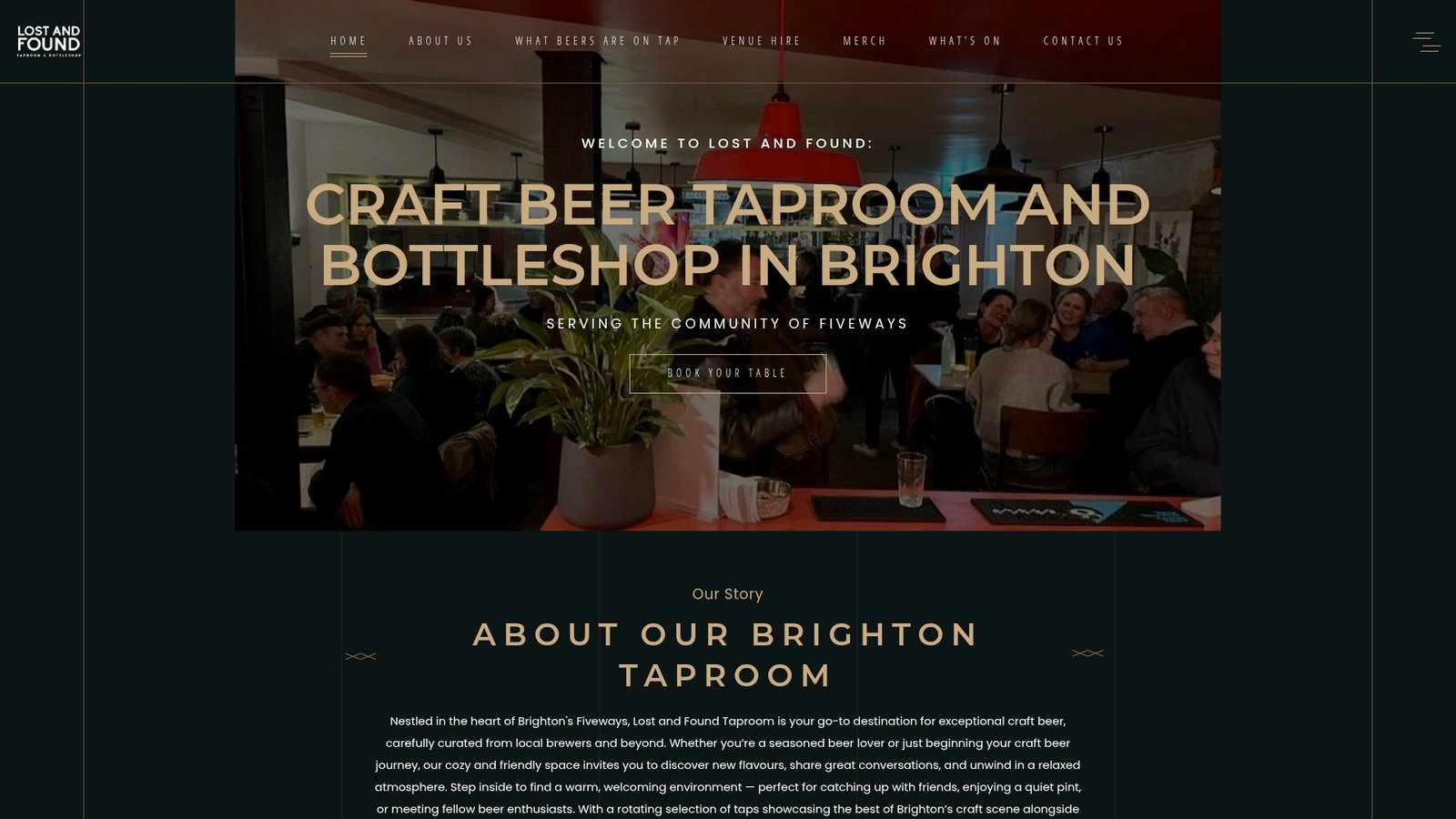
The minimum bar spend model here is built around transparency: itemised quotes, menus visible online before you enquire, and a rotating selection of local craft beers and curated wines that give your guests something worth spending on. No hidden corkage surprises, no compulsory service charge buried in the small print. What you see is what you commit to.
For planners who have spent time navigating opaque London pricing, the contrast is noticeable. You can check the beer and food options in advance, model your per-head spend against the minimum, and arrive at the booking conversation already knowing whether the numbers work. The space suits parties, corporate socials, and birthday gatherings where craft beer and a community atmosphere matter more than a postcode.
Check availability and enquire about venue hire to get an itemised quote and confirm dates.
Sources
- Venue hire costs in London 2026: what to expect
- What is a minimum spend? Everything you need to know when planning your event
- What does a venue minimum spend actually cover? (And what it doesn’t)
- Minimum spend venues in London — Hire Space
Recommended
- Venue Hire | Plan the Perfect Brighton Gathering – Lost And Found Craft Beer Taproom Brighton
- How to Choose the Best Party Venue Brighton (And Why You Should Never Pay a Booking Fee) – Lost And Found Craft Beer Taproom Brighton
- 5 Catchy Party Venue Brighton Ideas for Your Next Big Birthday (Without The Booking Fee) – Lost And Found Craft Beer Taproom Brighton
- Stop Wasting Time on Party Venue Searches: 7 Quick Brighton Hacks That Actually Work – Lost And Found Craft Beer Taproom Brighton