


English sparkling wine: the complete buyer’s guide
English sparkling wine is a traditional-method, bottle-fermented fizz made primarily in southern England from Chardonnay, Pinot Noir and Pinot Meunier. The quality is, frankly, world-class now. If you want to start somewhere, a bottle of Ridgeview Bloomsbury NV sits in the everyday-premium bracket and rarely disappoints; for a special occasion, Nyetimber’s Blanc de Blancs is the one to reach for.
TL;DR
- Style: Crisp, citrus-forward, high-acidity sparkling wine made by the traditional method
- Price bands: Entry-level from around £20–£30; everyday premium £30–£50; prestige cuvées £50+
- Where to buy: Direct from estates, specialist wine merchants, independent bottle shops, and curated taprooms such as Lost And Found Taproom in Brighton’s Fiveways
Sparkling wine now accounts for 76% of all wine produced in England and Wales, roughly 6.2 million bottles in 2023. That figure alone tells you this is no longer a novelty category.
Table of Contents
- Which English sparkling wine producers should you try?
- Where does English sparkling wine come from, and why does location matter?
- What does English sparkling wine taste like, and what should you eat with it?
- What should you expect to pay, and how long can you age English sparkling wine?
- Where can you taste or buy English sparkling wine in the UK?
- Key takeaways
- Why English sparkling wine matters more now than it ever has
- Try English sparkling wine at Lost And Found Taproom, Brighton
- Useful sources and further reading
Which English sparkling wine producers should you try?
Seven producers define the category right now. Each has a distinct house style, and understanding the differences saves you from buying the wrong bottle for the occasion.
Nyetimber
West Sussex’s Nyetimber is the name that opened the world’s eyes to English fizz. Founded in 1988 and producing its first commercial vintage in 1992, it was among the earliest to plant Champagne varieties on English chalk. The flagship Classic Cuvée Multi-Vintage is the reliable everyday bottle; the Blanc de Blancs is where the estate really shows off, with a taut, mineral precision that holds up against serious Champagne. Nyetimber has won multiple IWSC and Decanter trophies and regularly features in international blind tastings.
Ridgeview
Based in the South Downs, Ridgeview has been producing since 1995 and built its reputation on consistent, food-friendly blends. The Bloomsbury NV (a Blanc de Blancs style) is the go-to entry point: clean, appley, and reliably well-priced. Ridgeview’s Cavendish rosé is worth tracking down for summer drinking. The estate won the Decanter World Wine Awards’ Sparkling Wine Trophy and has been poured at official government functions.
Chapel Down
Kent’s largest wine producer, Chapel Down has done more than most to professionalise the English wine industry. The Brut NV is widely available in supermarkets and independent shops, making it the most accessible introduction to the category. The Kit’s Coty Blanc de Blancs, sourced from a single chalk vineyard, is the prestige tier and shows what the estate can do when it focuses. Chapel Down also produces still wines and cider, but sparkling is the core.
Gusbourne
Gusbourne in Kent is the producer most likely to make a Champagne lover stop and reconsider. The Blanc de Blancs is consistently one of England’s finest: long lees ageing, a chalky mineral spine, and a finish that lingers. The Brut Reserve NV is the entry point and punches above its price. Gusbourne has won multiple IWC gold medals and is a regular on restaurant wine lists.
Camel Valley
Cornwall’s Camel Valley is the outlier in this list, sitting further west than the south-east heartland. Founded in 1989 by Bob Lindo on a former farm, it produces the Brut and the Pinot Noir Rosé Brut, both of which have won IWSC gold. The cooler, wetter Cornish climate gives the wines a slightly different character: more green apple, a little more tartness, and a freshness that suits seafood perfectly.
Bolney Wine Estate
Bolney in West Sussex has been growing vines since 1972, making it one of England’s oldest wine estates. The Cuvée Noir, a Blanc de Noirs from Pinot Noir, is the signature bottle and a good way to understand how English producers use the grape differently from their Champagne counterparts. Bolney also runs a well-regarded winery café and tasting room, making it a practical destination visit.
Hambledon
Hampshire’s Hambledon Vineyard sits on some of the deepest chalk in England, a seam that runs directly from the Champagne region. The estate was actually the first commercial English vineyard, planted in 1952, though it lay dormant for decades before being revived in 2004. The Classic Cuvée NV is the house style: creamy, biscuity, with a long finish. The Première Cuvée is the prestige expression and one of the most Champagne-like English wines you will find.
The rise of English sparkling wine has attracted investment from Champagne houses themselves — a clearer signal of quality than any medal. When producers with 300 years of experience start buying English land, the argument about whether English fizz is “serious” is over.
Pro Tip: Use competition medals as a shortcut, not a rulebook. An IWSC gold or Decanter trophy tells you a wine has been assessed blind by professionals. But a producer without recent medals may simply not have entered — check their website for recent results before writing them off.
Where does English sparkling wine come from, and why does location matter?
Southern England is the heartland, and the geography is not accidental. The chalk, limestone, and greensand soils of Sussex, Kent, and Hampshire share a geological seam with the Champagne region, which is why the same grape varieties thrive here.
- Sussex: The largest producing county and home to several of the most celebrated estates. The South Downs chalk gives wines a mineral backbone and natural acidity. English wine Sussex producers benefit from a relatively dry microclimate compared with other English regions.
Soil matters, but not in the way most people assume. Chalk is celebrated, but greensand, limestone, and clay all produce excellent sparkling wine when drainage and water-holding capacity are right. A vine that is slightly stressed for water produces smaller, more concentrated berries, which is what you want for sparkling wine base.
Rapid growth in planted area and production over the past two decades has pushed English wine beyond its south-east heartland, but the south-east still accounts for the majority of production.
Pro Tip: If terroir matters to you, look for single-vineyard or estate-labelled bottles rather than multi-region blends. A wine labelled “English” under PGI may source grapes from several counties; one labelled with a specific estate or county is more traceable.
What does English sparkling wine taste like, and what should you eat with it?
English fizz tends towards a lighter, citrus-forward profile compared with many Champagnes, which often show richer, toastier autolytic notes. Think green apple, lemon curd, white peach, and chalk dust on a young NV; on a longer-aged vintage, add brioche, almond, and a hint of cream. The acidity is typically high, which is what makes these wines so food-friendly and so refreshing.
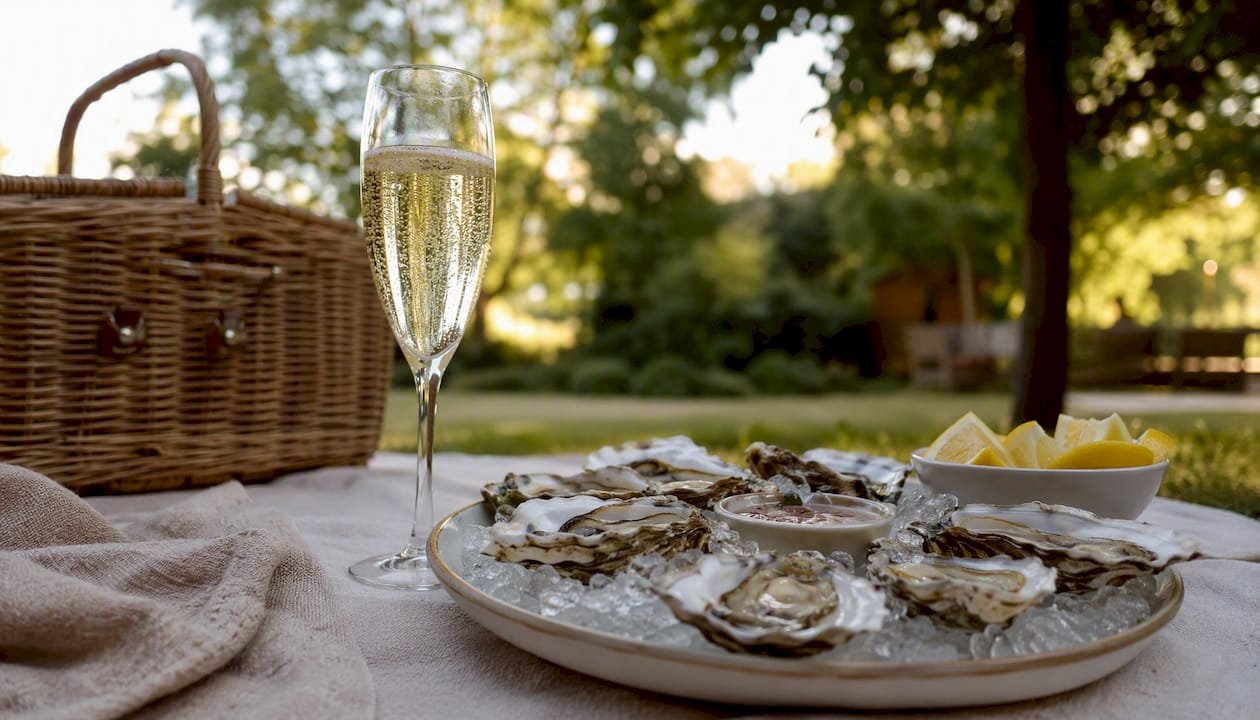
That said, view English sparkling wine and Champagne as different high-quality expressions rather than direct substitutes. English fizz is not trying to be Champagne; it has its own character, shaped by cooler growing conditions and a slightly shorter ripening window.
Pairing by style:
- Demi-sec: Rare but worth knowing. Pair with crème brûlée or a fruit tart. For more on wine pairing with crème brûlée, sweeter sparkling styles are often the most elegant match.
Serve English sparkling wine at 7–9°C. Too cold and you lose the aromatics; too warm and the bubbles become aggressive. A standard fridge is usually around 4°C, so pull the bottle out 10–15 minutes before serving.
Pro Tip: For a tasting flight at home, start with the NV Brut, move to the Blanc de Blancs, then finish with the vintage or rosé. This progression from lighter to richer mirrors how a sommelier would structure a flight and lets you appreciate the stylistic range without palate fatigue.
What should you expect to pay, and how long can you age English sparkling wine?
The traditional method is expensive to execute in England. Land prices, labour costs, and the time required for lees ageing all push prices up. That is not a complaint; it is context for why a quality English sparkling wine at £25 is genuinely good value relative to what it costs to make.
| Price band | Typical retail range | Ageability | Flavour cues |
|---|---|---|---|
| Entry-level | £20–£30 | Drink within 2–3 years of disgorgement | Fresh citrus, green apple, clean bubbles |
| Everyday premium | £30–£50 | 3–5 years from disgorgement | Citrus plus brioche, more texture and length |
| Prestige / vintage | £50+ | 5–10+ years from disgorgement | Autolytic complexity, dried fruit, mineral depth |
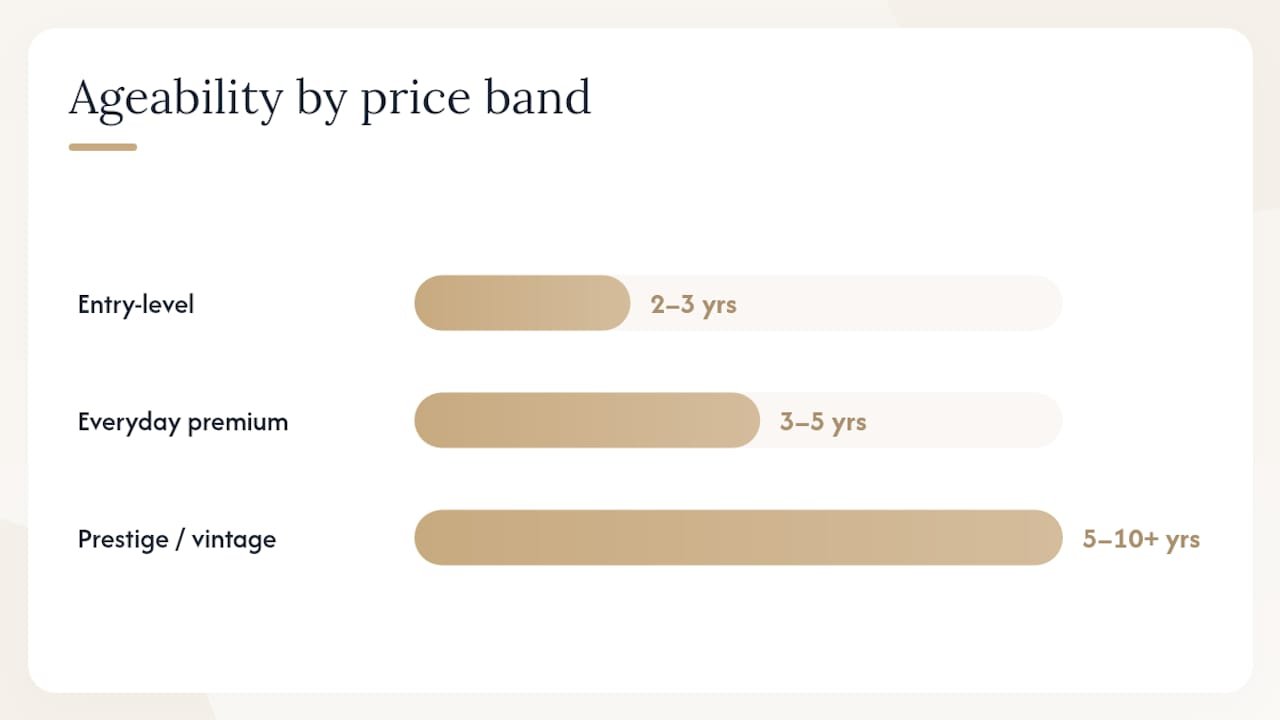
NV blends are designed for early drinking and consistency, not long ageing. A prestige vintage cuvée from a top producer, stored correctly (cool, dark, horizontal), can develop beautifully over a decade. The key variables are dosage (lower dosage wines age more austerely), lees time (more lees ageing = more buffer against oxidation), and storage conditions.
Climate shifts have helped southern England achieve conditions closer to historic Champagne ripening windows, which means recent vintages have more natural sugar and better phenolic ripeness than those from 20 years ago. That translates to wines with more ageing potential than the category’s early reputation suggested.
Pro Tip: Avoid cellaring half-bottles (37.5cl) for more than a year or two. The smaller volume ages faster due to the higher ratio of oxygen to wine. If you want to lay bottles down, stick to standard 75cl or magnums, which age more slowly and gracefully.
Where can you taste or buy English sparkling wine in the UK?
The best way to understand a wine is to taste it, and English sparkling wine has never been easier to access across the UK.
Estate tasting rooms are the most immersive option. Most of the major producers, including Nyetimber, Gusbourne, Ridgeview, Bolney, Camel Valley, and Hambledon, run tasting rooms and vineyard tours. Booking in advance is standard, particularly in summer. Expect to pay a tasting fee (often redeemable against a purchase) and to leave with a better understanding of how site and winemaking decisions shape the final wine.
Specialist wine merchants with dedicated English wine sections are worth seeking out. Staff at a good independent merchant will know the current disgorgement dates, which vintages are drinking well now, and which producers have just released something new.
Independent bottle shops and taprooms offer a different kind of discovery. You can often taste by the glass, compare styles side by side, and get a recommendation from someone who has actually opened the bottle. Lost And Found Taproom in Brighton’s Fiveways stocks curated wines alongside its craft beer selection, available to drink in or take home.
Farmers’ markets and food festivals are an underrated route to smaller producers who do not have wide retail distribution. Some of the most interesting English sparkling wines come from estates with fewer than 10 acres of vines, and a market stall is often the only place you will find them.
Online retailers specialising in English and Welsh wine carry ranges that go well beyond what supermarkets stock. Look for retailers who list disgorgement dates and tasting notes from the producer.
Pro Tip: If you are planning a trip to a Sussex or Kent estate, check whether they offer a “winery tour plus tasting” package rather than just a tasting room visit. The tour gives you context that makes the wine taste better, and most estates include a glass of their best cuvée at the end.
Key takeaways
English sparkling wine is a traditional-method fizz from southern England, now producing world-class bottles across clear price tiers, with Nyetimber, Ridgeview, and Gusbourne as the most reliable starting points.
| Point | Details |
|---|---|
| Production method | Traditional method, bottle-fermented, with minimum 9 months on lees for English sparkling wine. |
| Sparkling dominance | Sparkling accounts for 76% of English and Welsh wine production, around 6.2 million bottles in 2023. |
| Label signals | Check for PDO/PGI mark, disgorgement date, dosage level, and competition awards before buying. |
| Price and ageing | Entry-level from £20–£30 (drink young); prestige vintage cuvées from £50+ can age 5–10+ years. |
| Lost And Found Taproom | Brighton’s Fiveways taproom stocks curated wines for tasting by the glass or taking home, with menus available online. |
Why English sparkling wine matters more now than it ever has
There is a version of this conversation that happened 20 years ago, and it was mostly defensive. English fizz was good, people said, “for what it is.” That qualifier has gone. The wines no longer need the caveat.
What changed is partly climate, partly investment, and partly accumulated knowledge. Southern England’s growing seasons have shifted in ways that allow Chardonnay and Pinot Noir to ripen more consistently, producing base wines with better natural balance. The BBC Travel feature on English wine rivalling Champagne captures this shift well: it is not that English producers are copying Champagne, but that the conditions have converged enough to produce wines of genuine structural similarity.
The more interesting point, to my mind, is what English producers do differently. The lighter body, the sharper acidity, the green-fruit character that persists even in longer-aged examples: these are not deficiencies. They are a distinct style, and one that suits the British palate and British food culture particularly well. Oysters and English Blanc de Blancs is not a consolation prize for people who cannot afford Champagne. It is a better pairing.
The Appetite feature on English sparkling wine’s coming of age makes the point that most production is still sold domestically. That is partly a scale issue (roughly 10 million bottles a year versus Champagne’s 300 million), but it also means the best bottles are more accessible to UK buyers than to anyone else. If you are reading this in the UK, you are in the right place at the right time.
Try English sparkling wine at Lost And Found Taproom, Brighton
Lost And Found Taproom in Brighton’s Fiveways is one of the most practical places in the city to explore English sparkling wine without buying blind. The wine selection sits alongside a rotating craft beer range, curated with the same attention to independent producers and quality that defines the whole venue.
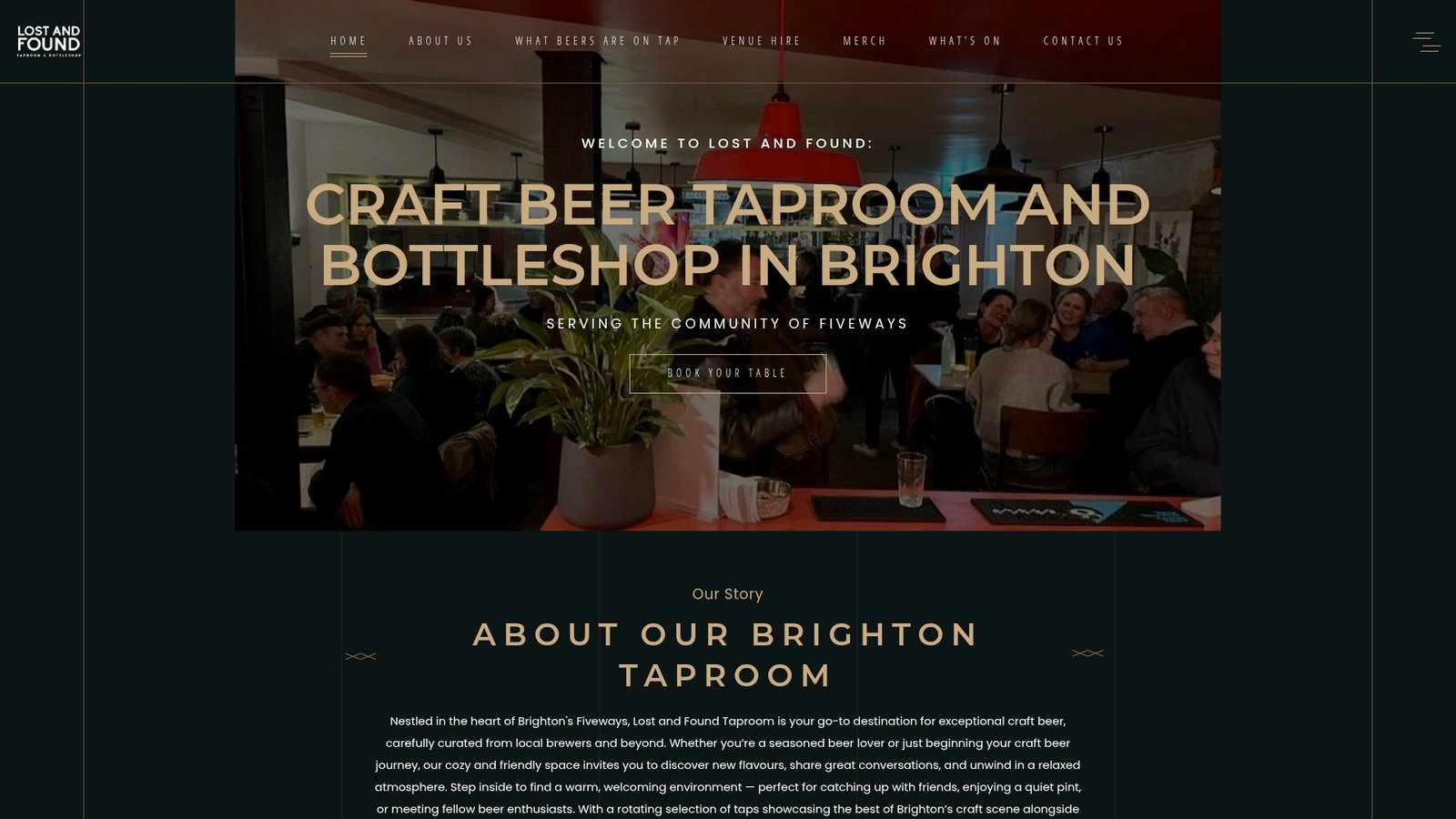
You can taste by the glass, pick up a bottle to take home, or book the venue for a private tasting event. The food and beer menus are available online, so you can check what is currently on before you make the trip. For groups, the venue hire option includes a minimum bar spend rather than a room fee, which makes it a genuinely good-value way to run a wine tasting evening with friends. Check availability and plan your visit at Lost And Found Taproom to book your next tasting.
Useful sources and further reading
The sources below underpin the claims in this article and are worth bookmarking if you want to go deeper.
- Protected food name: English wine (PGI) — gov.uk
- Protected food name: English regional wine (PGI) — gov.uk
- The rise of English sparkling wine | WSET
- How English sparkling wine is made — Wine Cellar Door
- English sparkling wine — Wikipedia
- The English wine that’s rivalling Champagne — BBC Travel
- A coming of age story – English sparkling wine | Appetite
- The English sparkling wine revolution — ack.net
For producer pages and direct purchases, visit the estate websites for Nyetimber, Ridgeview, Chapel Down, Gusbourne, Camel Valley, Bolney Wine Estate, and Hambledon directly. Most run online shops with current stock and disgorgement date information. For a Champagne region comparison to understand the stylistic context, Vinesia’s regional guide is a useful reference.
Recommended
- Not Your Nan’s Chardonnay: The Fresh, Local Bottle You Need This Weekend – Lost And Found Craft Beer Taproom Brighton
- Natural wine explained: a beginner’s guide
- English wine Sussex: what to try in Brighton
- Independent Lager Vs Corporate Pilsner: Which Is Better For Your Brighton Craft Beer Summer? – Lost And Found Craft Beer Taproom Brighton