

Best UK craft beers: a taproom curator’s 2026 guide
If you want to cut straight to it: the best UK craft beers right now span hazy NEIPAs bursting with tropical fruit, tightly brewed craft lagers, and cask bitters that remind you why British brewing has always had something the rest of the world envies. Here is a curator-vetted shortlist to start with.
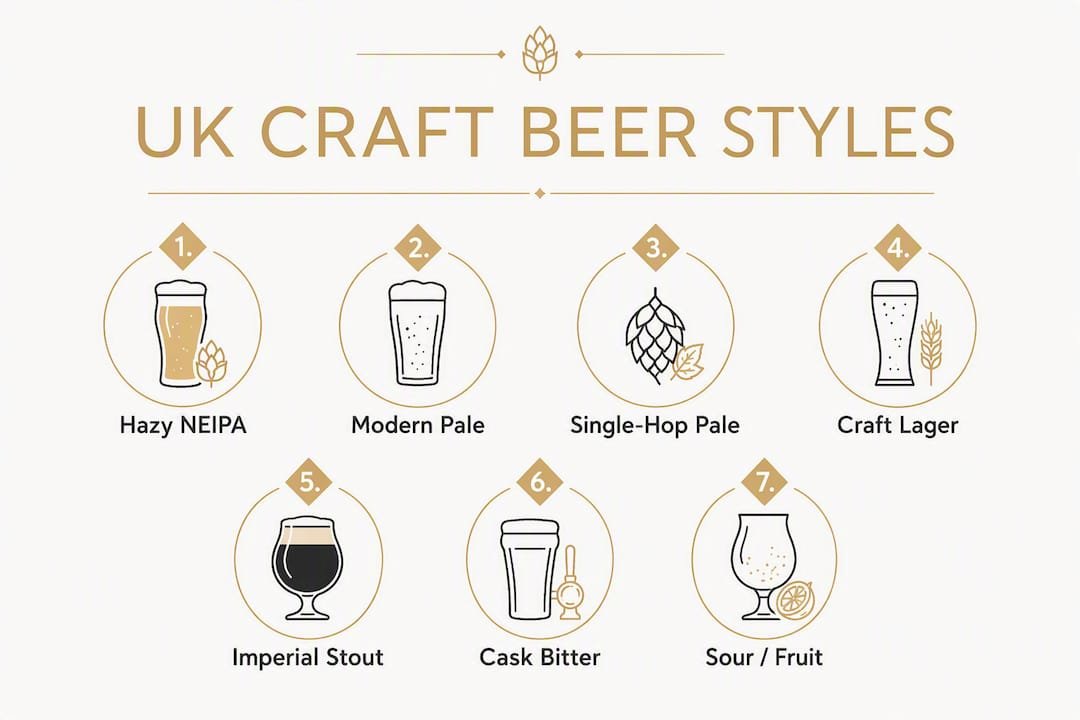
- Hazy NEIPA — soft, juicy, low bitterness; the style most likely to convert a wine drinker
- Modern pale ale — citrus-forward, clean finish, sessionable; the everyday workhorse of any great tap list
- Single-hop pale — one hop variety showcased in full; a masterclass in what UK-grown hops can do
- Craft lager / Pilsner — cold-conditioned, crisp, and increasingly excellent from British independents
- Modern cask bitter — earthy, biscuity, and best served cellar-cool; still the most underrated style in the country
- Sour / fruit beer — tart, bright, and seasonal; the style driving the most excitement in 2026
- Imperial stout / porter — rich, roasty, and complex; a slow sipper worth every penny of the premium price
Typical cans are moderately priced; a pint at a taproom usually costs between the lower to mid-range for craft beer, depending on ABV and style. Most of these styles are available in can, keg, and cask formats. The single best next step: visit Lost And Found Taproom in Brighton’s Fiveways neighbourhood, where a rotating selection of local and UK-wide beers is always on tap, and staff can point you straight to what is freshest.
Table of Contents
- How this shortlist was put together
- What are the top UK craft beer styles to try?
- Curator-selected standout beers and how to spot them
- Where can you find and try these beers across the UK?
- How do you pick the right UK craft beer for your palate?
- What’s trending in UK craft beer in 2026?
- Key takeaways
- Why curation matters more than choice
- Try the best UK craft beers at Lost And Found Taproom
How this shortlist was put together
Curation is only as good as the signals behind it. This list draws on three overlapping sources: staff expertise at Lost And Found Taproom, community voting data, and independent industry awards.
Selection criteria used:
- Freshness and rotation frequency — styles and beers that appear consistently on quality tap lists, not one-off novelties
- Community signals — We Are Beer’s Top 50 UK Beers combines public votes with an expert panel; beers that appear there carry genuine crowd credibility
- Industry awards — the SIBA Indie Beer Awards 2026 and SIBA Business Awards, which named Fyne Ales Brewery Business of the Year, are the most rigorous independent benchmarks in UK brewing
- Stylistic variety — the list covers the full flavour spectrum so any palate finds a starting point
- UK availability — every style is findable in a decent bottle shop, taproom, or online retailer; no imports, no brewery-only exclusives
What was excluded: beers from breweries with no consistent UK distribution, styles with no meaningful presence on current tap lists, and anything that relies on hype rather than repeatable quality.
Lost And Found Taproom’s role in this is specific: the team curates Brighton’s independent brewery scene and rotates lines based on what is tasting best, not what is cheapest to stock. That community feedback loop shapes which styles earn a permanent place on the list.
Pro Tip: When visiting any taproom, ask the bar team which keg was most recently tapped. Freshness matters more for hazy styles than almost any other variable.
What are the top UK craft beer styles to try?
Knowing what a style tastes like before you order saves you from a pint you will not finish. Here is what each of the shortlisted styles actually delivers.
| Style | Flavour profile | Typical ABV band | What to look for on the menu |
|---|---|---|---|
| Hazy NEIPA | Tropical fruit, mango, low bitterness, creamy body | Mid-strength (around 5%) | “Hazy”, “juicy”, “unfiltered”, “Vermont-style” |
| Modern pale ale | Citrus, light pine, clean dry finish | Session-strength (up to 5.5%) | “Pale”, “APA”, “citrus”, “easy-drinking” |
| Single-hop pale | Focused floral or resinous character, clean malt base | Session-strength (around 4%–5.5%) | Named hop variety on the label (e.g. Citra, Mosaic, Jester) |
| Craft lager / Pilsner | Crisp, bready, subtle noble-hop bitterness | Session-strength (4–5%) | “Cold-conditioned”, “Pilsner”, “lager”, “lagered” |
| Modern cask bitter | Earthy, biscuity malt, gentle hop spice | Low-to-mid (around 4%–5.5%) | “Cask”, “best bitter”, “golden ale”, “real ale” |
| Sour / fruit beer | Tart, bright acidity, fruit-forward | Variable (3–6%) | “Kettle sour”, “Berliner Weisse”, “Gose”, named fruit |
| Imperial stout / porter | Dark chocolate, espresso, dried fruit, warming finish | High (above 8%) | “Imperial”, “pastry stout”, “porter”, “barrel-aged” |
A few things worth knowing about how UK brewers approach these styles. The modern pale ale is where British craft brewing genuinely excels: decades of hop-forward cask tradition gave independent brewers a head start on flavour balance that many American craft breweries are still chasing. Hazy NEIPAs arrived later but have been adopted with real skill, particularly in the North West and London. Craft lager is the style most improved in the last three years; cold-conditioning takes time and tank space, so the fact that small UK independents are now producing genuinely excellent examples says a lot about where investment has gone.
Serving temperature matters more than most people realise. Cask ales should be served cellar-cool (around 11–13°C), not cold. Hazy NEIPAs and sours are best slightly chilled but not ice-cold, which mutes the aroma. Imperial stouts open up noticeably if you let them sit for five minutes after pouring.
If you like citrus, start with a single-hop pale and work outward. If you prefer something richer, go straight to a porter before committing to an imperial stout.
Curator-selected standout beers and how to spot them
The best UK craft beers share a few identifiable qualities: a clear flavour intention, consistent execution across batches, and a brewer who has not tried to make every style at once. Here is what to look for across the shortlist, with regional context.
Hazy NEIPA from the North West
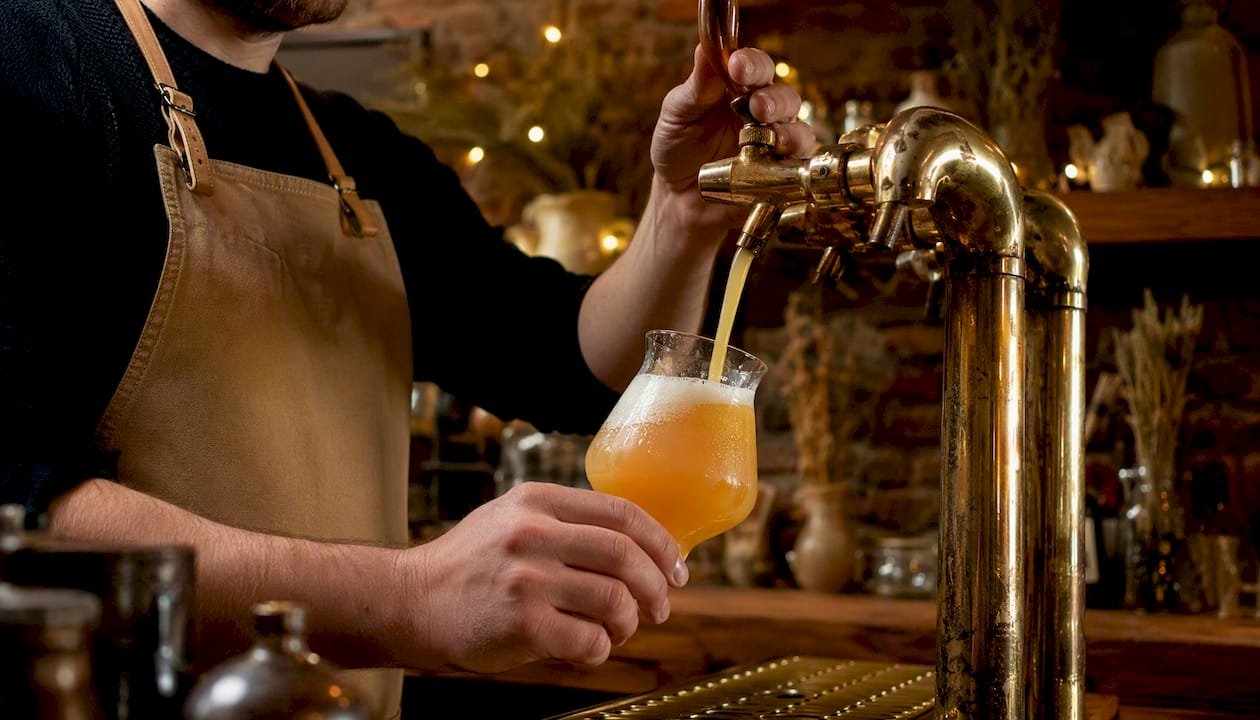
Expect a thick, hazy pour with aromas of mango, passionfruit, and sometimes peach. The bitterness should be low; if it bites, it is either old or poorly made. North West breweries have been producing some of the most consistent examples in the UK. Available predominantly in can, often in 440ml format. Typical can price: £3.50–£4.50.
Modern pale ale from London and the South East
London’s independent scene has produced a generation of pale ales that balance hop character with genuine drinkability. Look for a golden colour, a clean nose, and a finish that does not linger too long. These appear on keg and in can; some are available in cask at specialist pubs. Around £4.50–£5.50 a pint.
Single-hop pale from Sussex and the South West
Sussex breweries, several of which supply Lost And Found Taproom directly, have leaned into single-variety hop showcases. The Brighton independent brewery scene is particularly strong here. Look for the hop name on the label; if it is not there, ask. Cans and keg; £3–£4 a can.
Craft lager from Scotland
Scotland’s brewing tradition has always favoured clean, malt-forward profiles, and that translates well to lager. Fyne Ales, named SIBA Brewery Business of the Year 2026, is a strong reference point for what Scottish independents are doing with quality-focused production. Cold-conditioned lagers from this region tend to be crisper and better-attenuated than their English counterparts. Bottle and keg; £4–£5.50 a pint.
Modern cask bitter from the Midlands and North
Cask bitter is the style that most rewards patience. The Midlands and North have the deepest tradition, and the best examples have a biscuity malt backbone with a dry, earthy finish. SIBA data shows pale ales, bitters, and golden ales still dominate independent brewery output, with cask accounting for 58% of independent brewery packaging. Cask only; £3.80–£5 a pint.
Sour / fruit beer from Wales and the South West
Kettle sours and Gose-style beers have become a genuine speciality for several Welsh and South West breweries. The best ones use real fruit additions rather than flavouring; look for named fruit varieties on the label. Seasonal releases are common, so availability varies. Can and keg; £3.50–£4.50 a can.
Imperial stout / porter from across the UK
This is the style where UK brewers have always had credibility, and barrel-aged versions from multiple regions now compete with the best in the world. Limited releases, often in 330ml bottles. Worth paying £5–£8 for a quality example. Check the stout vs porter guide if you want to understand the difference before ordering.
Where can you find and try these beers across the UK?
The UK has around 1,578 active independent breweries, which means the infrastructure for finding great craft beer has never been better. The challenge is knowing which routes actually work.
Taprooms
A taproom is the closest you will get to drinking a beer at its source. Most independent breweries now operate one, and the quality of the pour is typically higher than at a pub because the beer has not travelled far. Understanding what a taproom offers before you visit helps you get more from the experience. Book ahead where possible; many taprooms have limited seating and fill quickly on weekends.
Bottle shops
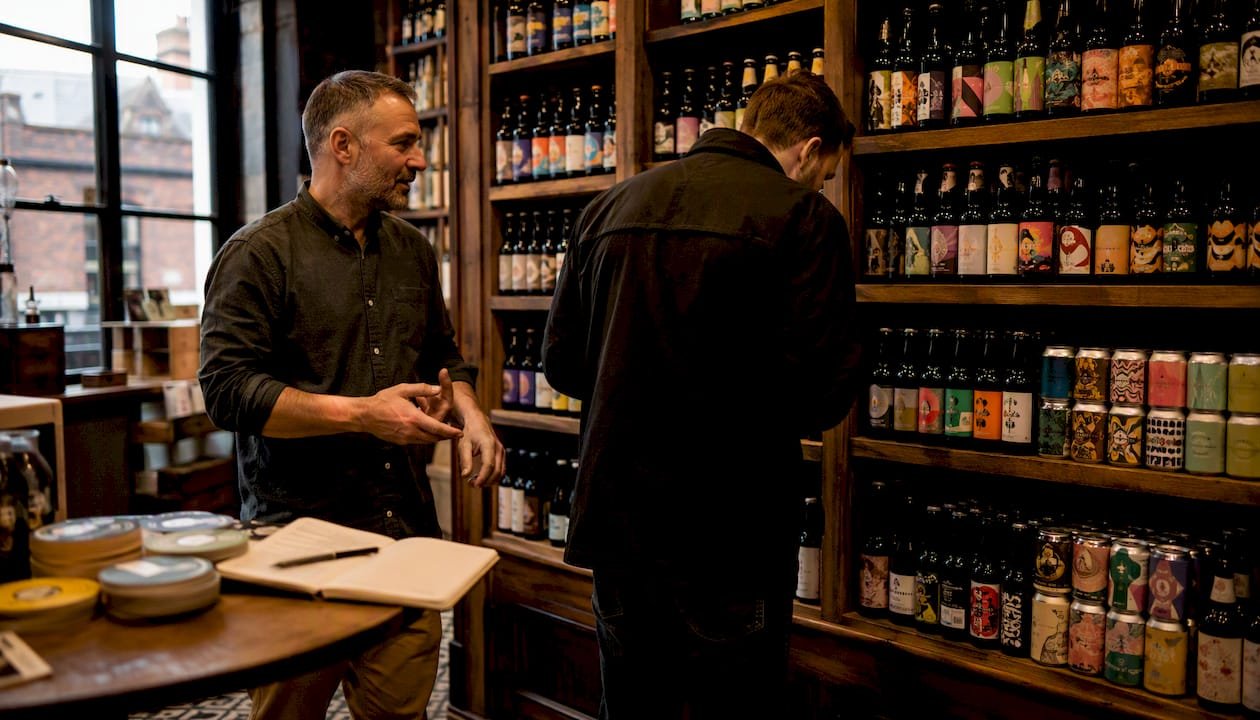
A good independent bottle shop will stock rotating selections from UK breweries, often with staff who can recommend based on your preferences. Look for shops that keep their fridges well-stocked and rotate lines regularly; stale stock is a real problem in shops that do not move enough volume.
Online retailers
Ordering direct from breweries is increasingly common and often the only way to access limited releases. Several specialist online retailers also offer mixed cases that let you sample across styles and regions without committing to a full case of one beer.
Beer festivals and brewery open days
The Great British Beer Festival and regional SIBA events are the most efficient way to sample a wide range in a single session. Brewery open days, often announced on social media, give access to tap-room-only releases. Check event pages in advance; popular releases sell out.
In Brighton
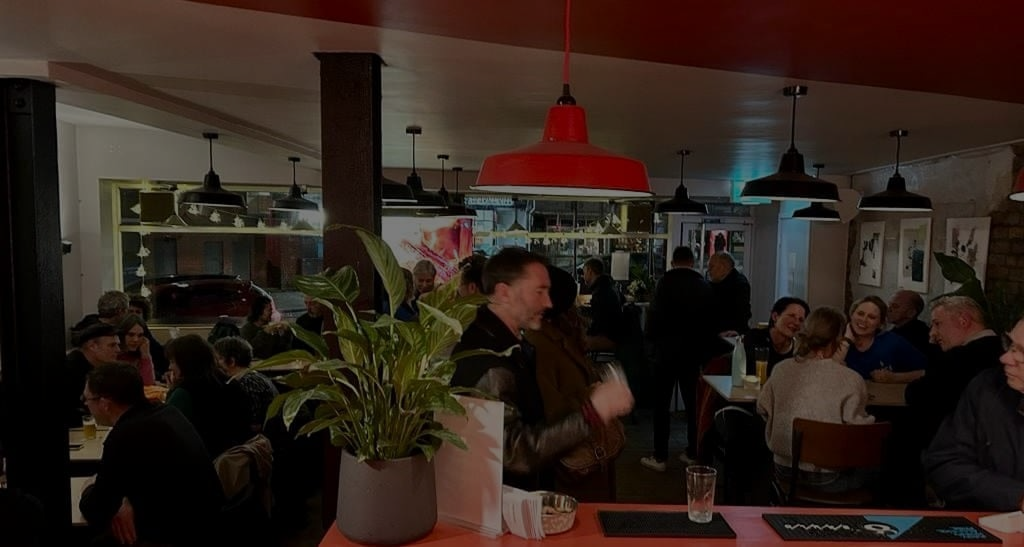
Lost And Found Taproom in Fiveways stocks a rotating selection of local Sussex breweries alongside UK-wide picks. Staff recommendations are a genuine shortcut: the team tastes everything on the list and can tell you what is drinking best that week. Check the current beer menu online before visiting so you know what is on tap.
How do you pick the right UK craft beer for your palate?
A five-step method that works whether you are standing at a taproom bar or browsing a bottle shop shelf.
-
Identify your flavour starting point. Do you prefer fruit, bitterness, sweetness, or earthiness? That single answer narrows the style list immediately. Fruit and low bitterness points to hazy NEIPA or sour; earthiness points to cask bitter; sweetness and richness points to porter or stout.
-
Check the ABV for sessionability. If you are having more than two pints, stay below 5.5%. Imperial stouts and barleywines above 8% are one-glass experiences. Most tap lists show ABV clearly; if a can does not, that is a red flag.
-
Read the hop and malt descriptors. “Mosaic” and “Citra” mean tropical and citrus. “Fuggles” and “Goldings” mean earthy and floral. “Crystal malt” means sweetness and body. These are not marketing words; they are actual ingredients with predictable flavour outcomes.
-
Ask the right questions at the bar. “Which of these is freshest?” gets you the best-condition pour. “Which pairs well with food?” opens up a different conversation about balance and weight. Knowledgeable front-of-house staff who recommend confidently are one of the strongest signals that a taproom takes its list seriously.
-
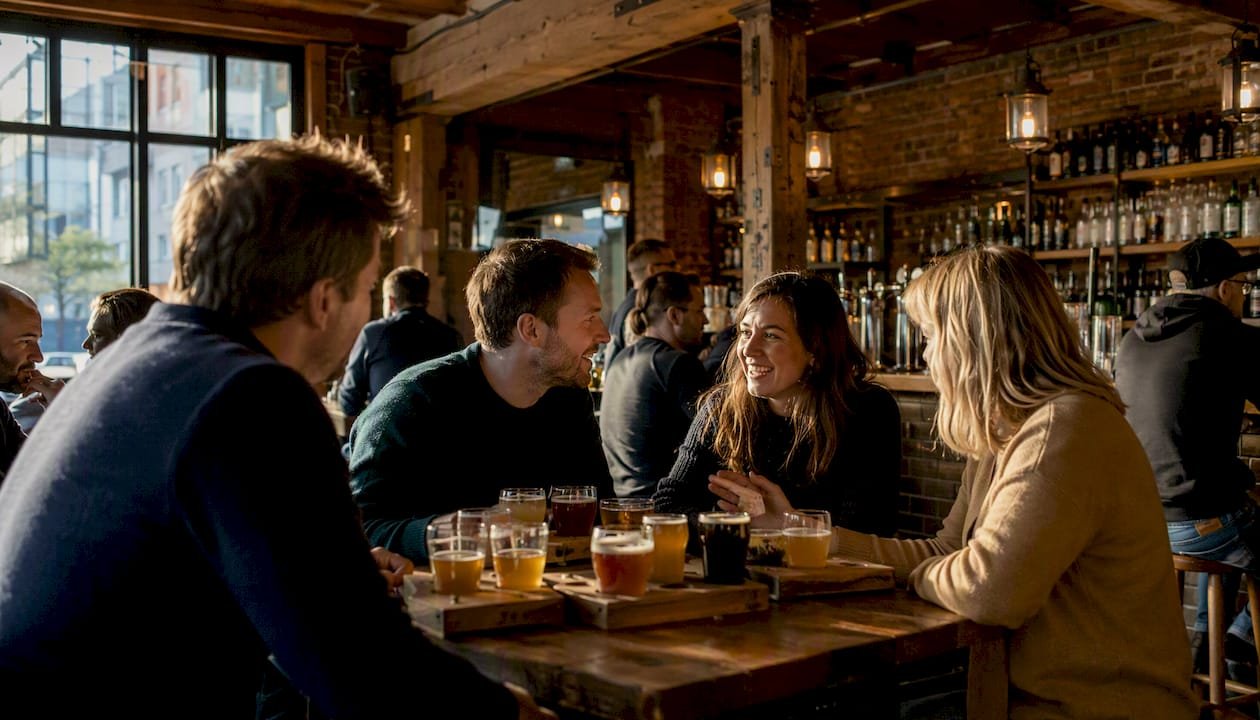
Use a tasting flight before committing. Most good taprooms offer three or four small pours for less than the price of a pint. It is the fastest way to find your preferred style without guessing. Lost And Found Taproom offers flights; you can also use the how to taste beer guide to sharpen your palate before or after a visit.
On allergens and vegan labelling: UK law requires allergen information to be available, but vegan status is voluntary. If you need to know whether isinglass was used in fining, ask directly or check the brewery’s website. Lost And Found publishes a vegan beer guide covering UK craft ales if you want a pre-visit reference.
Red flags to avoid: very old cask dates on a pub handpump (anything over three days on a slow-moving line will be flat and stale), inconsistent ABV claims between the tap badge and the menu, and labels with no style descriptor at all.
What’s trending in UK craft beer in 2026?
The headline story is consolidation, not collapse. Independent brewers produce just 6% of UK beer, and while volume across the sector has faced pressure, quality-focused taproom brewers are holding their ground. As Northern Monk’s coverage illustrates, the headline volume decline masks genuine pockets of growth for breweries that have prioritised experience over expansion.
Three trends worth tracking in 2026:
- Fruit-led beers are prominent. Consumer trends in 2026 show fruit beers driving novelty purchases; breweries using real fruit additions (not flavouring) are producing some of the most interesting seasonal releases. Try one if you see it on a rotating tap list.
- Alcohol-free craft is a medium-to-long-term growth area. The quality gap between alcoholic and alcohol-free craft beer has narrowed considerably. If you have not tried an alcohol-free craft option recently, it is worth revisiting. The best examples now carry genuine hop character and body.
- Taproom experience over aggressive expansion. The breweries weathering the current market are the ones investing in their own spaces and communities rather than chasing supermarket listings. That is good news for anyone who visits taprooms: the experience is getting better, not worse.
For new styles arriving from international trends and how they are landing in Brighton specifically, Lost And Found Taproom publishes regular style guides worth bookmarking.
Key takeaways
The best UK craft beers in 2026 reward drinkers who know their preferred style, ask the right questions at the bar, and seek out taprooms that rotate their lines based on quality rather than convenience.
| Point | Details |
|---|---|
| Start with style, not brewery | Identify your flavour preference first; it narrows the field faster than any brewery name. |
| Freshness is the biggest variable | Ask which keg was most recently tapped; hazy and sour styles degrade quickly once opened. |
| Cask accounts for 58% of indie output | Pale ales, bitters, and golden ales dominate independent brewery production according to SIBA data — do not overlook them. |
| 1,578 active UK breweries | The infrastructure for finding great craft beer is strong; use taprooms, bottle shops, and festivals together. |
| Lost And Found Taproom, Brighton | Rotating local and UK-wide beers, online menus, and staff recommendations make it a practical starting point. |
Why curation matters more than choice
The conventional wisdom in craft beer is that more choice is always better. Walk into a bar with 40 taps and you are supposed to feel spoilt. In practice, most people freeze, pick something familiar, and miss the three genuinely outstanding beers buried in the middle of the list.
What actually helps is a shorter list assembled by someone who has tasted everything on it and made deliberate decisions about what belongs. That is what a well-run taproom does. Rotating taps are not just a novelty feature; they are a quality filter. When a line comes off, it is usually because something better is ready to replace it. Themed tap takeovers and tasting events add another layer: they create a reason to try something outside your usual range, with staff on hand to explain why it is worth the risk.
Lost And Found Taproom publishes its beer menu online so you can check what is on before you arrive. That transparency is itself a trust signal. A taproom confident enough to show you the list in advance is one that stands behind every line on it.
The human factor matters too; knowledgeable front-of-house teams who recommend confidently and inclusively turn casual visitors into regulars, exemplifying the premium artistry with Casa Armero ethos in spirits and hospitality. Front-of-house teams who recommend confidently and inclusively turn casual visitors into regulars. That is not a soft benefit; it is the difference between a one-off visit and a community you return to.
Try the best UK craft beers at Lost And Found Taproom
Knowing which styles to try is one thing. Having somewhere to try them well is another.
Lost And Found Taproom in Brighton’s Fiveways neighbourhood stocks a rotating selection of local Sussex breweries alongside carefully chosen UK-wide picks. The beer menu changes regularly and is always available to browse online before you visit. Tasting flights let you work through multiple styles in a single session without committing to a full pint of something unfamiliar.
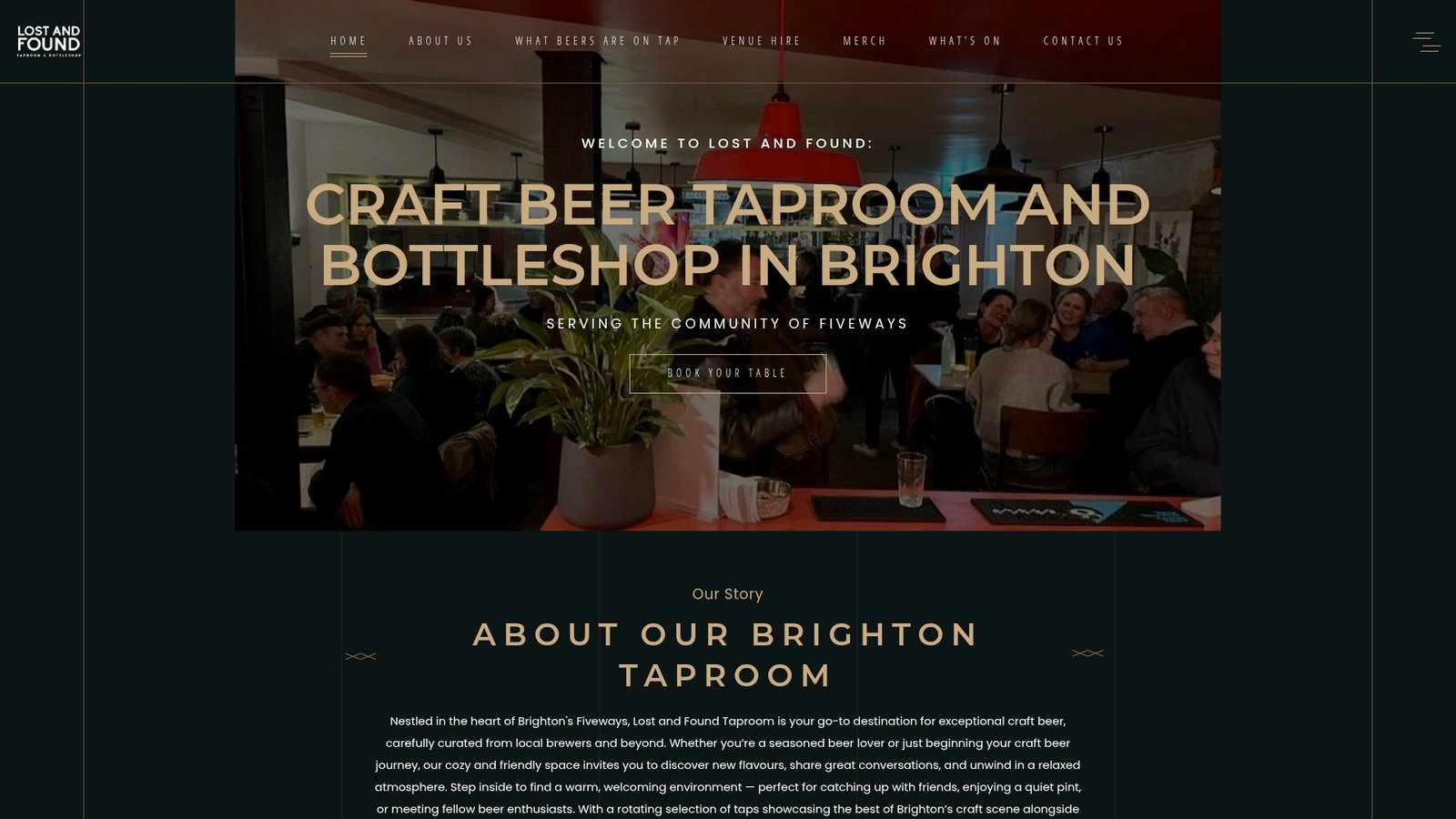
Beyond the tap list, Lost And Found offers a bottle shop for take-home options, street food collaborations, and venue hire for private tastings and events. If you are planning a group visit or a tasting evening, the team can help you build a flight around a theme or a specific style journey.
Check the current beer menu to see what is on tap this week, or get in touch to enquire about venue hire and tasting bookings.
Useful sources and further reading
The sources below are the most authoritative references for UK craft beer awards, industry data, and community rankings.
- SIBA Indie Beer Awards 2026 — the definitive independent awards for cask, keg, and bottle/can categories across the UK
- SIBA Business Awards 2026 — brewery business excellence, including taproom and regional performance
- SIBA Independent Beer Report 2026 — industry data on active breweries, market share, and brewer priorities
- We Are Beer Top 50 UK Beers 2026 — community votes combined with expert panel rankings; the most crowd-sourced benchmark available
- Morning Advertiser / Northern Monk feature — analysis of where growth is actually occurring within the wider volume decline
SIBA Indie Beer Awards 2026: selected category winners
| Category | Beer | Brewery | ABV |
|---|---|---|---|
| Cask — Pale Ale / Bitter | Consult SIBA for full winner list | Various | Varies |
| Keg — Pale Ale / IPA | Consult SIBA for full winner list | Various | Varies |
| Bottle/Can — Stout / Porter | Consult SIBA for full winner list | Various | Varies |
Full winner details and ABVs are published on the SIBA Indie Beer Awards page. Lost And Found Taproom’s current online menu shows which award-recognised styles are available on tap.
Recommended
- Independent Brighton Breweries Matter: Why Your Next Pint at Fiveways is a Vote for Sussex Beer Survival – Lost And Found Craft Beer Taproom Brighton
- Taproom vs Pub: Why Brighton’s Fiveways Taproom Scene is Winning in 2026 – Lost And Found Craft Beer Taproom Brighton
- Gluten free beer UK: your Brighton taproom guide
- Are Brighton’s Independent Breweries Really Dying? The Truth About Our Local Beer Scene After Brighton Bier’s Closure – Lost And Found Craft Beer Taproom Brighton