



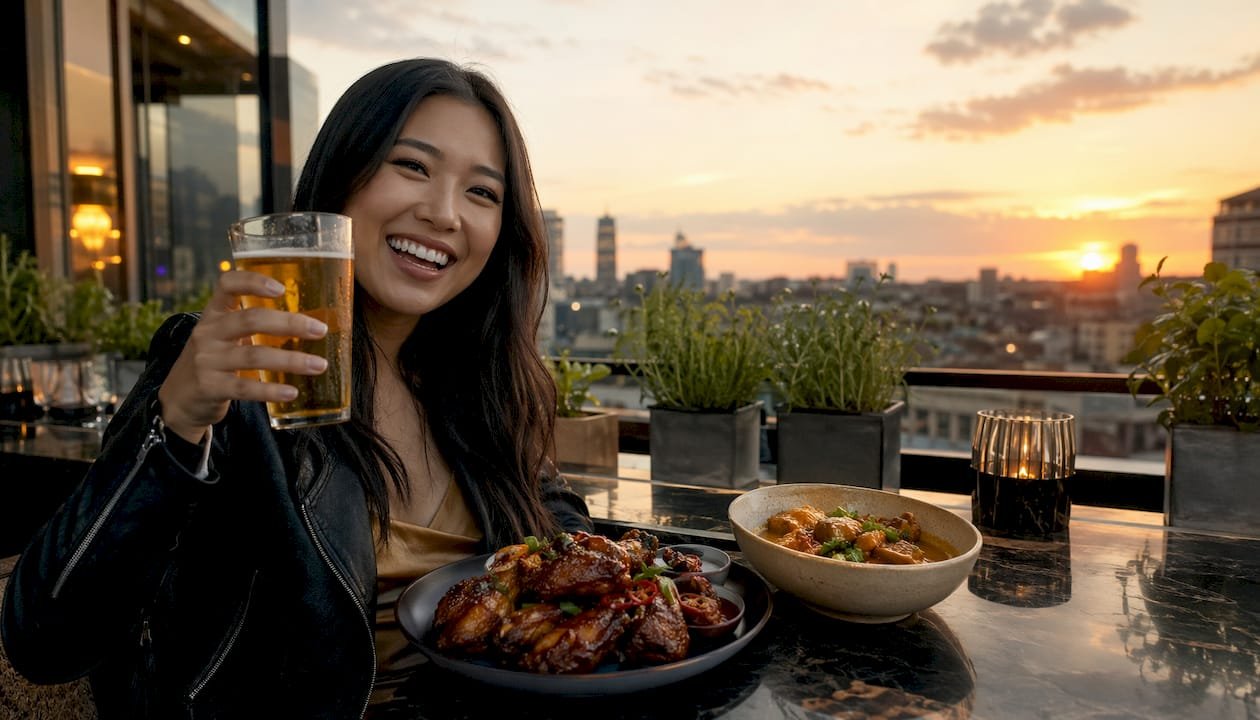
Beer with spicy food: what to drink with curry and wings
The short answer: reach for a light lager, pilsner, Munich Helles, Belgian witbier, wheat ale, or a malt-forward amber ale. For the fiercest dishes — a vindaloo, a Sichuan mapo tofu, a jerk chicken slathered in scotch bonnet sauce — a milk stout or cream stout is the most forgiving choice. The one rule that covers almost every situation: pick moderate ABV (roughly 3.5–6.5%), keep bitterness low to moderate, and lean on either refreshing carbonation and citrus acidity or gentle malt sweetness. Sensory scientist Dr Nicole Garneau has shown that bitterness and capsaicin amplify each other’s signals in the brain, which is why a double IPA with a Madras feels like punishment rather than pleasure. At Lost And Found Taproom in Brighton’s Fiveways, we test these pairings regularly against our rotating tap list and street food collaborations — and the science holds up every time.
Best styles at a glance:
- Light lager or pilsner (fresh chilli, Thai green, pad thai)
- Munich Helles or session lager (lighter curries, spicy tacos)
- Belgian witbier (Thai red curry, spicy noodles, citrus-dressed dishes)
- Wheat ale or hefeweizen (buffalo wings, mild jerk, spicy pizza)
- Amber or red ale (Madras, BBQ with spicy glaze, mole)
- Milk stout or cream stout (vindaloo, very oily Sichuan dishes, sticky jerk)
Table of Contents
- Why some beers make spicy food feel hotter
- How to choose the right beer for any spicy dish
- The best beer styles for common spicy dishes
- Practical serving tips that make a real difference
- How Lost And Found tests pairings
- Key takeaways
- Balance over “cooling”: a note on pairing philosophy
- Try these pairings at Lost And Found Taproom
Why some beers make spicy food feel hotter
Capsaicin is not technically a taste. It binds to TRPV1 receptors — the same nerve endings that respond to genuine heat and physical pain — which is why eating a hot chilli triggers sweating and a burning sensation rather than a flavour in the conventional sense. The brain reads it as a danger signal, not a culinary note.
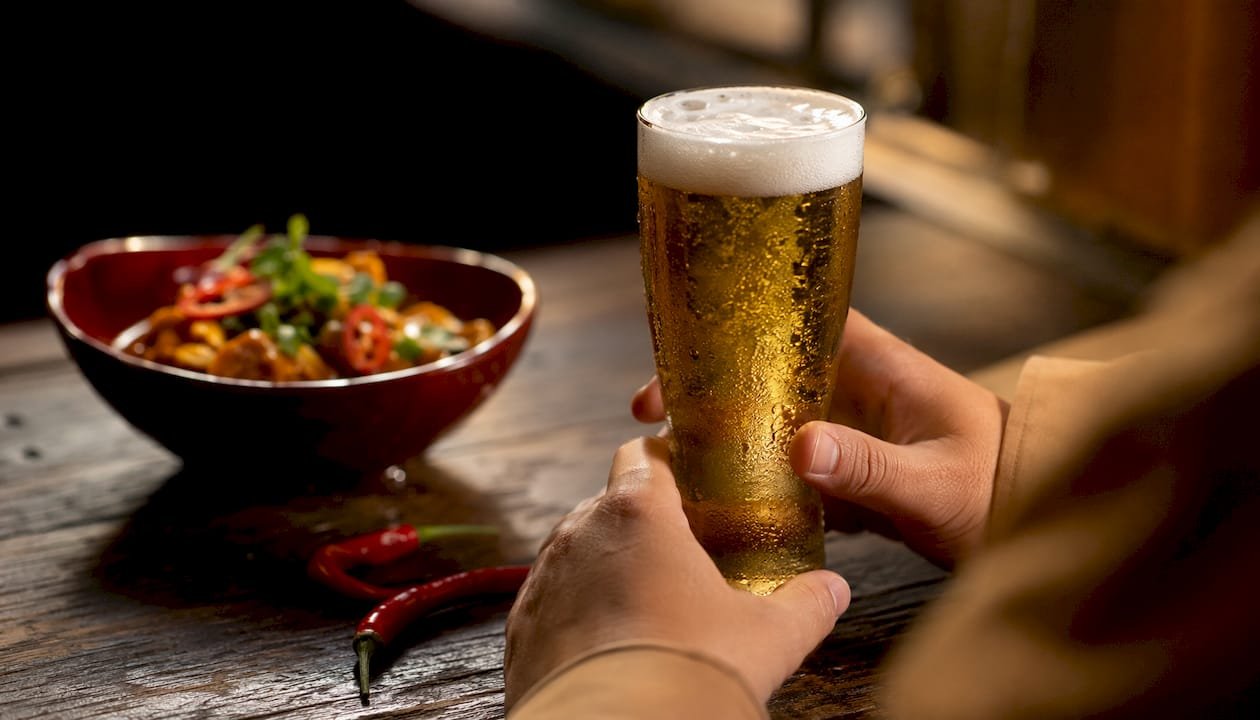
Two beer components interact badly with that signal: alcohol and bitterness. Ethanol activates TRPV1 directly, so a high-ABV beer does not wash capsaicin away — it amplifies the burn. High-IBU, heavily hopped beers compound the problem further, because bitterness and capsaicin interact to make both sensations feel more intense simultaneously. A West Coast IPA at 70 IBU alongside a Thai red curry is not a pairing; it is a competition.
Carbonation adds a third layer of complexity. Carbonated beverages activate oral pain receptors through a different pathway (TRPA1, via carbonic acid), which can pile additional sting onto an already-hot dish. A PMC-published study confirmed that carbonated beverages — including non-alcoholic beer — were among the least effective at reducing capsaicin burn, and that adding alcohol would likely make performance worse.
What works in your favour:
- Residual malt sweetness can reduce perceived heat; amber ales and sweeter styles show this effect in tasting panels
- Hop terpenes such as humulene and myrcene may activate TRPM8 cooling receptors, offering a mechanistic reason why some hop profiles feel balancing despite low bitterness
- Moderate carbonation still refreshes the palate between bites without adding significant oral irritation
The goal, as pairing experts put it, is not to extinguish the burn but to create harmony — beers with citrus or herbal notes, or gentle sweetness, lift the aromatic profile of the food rather than fighting it.
How to choose the right beer for any spicy dish
A three-step mental checklist works well whether you are at a bar or browsing a bottle shop.
Step 1: Assess the dish’s weight
A light, broth-based dish (pad thai, pho, spicy ramen) needs a lighter beer. A rich, oily, sauce-heavy dish (Madras, mole, sticky jerk) can carry a fuller-bodied beer. Matching weight to weight consistently produces better pairings than mismatching — a delicate pilsner gets lost under a thick, spiced mole.
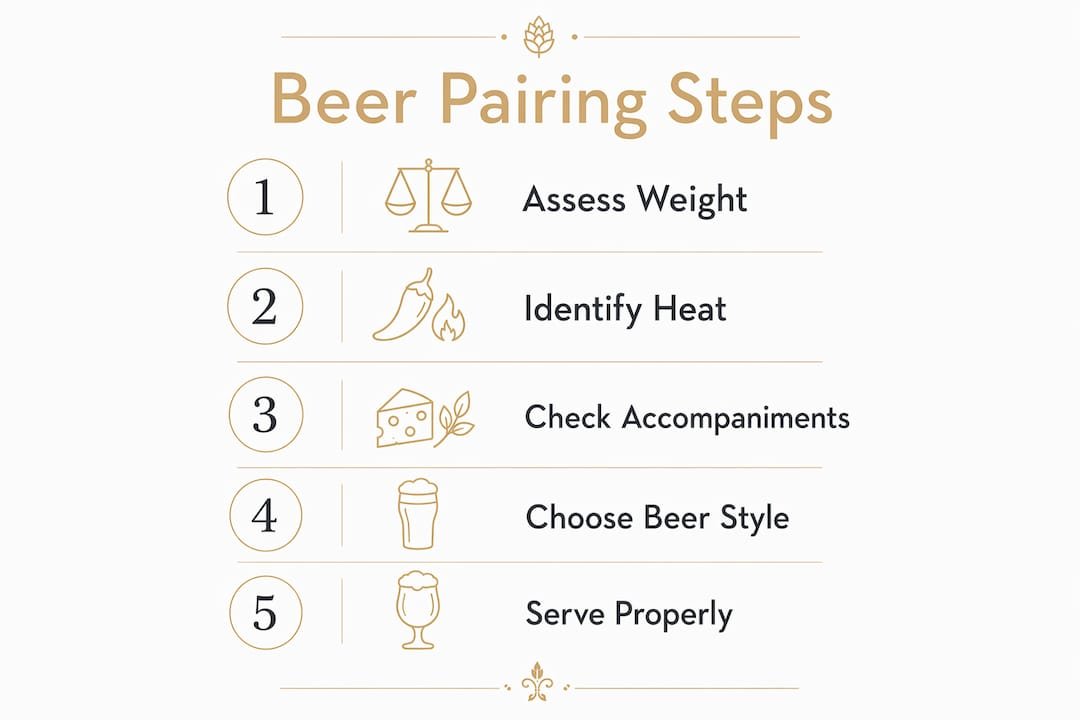
Step 2: Identify the dominant heat type
Fresh chilli heat (Thai green, jalapeño salsa) is bright and quick-fading — citrus-forward lagers and witbiers complement it well. Dried chilli heat (Madras, ancho mole, chilli con carne) is deeper and slower — malt sweetness from an amber or brown ale is a better counterpoint. Szechuan numbing heat (mapo tofu, dan dan noodles) is a different beast entirely: the peppercorn numbs the palate, so a clean, lightly carbonated lager or Helles works better than anything complex.
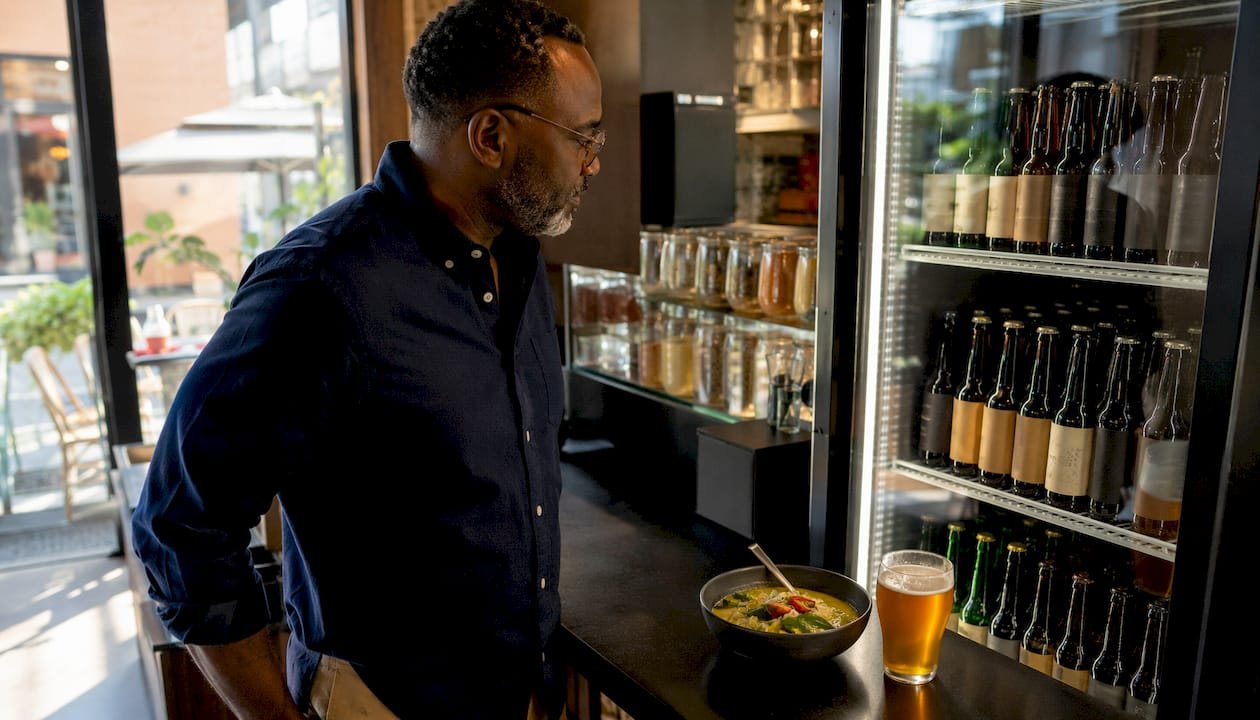
Step 3: Check the accompaniments
Raita, coconut milk, or a citrus garnish on the plate changes what beer works best. A curry served with cooling raita already has dairy doing the heavy lifting, so a refreshing pilsner pairs cleanly. A dish with no dairy buffer and maximum chilli heat is where malt sweetness or lactose becomes genuinely useful.
ABV and IBU guidance:
- Aim for moderate ABV low enough that alcohol does not amplify the burn
- Keep bitterness low to moderate for most spicy dishes, lower for the hottest
- Choose citrus or herbal hop character over resinous or piney for fresh-chilli dishes
- Prioritise malt sweetness or lactose for dense, oily, slow-burning heat
Pro Tip: For very fiery curries or sticky jerk, a milk stout’s lactose sweetness is the closest a beer gets to the capsaicin-reducing effect of dairy. It will not chemically remove the burn the way milk does — Penn State research confirms milk protein is the real mechanism — but the sweetness and body create a perception of relief that lighter beers cannot match.
The best beer styles for common spicy dishes
The pairings below follow the weight-matching and heat-type logic above. Each entry includes a primary style and a quick alternative for those who prefer more hop character.
- Thai green curry: Witbier (coriander and orange peel in the beer echo the dish’s fresh herb notes) or a Munich Helles for a cleaner contrast. Hop alternative: a low-IBU pale ale with citrus dry-hop.
- Thai red curry / Massaman: Light lager or pilsner — the carbonation refreshes between bites and the neutral malt does not compete with coconut and lemongrass. Pilsner is a consistent recommendation for lighter, coconut-based curries.
- Madras / Vindaloo: Amber ale or brown ale; the malt sweetness cushions the deep dried-chilli heat. For vindaloo, step up to a milk stout. Hop alternative: a session red IPA kept below 40 IBU.
- Buffalo hot wings: Wheat ale or hefeweizen — the banana and clove esters from the yeast soften the vinegar-forward hot sauce. The lagers-for-spicy-food recommendation holds here too; a cold lager is the crowd-pleasing fallback.
- Pad thai: Pilsner or session lager. The dish is lighter than it looks; a full-bodied beer overwhelms the tamarind and fish sauce notes.
- Spicy miso or tonkotsu ramen with chilli oil: Munich Helles or a clean session lager. The richness of the broth calls for something that cuts through fat without adding bitterness.
- Sichuan dishes (mapo tofu, dan dan noodles): Light lager or Helles. The numbing peppercorn effect means complex flavours are partly lost on the palate; keep the beer simple and refreshing.
- Jerk chicken: Amber ale for the sweeter, allspice-forward marinades; a witbier if the jerk is citrus-heavy. Milk stout for the hottest versions.
- BBQ with spicy glaze: Amber or red ale — the caramel malt mirrors the glaze’s sweetness and handles the smoky heat well.
- Mole (dark, chilli-chocolate sauce): Brown ale or porter. The roasted malt in a porter echoes the chocolate and dried chilli complexity without fighting it.
- Spicy tacos / enchiladas: Session lager or Helles for fresh-chilli versions; amber ale for slow-cooked, dried-chilli fillings.
| Dish | Beer style | ABV / IBU guidance | Serving note |
|---|---|---|---|
| Thai green curry | Witbier / Munich Helles | Moderate alcohol and bitterness | Serve cold; light carbonation |
| Thai red / Massaman | Light lager / pilsner | Moderate alcohol and bitterness | Serve cold; standard carbonation |
| Madras / Vindaloo | Amber ale / milk stout | Moderate alcohol and bitterness | Slightly less cold; fuller body |
| Buffalo wings | Wheat ale / hefeweizen | Moderate alcohol and bitterness | Serve cold; moderate carbonation |
| Pad thai | Pilsner / session lager | Moderate alcohol and bitterness | Serve cold; crisp carbonation |
| Sichuan dishes | Light lager / Helles | Moderate alcohol and bitterness | Serve cold; gentle carbonation |
| Jerk chicken | Amber ale / witbier | Moderate alcohol and bitterness | 6–8°C; moderate carbonation |
| BBQ spicy glaze | Amber / red ale | Moderate alcohol and bitterness | 7°C; moderate carbonation |
| Mole | Brown ale / porter | Moderate alcohol and bitterness | 8°C; lower carbonation |
| Spicy tacos | Session lager / amber ale | Moderate alcohol and bitterness | Serve cold; standard carbonation |
Practical serving tips that make a real difference
Getting the pairing right on paper is only half the job. How you serve the beer changes the experience considerably.
Temperature matters more with spicy food than with most other dishes. A lager served at 8°C rather than 4°C loses its refreshing contrast and starts to feel flat against heat. Conversely, serving an amber ale too cold suppresses the malt sweetness that makes it useful alongside a curry. A style-specific serving temperature guide is worth consulting before you pour. The general rule: lagers and witbiers as cold as the style allows; amber ales and porters a few degrees warmer so the malt character comes through.
Glassware affects carbonation and aroma. A tulip or nonic pint glass retains carbonation better than a wide-mouthed vessel, which matters when you want the fizz to keep refreshing the palate. For a glassware-by-style breakdown, the short version is: use a weizen glass for hefeweizens (it channels the banana ester aroma), a tulip for witbiers, and a standard pint or nonic for lagers and amber ales.
- Sip between bites rather than after — a sip taken mid-bite refreshes the palate before the next wave of heat builds
- For very spicy dishes, a small piece of plain bread or rice between sips gives the palate a moment to reset
- Dairy accompaniments (raita, soured cream, crème fraîche) do more chemical work on capsaicin than beer can; use them alongside rather than instead of a good pairing
- Avoid drinking large volumes quickly — the cumulative alcohol effect will amplify heat over the course of a meal
Pro Tip: At the bar, ask for a two-thirds pour rather than a full pint when you are eating something very spicy. A smaller, colder pour stays at the right temperature longer and lets you pace the pairing properly without the last third going warm.
How Lost And Found tests pairings
At Lost And Found Taproom, pairing nights are a regular fixture, run alongside street food collaborations including @boxxbbq. The tasting protocol keeps variables consistent: the same dish portion for each participant, a fixed sip order (beer before food, then food, then beer again), and a water break between each pairing. Scores are recorded across three axes: heat balance, flavour harmony, and overall enjoyment.
Two pairings that have come out consistently well in these sessions:
- Pilsner with Thai green curry: The clean malt and moderate carbonation refresh the palate between bites without competing with lemongrass and kaffir lime. Heat balance scores high; the beer does not disappear under the dish.
- Amber ale with Madras: The caramel malt sweetness cushions the dried-chilli depth. Flavour harmony scores are consistently strong; the beer’s body matches the sauce’s weight.
| Pairing | Heat balance | Flavour harmony | Overall enjoyment |
|---|---|---|---|
| Pilsner + Thai green curry | High | High | High |
| Witbier + Thai red curry | High | High | High |
| Amber ale + Madras | Medium–high | High | High |
| Milk stout + Vindaloo | High | Medium | High |
| Hefeweizen + buffalo wings | Medium | High | High |
| Light lager + Sichuan mapo tofu | High | Medium | Medium–high |
For anyone who wants to replicate this at home, the craft beer tasting guide covers the full protocol, scoring sheets, and how to control variables across multiple pairings in a single session.
Key takeaways
The single most useful rule for beer with spicy food: keep ABV moderate, bitterness low, and match the beer’s body to the dish’s weight.
| Point | Details |
|---|---|
| Avoid high IBU and high ABV | Bitterness and alcohol both amplify capsaicin heat; stay below 40 IBU and 6.5% ABV for most spicy dishes. |
| Match weight to weight | Light dishes need light beers; rich, oily sauces need fuller-bodied styles like amber ales or porters. |
| Use malt sweetness for dense heat | Amber ales, brown ales, and milk stouts reduce perceived heat through sweetness and body, not carbonation. |
| Citrus and herbal hops for fresh chilli | Witbiers and low-IBU pale ales with citrus character complement fresh-chilli dishes without amplifying burn. |
| Try pairings at Lost And Found Taproom | Lost And Found Taproom in Brighton runs regular pairing nights with rotating taps and street food collaborations — see the beer menu online. |
Balance over “cooling”: a note on pairing philosophy
The framing of “what beer puts out the fire” is, I think, the wrong question — and it leads people straight to the worst choices. You reach for a cold IPA because it feels like it should work, the bitterness seems aggressive enough to match the heat, and the carbonation feels refreshing. In practice, you have just stacked three irritants on top of capsaicin and wondered why the dish suddenly tastes like a challenge rather than a meal.
The pairings that actually work are the ones where the beer adds something to the dish rather than fighting it. A witbier alongside Thai green curry is not cooling the heat; it is echoing the coriander and citrus in the dish and making the whole thing more interesting to eat. An amber ale with a Madras is not suppressing the chilli; the caramel malt is creating a counterpoint that makes the spice feel intentional rather than overwhelming.
At Lost And Found Taproom, the rotating tap list means there is almost always something that fits this brief — a Helles for lighter dishes, a witbier or session pale for mid-range heat, something malt-forward for the fiercer end of the menu. The common pairing mistakes people make almost always come back to the same thing: choosing a beer that sounds bold enough to match the dish rather than one that is actually suited to it.
Try these pairings at Lost And Found Taproom
If you want to put this into practice without doing the shopping yourself, Lost And Found Taproom in Brighton’s Fiveways is the place to start. The rotating tap list draws from independent UK breweries, which means the styles covered in this article — pilsners, Helles lagers, witbiers, amber ales, milk stouts — are almost always represented, often from Sussex producers you will not find anywhere else.
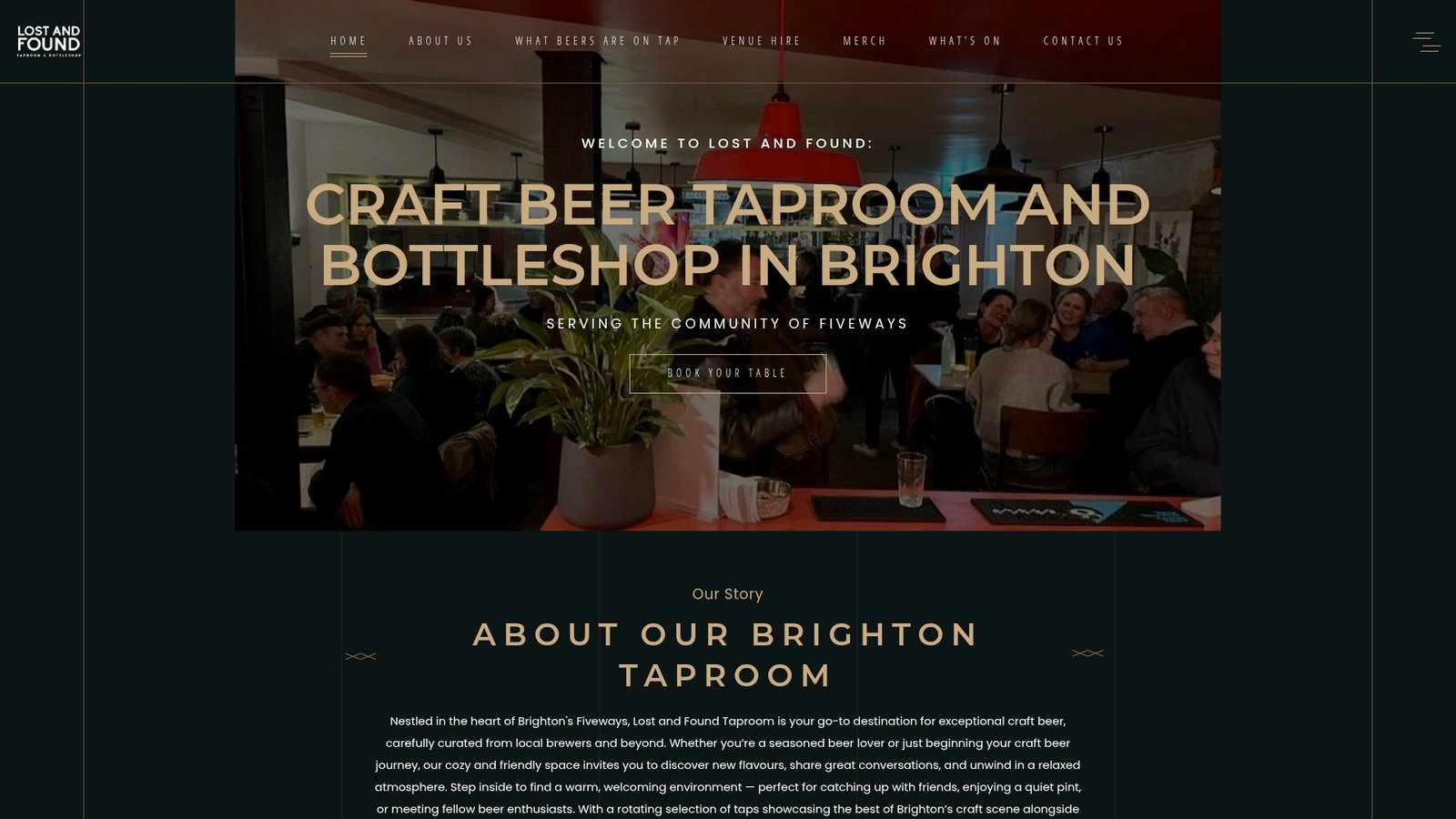
Pairing nights run regularly alongside street food collaborations, giving you the chance to work through the style-by-dish logic above with a knowledgeable pour on one side and something genuinely spicy on the other. The beer and food menu is available online, so you can check the current tap list before you visit. If you are planning a group tasting or a private pairing event, the venue hire option is worth a look too. Walk in, tell the bar what you are eating, and they will point you in the right direction.