


British beer styles: a beginner’s complete guide
British beer styles are the traditional categories of ales and lagers that have defined the UK pint for centuries. The main families you need to know are: bitter and pale ale (including IPA), mild, brown ale, porter, stout, old ale and barleywine, golden and summer ale, and lager as a modern everyday presence. As Serious Eats notes, these styles resist tidy classification — the labels are fluid, shaped by pub culture and regional habit as much as by any rulebook.
Here is what separates them at a glance:
- Colour: pale gold (golden ale, lager) through amber (bitter, brown ale) to near-black (porter, stout)
- ABV: session ales typically sit around 3.5–4.5%, stronger styles (ESB, old ale, barleywine) run 5–12%
- Flavour cues: hop bitterness and floral/earthy aromas (bitter, IPA), toasty malt sweetness (mild, brown ale), roasted coffee or chocolate (porter, stout), rich dried fruit (old ale)
- Serve: cask-conditioned real ales pulled by hand pump versus filtered keg or bottled beer
Knowing these families means you can walk into any UK pub or taproom and order with confidence rather than guessing from a tap badge.
Key takeaways
British beer styles span a wider range than most drinkers realise, from the sessionable 3.2% ordinary bitter to the 12% imperial stout, and the serving method shapes the experience as much as the recipe does.
| Point | Details |
|---|---|
| Core style families | Bitter, pale ale/IPA, mild, brown ale, porter, stout, old ale/barleywine, golden ale, and lager cover the full British range. |
| Serve temperature matters | Cask real ales are best at 11–13°C; serving them cold suppresses the malt and hop character that defines the style. |
| Tasting shortcut | Check colour first, then nose for roast vs malt vs hops — these three cues identify the style family in under a minute. |
| CAMRA and WSET are the authorities | For style definitions, use the CAMRA styles chart; for formal study, WSET’s beer modules cover stout, pale ale, and mild as core categories. |
| Try them at Lost And Found Taproom | Lost And Found Taproom in Brighton’s Fiveways rotates local and UK-wide examples of these styles, with staff who can guide you through the differences. |
Table of Contents
- What are the classic British beer styles?
- How do you tell these styles apart when tasting?
- How does serving method change what you taste?
- How have British beer styles changed recently?
- Why British styles still deserve your attention
- Taste these styles at Lost And Found Taproom in Brighton
- Useful sources for going deeper
What are the classic British beer styles?
These are the styles you are most likely to encounter in UK pubs, bottle shops, and taprooms. Definitions shift at the edges, but the core characters below hold across most examples. The WSET (Wine & Spirit Education Trust) frames stout, pale ale, and mild as the three essential learning categories for anyone studying beer formally, and that is a reasonable starting point.
Pale ale and IPA
British pale ale is the ancestor of most hop-forward beers globally. Pale gold to light amber, it uses pale malt and English hops for a balanced, biscuity character. IPA (India Pale Ale) pushes that further, being stronger and more bitter, with a drier finish. Thornbridge Jaipur (5.9% ABV) is widely cited as one of the finest modern British IPAs, with citrus and floral notes from a blend of American and English hops.
“IPA is not a single style but a family. The British version is drier and more restrained than its American cousin; the New World and NEIPA variants that CAMRA now recognises are a different animal entirely.”
CAMRA beer styles factsheet, October 2025
Mild
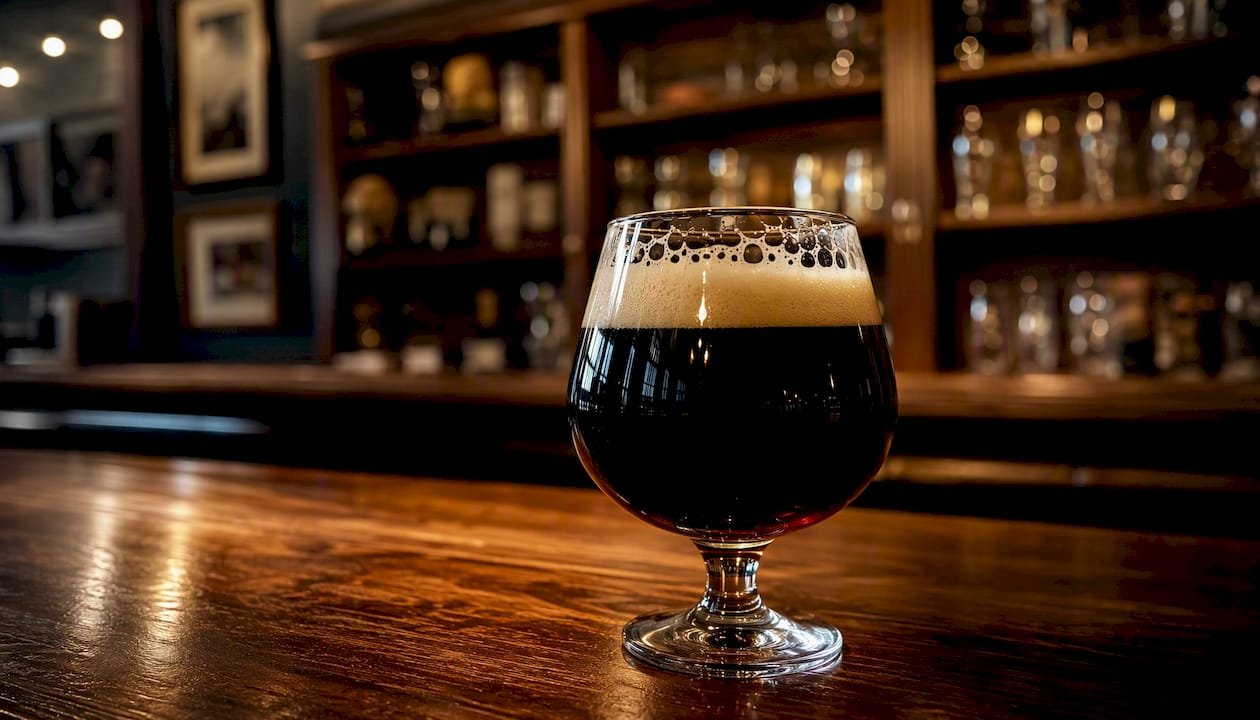
Mild is the most misunderstood style on this list. It is not necessarily weak — the name refers to its low hop bitterness, not its strength. Dark mild pours deep ruby to near-black, with flavours of toffee, light chocolate, and gentle roast. ABV is generally on the lower side, reflecting the style’s gentle character. It was the dominant British working-class beer until the 1950s and has seen a modest revival through microbreweries.
Brown ale
Brown ale sits between mild and bitter in colour (amber to dark brown) and character. The southern English style, typified by Newcastle Brown Ale (4.7% ABV), is sweeter and nuttier, with caramel malt at the fore. The northern style tends to be drier and slightly hoppier. Samuel Smith’s Nut Brown Ale from Tadcaster is the classic example of the nuttier, more complex end of the spectrum.
Porter
Porter pours dark brown to near-black, with flavours of dark chocolate, coffee, and a hint of dried fruit. It is generally of moderate strength. It is less roasty than stout, with a smoother, more rounded body. Fuller’s London Porter (5.4% ABV) is the standard reference point: rich, chocolatey, and beautifully balanced. For a deeper look at how porter and stout compare in practice, the stout vs porter guide at Lost And Found Taproom is worth reading.
Stout
Stout shares porter’s dark colour but typically carries more intense roasted barley character: sharper coffee bitterness, drier finish, sometimes an almost astringent edge. Dry Irish stout (4.0–5.0% ABV) is the most familiar form, but British stout variants include oatmeal stout (smoother, creamier), milk stout (sweetened with lactose), and imperial stout (8–12% ABV, intensely complex). The WSET’s coverage of classic British styles connects stout’s evolution directly to the London porter tradition.
Old ale and barleywine
Old ale is a strong, dark, malt-driven style with flavours of dried fruit, toffee, and sometimes a vinous or slightly sour edge from extended conditioning. Theakston’s Old Peculier (5.6% ABV) is the most famous example: dark, warming, and complex. Barleywine pushes further still, with a rich and complex character.
Golden and summer ale
Golden ale is a relatively modern British style, pale straw to gold in colour, light-bodied, and refreshing, with moderate strength. It was developed partly to attract lager drinkers to cask beer, and it works: the hop character is floral and fruity rather than resinous, and the finish is clean. CAMRA’s style groupings include golden ale as a distinct category alongside session pale.
Lager
Lager is now the most-consumed beer in the UK by volume, though it is not a traditional British style. Most mainstream UK lagers are bottom-fermented, filtered, and served cold, typically of moderate strength. A small number of craft producers now make British-hopped or heritage lagers worth seeking out, but in a pub context, lager is largely the international standard product.
Quick-reference style table
| Style | Colour | ABV range | Flavour cues | Example |
|---|---|---|---|---|
| Ordinary bitter | Amber | 3.2–3.8% | Earthy hops, dry finish | Various cask bitters |
| Best bitter / ESB | Copper | 3.8–6.2% | Biscuit malt, hop bite | Fuller’s ESB, Bass |
| British IPA | Gold–amber | 5–12% | Citrus, floral, dry | Thornbridge Jaipur |
| Mild | Ruby–black | 3.2–3.8% | Toffee, light chocolate | Various dark milds |
| Brown ale | Amber–brown | 4.0–5.0% | Nutty, caramel, soft | Newcastle Brown Ale, Samuel Smith’s Nut Brown Ale |
| Porter | Dark brown | 4.0–5.0% | Chocolate, coffee, smooth | Fuller’s London Porter |
| Stout | Near-black | 4.0–12% | Roast, coffee, dry | Various British stouts |
| Old ale | Dark brown | 8–12% | Dried fruit, toffee, vinous | Theakston’s Old Peculier |
| Golden ale | Pale gold | 3.5–5.0% | Floral, fruity, light | Various golden ales |
| Lager | Pale straw | 3.5–5.0% | Clean, crisp, neutral | Various UK lagers |
Regional note: Scotland has its own tradition of “Scottish ales” (60/–, 70/–, 80/– shilling designations), which tend to be maltier and less hop-forward than their English equivalents. Wales and Northern Ireland largely follow English style conventions, though Welsh craft breweries have produced distinctive takes on porter and golden ale in recent years.
How do you tell these styles apart when tasting?
The fastest way to distinguish British styles is a four-step sequence: look, smell, sip, finish. Work through it deliberately, and most styles reveal themselves within the first two steps. For a more detailed walkthrough, the beer tasting guide at Lost And Found Taproom covers the full method with practical kit suggestions.
-
Look. Hold the glass to the light. Pale gold to amber points to bitter, pale ale, golden ale, or lager. Deep ruby suggests mild or brown ale. Near-black means porter or stout. Haze indicates an unfiltered or New World-style beer; British cask ales are typically clear.
-
Smell. Before you sip, nose the glass. Earthy, floral, or herbal aromas (East Kent Goldings, Fuggles) signal a traditional British hop character. Citrus, pine, or tropical fruit suggests New World hops or a modern IPA. Toffee and biscuit point to malt-forward styles (mild, brown ale). Roasted coffee or dark chocolate means porter or stout.
-
Sip. Let the beer sit on your palate for a moment. Is the dominant impression malt sweetness or hop bitterness? A dry, crisp finish with noticeable bitterness is bitter or IPA territory. Soft, sweet, and low-bitterness is mild or brown ale. Roasty and drying is stout; roasty but smoother is porter.
-
Finish. How long does the flavour linger, and what does it leave behind? A short, clean finish is typical of session bitters and golden ales. A long, warming, complex finish with dried fruit or vinous notes suggests old ale or barleywine.
Pro Tip: When tasting a cask ale from a hand pump, let it warm slightly in the glass for two or three minutes before nosing it. Cask ales served at cellar temperature (around 11–13°C) open up considerably as they warm, revealing malt and hop complexity that a cold keg pour would suppress.
Quick identification checklist:
- Roasty vs malty? (Roasty = porter/stout; malty = mild/brown ale)
- Hop-forward vs malt-forward? (Hop-forward = bitter/IPA; malt-forward = mild/old ale)
- Low vs high carbonation? (Low = cask real ale; high = keg or bottled)
- Pale vs dark? (Pale = bitter/golden/IPA/lager; dark = mild/porter/stout/old ale)
- Dry vs sweet finish? (Dry = bitter/stout; sweet = mild/milk stout/brown ale)
How does serving method change what you taste?
Serving method is the single biggest variable in how a British beer actually tastes in the glass, and most drinkers underestimate it. The same beer served from a cask hand pump and from a pressurised keg can taste meaningfully different: softer carbonation, a rounder mouthfeel, and more aromatic complexity from the cask version.
Real ale (cask-conditioned ale) undergoes secondary fermentation in the cask, producing natural carbonation and leaving the beer alive with yeast. It is served without added gas, drawn by hand pump or gravity, and consumed fresh. The BJCP’s guidance on British bitter specifies that traditional bitters are served very fresh under no pressure, at cellar temperature, which is why a well-kept cask bitter in a good pub is a different experience from the same beer in a bottle.
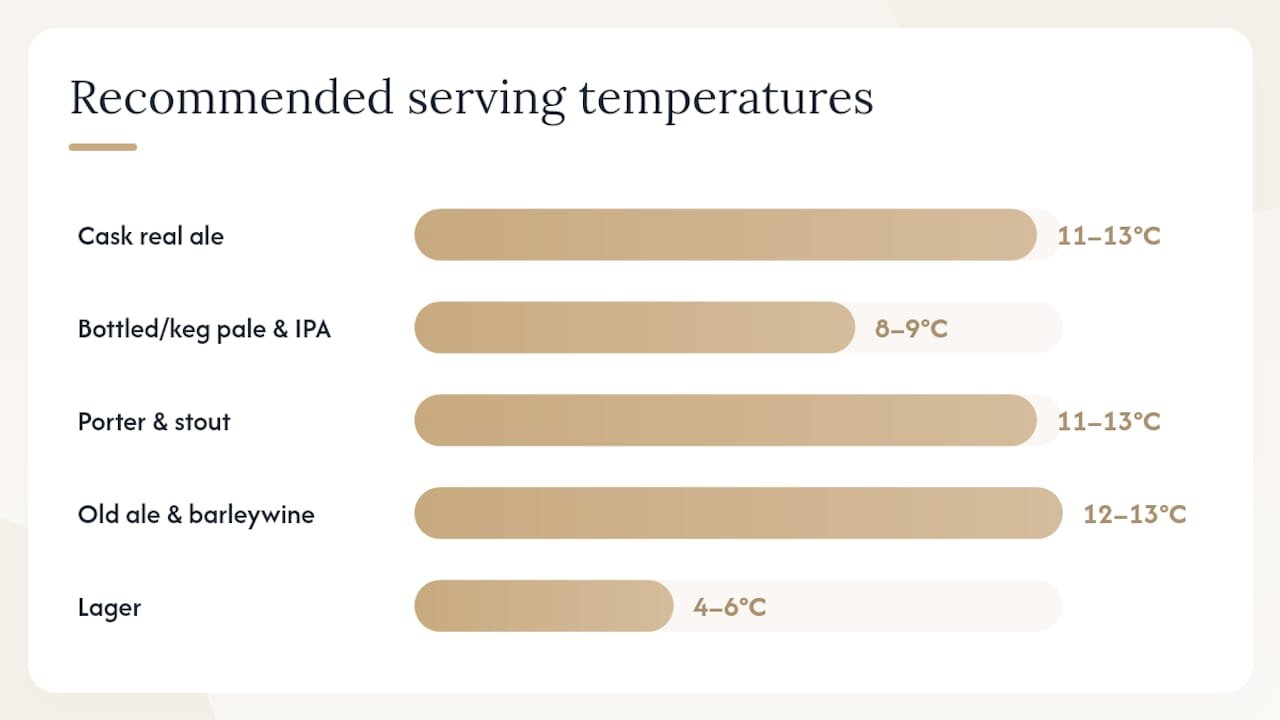
Recommended serving temperatures
| Beer type | Cellar/serve temperature | Notes |
|---|---|---|
| Cask real ale (bitter, mild, golden) | 11–13°C | Never chilled; allow to rest after pulling |
| Bottled/keg pale ale and IPA | 8–9°C | Slightly cooler than cask; still not fridge-cold |
| Porter and stout | 11–13°C | Warmer than lager; cold suppresses roast character |
| Old ale and barleywine | 12–13°C | Serve closer to room temperature to open up complexity |
| Lager | 4–6°C | Cold serve is appropriate for the style |
Glassware matters more than most people admit. A straight-sided pint glass (the classic British pub glass) works for most ales. A tulip or thistle glass concentrates aroma for stronger styles like ESB, old ale, or IPA. Stouts and porters benefit from a slightly wider bowl. For proper cellar stock management that keeps cask ales in peak condition, temperature consistency in the cellar is the critical factor.
A few practical points on cask versus keg:
- Cask ale has a short shelf life once tapped (typically 3–5 days); a busy pub serves better cask beer than a quiet one
- Keg beer is filtered and often pasteurised, giving it a longer shelf life and more consistent carbonation
- “Nitro” stout (served on a nitrogen/CO₂ mix) produces the characteristic creamy cascade; it is keg-served, not cask
- Look for the hand pump on the bar as the clearest signal that a pub takes real ale seriously
For stronger styles, brief cellaring at home is worthwhile. Old ales and barleywines improve with six to twelve months in a cool, dark place; porters and imperial stouts can develop for longer still.
How have British beer styles changed recently?
British styles are evolving faster now than at any point since the post-war lager boom, and the changes are visible on tap lists across the country.
The craft and microbrewery revival that gathered pace through the 2000s and 2010s brought two things simultaneously: a renewed interest in traditional styles (mild, porter, ESB) and a wave of American and New World influences that pushed British brewers toward hoppier, hazier, and more experimental beers. CAMRA responded with a formal style review process running from 2019 to 2025, resulting in an updated factsheet (effective July 2025) that adds new subcategories including New World IPA, NEIPA (New England IPA), and Black IPA alongside the traditional British IPA. The CAMRA 2025 style factsheet is the most current reference for these updated definitions.
“The 2025 CAMRA style review reflects a genuine tension in British brewing: the desire to preserve and celebrate traditional styles while acknowledging that the best contemporary British brewers are making beers that do not fit neatly into any historical category.”
CAMRA beer styles factsheet, October 2025
New World hops (Citra, Mosaic, Galaxy, Nelson Sauvin) have become standard in British craft brewing, producing flavour profiles that would have been unrecognisable in a 1970s pub. NEIPAs are hazy, soft, and fruit-forward, almost the opposite of a traditional dry British bitter. They now sit in CAMRA’s recognised categories, which tells you something about how far the style conversation has moved.
Signals that a beer is a modern interpretation rather than a traditional style:
- Heavy late hopping or dry-hopping (intense tropical or citrus aroma, often with a juicy mouthfeel)
- Haze or opacity in the glass (NEIPA, unfiltered pale)
- Adjuncts on the label: oats, lactose, wheat, vanilla, fruit
- ABV above 6.5% in a pale ale (suggests double/imperial IPA territory)
- “New World” or “NEIPA” explicitly stated on the pump clip or label
The CAMRA beer styles chart now maps these modern variants alongside the classics, which makes it a genuinely useful tool for navigating a contemporary tap list. Traditional styles have not disappeared; if anything, the contrast with modern interpretations has made well-made bitters and milds more interesting to drink.
Why British styles still deserve your attention
There is a tendency in craft beer circles to treat traditional British styles as the boring baseline before the interesting stuff starts. That view gets it backwards.
The bitter is one of the most technically demanding styles to brew well precisely because there is nowhere to hide: no tropical fruit, no barrel ageing, no adjuncts. A great ordinary bitter at 3.5% ABV is a study in balance, and the brewers who can pull it off consistently are doing something harder than most NEIPA producers. The same applies to mild. It is a style that was nearly killed off by lager and keg ale, and the fact that it is coming back is partly because drinkers are realising that low-ABV does not mean low-interest.
The historical depth matters too. When you drink a porter, you are drinking a style that shaped the industrial revolution’s relationship with alcohol, that funded London’s early brewing empires, and that crossed the Atlantic to influence American craft brewing two centuries later. That context does not make it taste better, but it does make it more interesting to think about.
What I find most useful about learning British styles is the practical payoff. Once you can read a tap list and know roughly what a “best bitter” or a “golden ale” will taste like before you order, you stop making expensive mistakes in unfamiliar pubs. The CAMRA styles chart and the BJCP’s British bitter notes are the two resources I would point anyone to first.
Taste these styles at Lost And Found Taproom in Brighton
If you want to move from reading about British styles to actually tasting them side by side, Lost And Found Taproom in Brighton’s Fiveways neighbourhood is built for exactly that. The rotating tap list pulls from independent UK breweries and local Sussex producers, meaning the styles covered in this article turn up regularly in well-kept, well-chosen form.
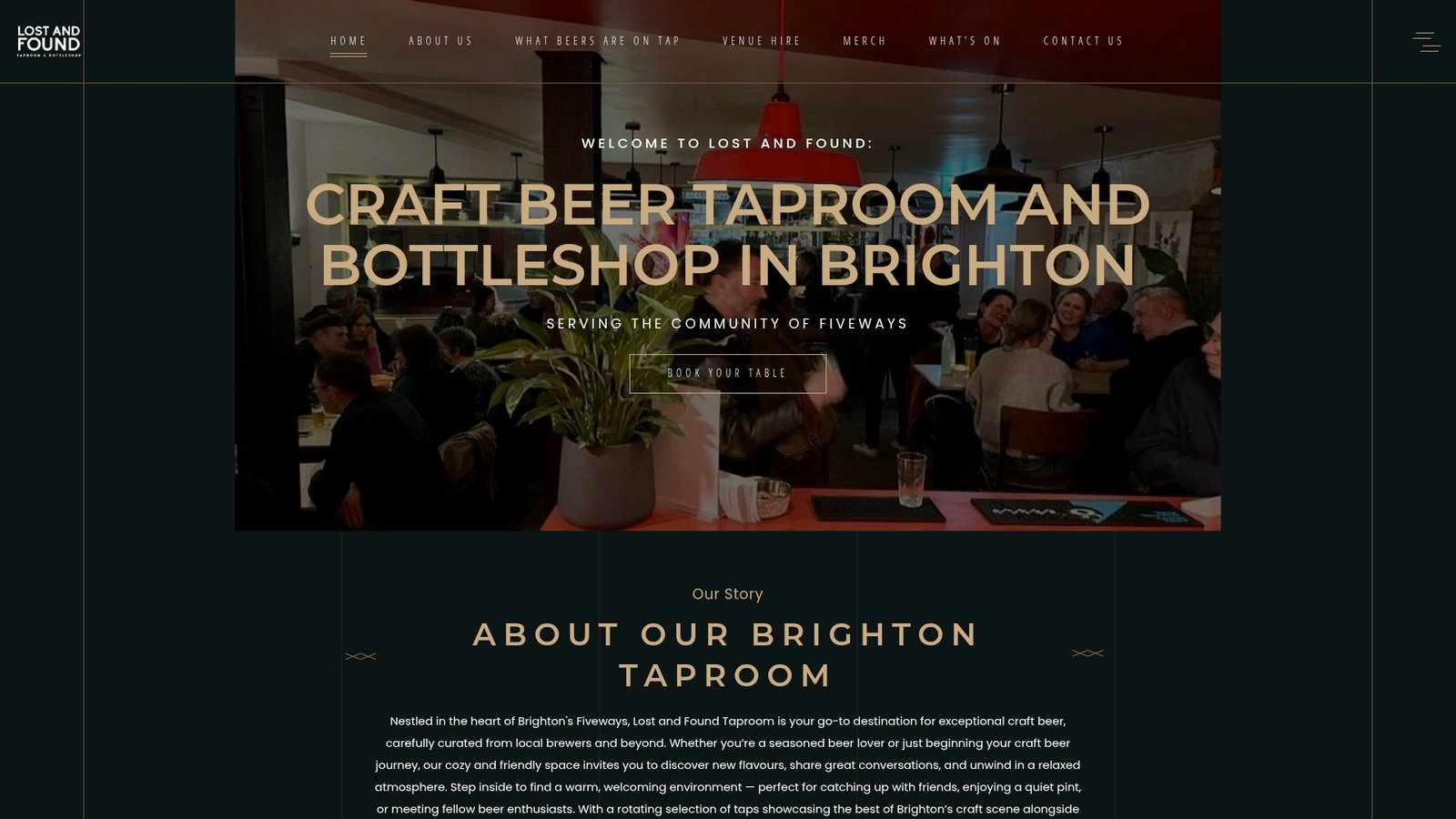
The beer menu is available online so you can check what is currently pouring before you visit. Staff are genuinely knowledgeable and happy to walk beginners through the differences between a bitter and a mild, or explain why the porter on the board tastes different from the stout next to it. Lost And Found also hosts tasting events and has venue hire available for groups who want a more structured introduction to British styles. If you are planning a tasting evening or a private event, venue hire details are on the site. For a sense of what local Brighton breweries are producing right now, the Brighton independent breweries guide is a good companion read.
Useful sources for going deeper
The best places to continue learning about British beer styles are the organisations that define and maintain them.
- A beginner’s guide to British beer styles
- Classic British beer styles: Stout, pale ale and mild | Wine & Spirit Education Trust
- Beer Judge Certification Program — British Bitter (BJCP)
- Beer in England — Wikipedia
- British beer styles guide: 8 classics to know – Today | Blog
- Beer styles chart — CAMRA
For competitions, consult BJCP first. For pub and festival navigation, the CAMRA chart is the most practical tool. For formal qualifications, WSET is the recognised standard.
Recommended
- IPA styles explained: your complete guide to every type
- How to taste beer: a step-by-step guide for enthusiasts
- Brighton Beers: 20 Local Brews to Get You Started – Lost And Found Craft Beer Taproom Brighton
- Brighton Beers: 20 Local Brews to Get You Started – Lost And Found Craft Beer Taproom Brighton