




Beer serving temperature: the UK style-by-style guide
Serving beer at the right temperature is the single biggest variable most drinkers never think about. Get it right and you taste what the brewer intended. Get it wrong and you’re drinking a muted, one-note version of something that deserved better.
Table of Contents
- What’s the ideal beer serving temperature by style?
- How temperature changes what you taste and smell
- Practical tips for getting the temperature right at home
- UK industry standards and style-specific serving data
- Lost And Found Taproom’s approach to serving temperature
- Key takeaways
What’s the ideal beer serving temperature by style?
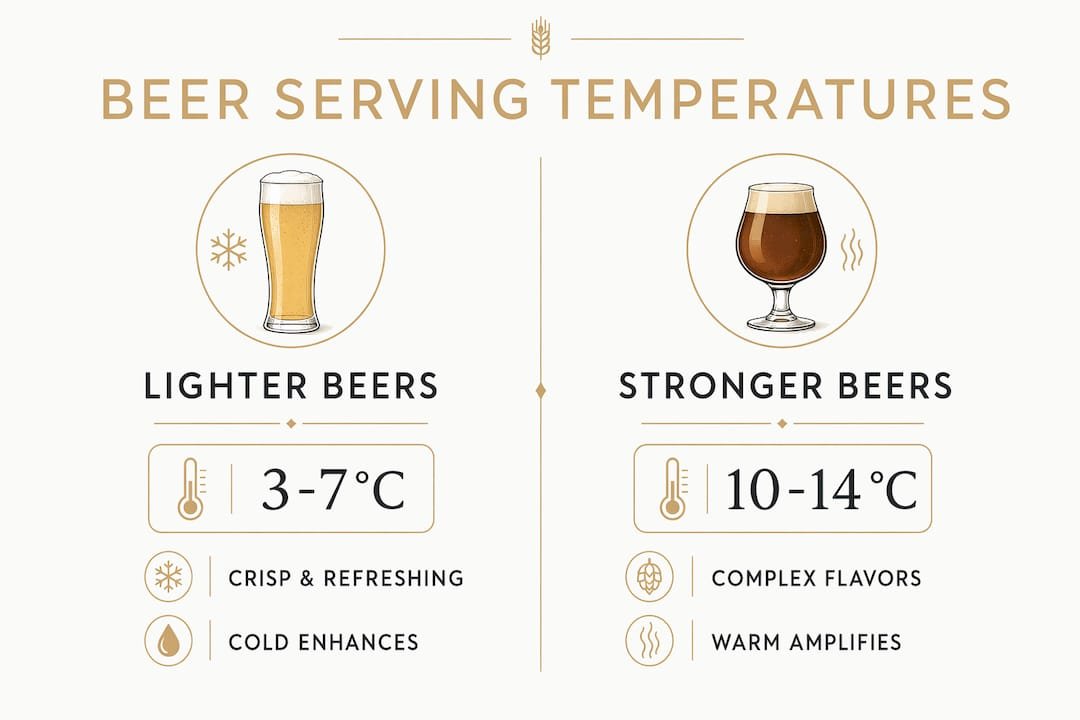
The Cask Marque standards and the Cicerone Certification Programme both set clear benchmarks for UK beer service. Here’s where each major style sits:
- Cask ale: typically served at cellar temperature around 11–13°C as recommended by Cask Marque and industry guidelines
- Standard lager and keg beer: best served at 5–8°C to enhance refreshment, as recommended by UK standards
- Extra cold keg products: served at 0–5°C to emphasize carbonation and a colder drinking sensation
- Lager and pilsner: best served at 5–7°C to maximize crispness and refreshment
- Wheat beer: best at 6–8°C, slightly warmer than lagers, preserving yeast character and flavours
- IPA (including pale ales and session IPAs): best at 7–10°C, cool but above fridge temperature to maximize hop aroma and flavour
- Stout and porter: best at 10–13°C to highlight roasted and malt flavours
- Belgian ale and strong ale: best at 13–16°C to bring forward complexity
- Bottled beer (general): served chilled at style-appropriate temperatures; bottle-conditioned styles may benefit from 8°C or above
The pattern is consistent: stronger, more complex beers want more warmth. Lighter, refreshment-led styles want the cold. A cask bitter at 5°C loses the very thing that makes it worth drinking.
How temperature changes what you taste and smell
Cold suppresses flavour. That’s not opinion; it’s physiology. Temperature affects the TRPM5 ion channel on the tongue, which governs sweetness and bitterness perception. Serve a beer too cold and you’re physically numbing the receptors that decode it.
The aromatic side is equally affected. Volatile compounds responsible for hop character, malt sweetness, and yeast-derived esters need warmth to leave the liquid and reach your nose. At 4°C, those compounds stay locked in the beer. You get carbonation and not much else.
For lagers, that trade-off is acceptable. The style is built on refreshment, and cold amplifies the crisp, clean finish that defines it. But serve an IPA at the same temperature and you strip away the entire point of the beer. The citrus, pine, and tropical fruit aromas that justify the bitterness simply don’t exist at that temperature. What’s left is blunt, harsh bitterness with no context around it.
Warmth carries its own risks. Above 12°C, off-flavours that cold masks can surface: diacetyl (buttery, popcorn-like) and trans-2-nonenal (cardboard staleness) both become detectable as temperature rises. A well-made, properly stored beer won’t have these in abundance, but warmth is an honest test of quality. Cask ale served too warm gives off unplanned, unpleasant aromas the brewer never intended.
Carbonation also shifts with temperature. As beer warms, dissolved CO2 escapes more readily, softening the mouthfeel. For a lager, that means losing the lively fizz that defines the style. For a stout, a slight softening of carbonation at 10–12°C actually rounds out the roasted character rather than fighting it.
Practical tips for getting the temperature right at home
The most common mistake is serving everything straight from a very cold fridge at around 4°C. That works for lager. For almost everything else, a few minutes of patience makes a real difference.
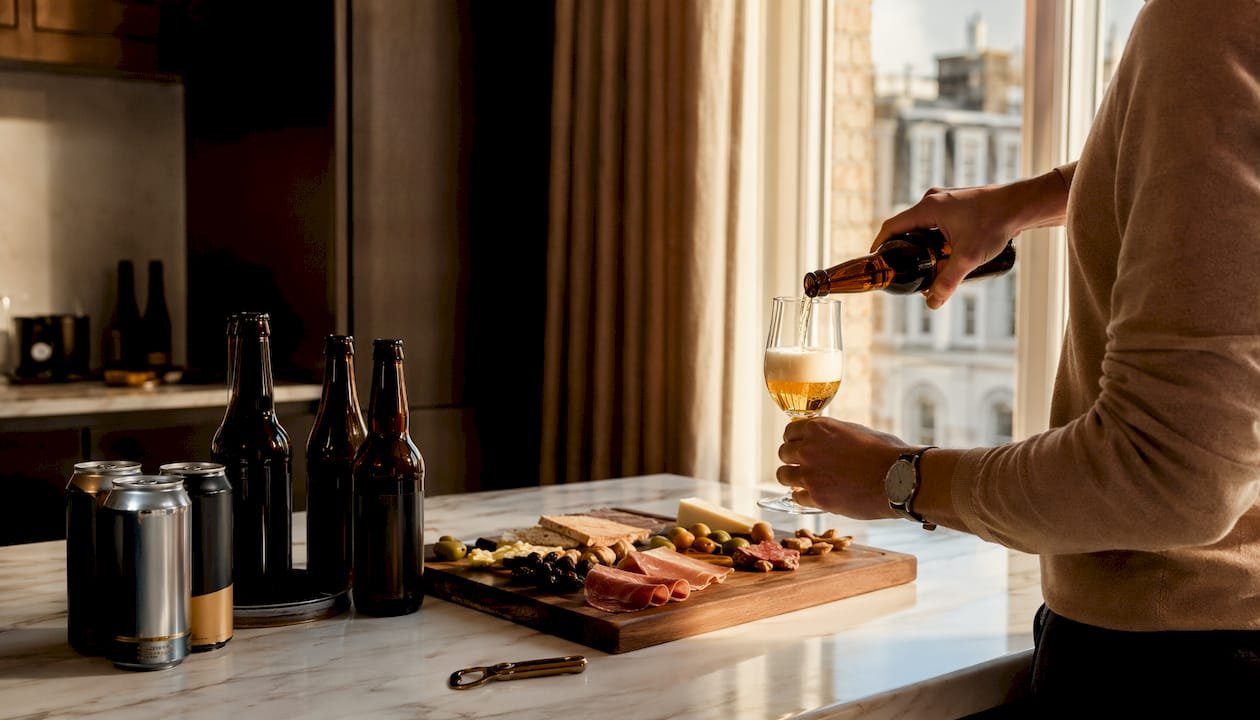
Pro Tip: Pull craft beers like IPAs and stouts from the fridge a few minutes before drinking. Letting them rise from fridge-cold to around 8°C or above unlocks aroma and flavour that would otherwise stay invisible. You don’t need a thermometer; just give them time to breathe.
A few habits that genuinely help:
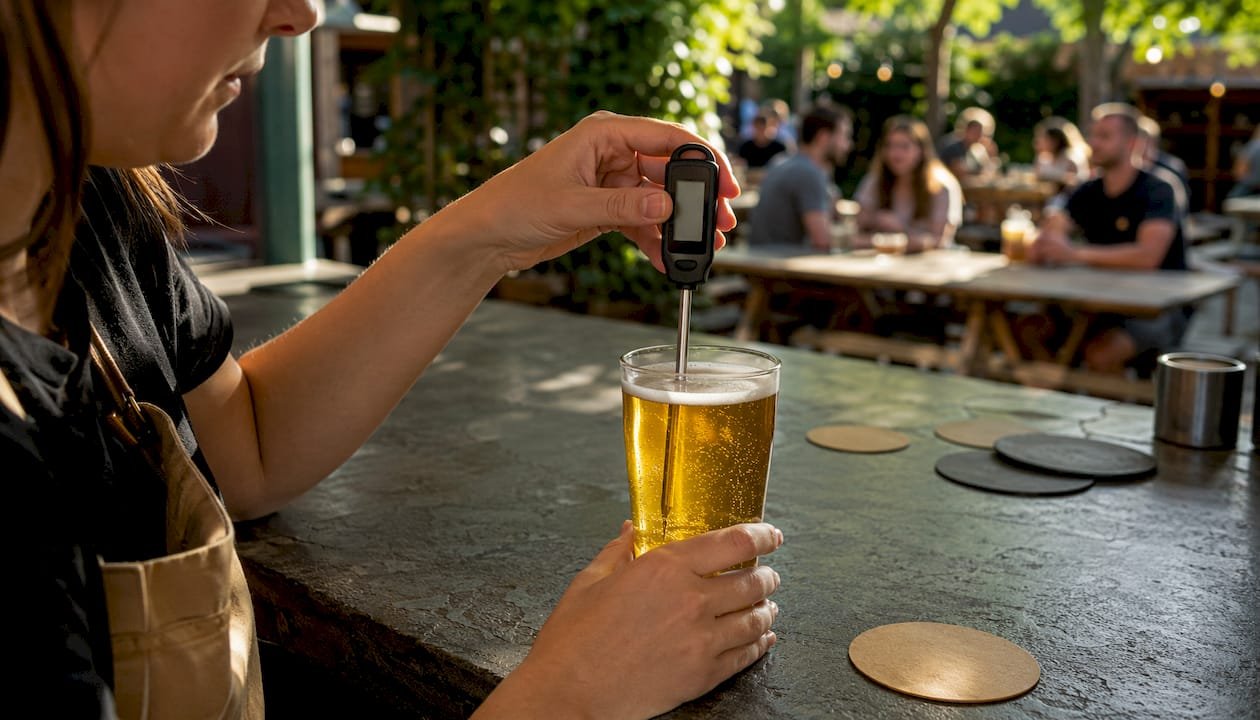
- Measure glass temperature. The Cask Marque guidance recommends using a thermometer on the glass itself, not just the bottle. A warm glass can push a correctly stored beer out of its ideal range within seconds of pouring.
- Avoid frosted glasses. Frozen or frosted glassware causes excessive foaming and drives the beer far too cold. Room temperature or lightly chilled glasses are the right call for most styles.
- Use the right glass shape. A tulip or snifter traps aroma; a straight pint glass lets it disperse. For hop-forward beers where aroma is the whole story, glassware shape matters as much as temperature.
- Keep beer out of direct sunlight. UV light reacts with hop compounds within minutes, producing the sulphuric skunk smell that ruins an otherwise perfect beer. This applies even briefly outdoors.
- Store cask ales at cellar temperature. The Cicerone Certification Programme is clear: cask ales require a temperature-controlled environment kept at 11–13°C. Refrigerated storage is best for all other styles.
- Don’t leave beer sitting out. A beer left in a warm room warms faster than most people expect. Pour smaller amounts more often, keeping the rest cold.
The “ice cold” marketing around mass-market lagers serves a purpose: it masks flavour deficiencies by numbing the palate and emphasising carbonation tingle. For craft beer, that approach destroys the product.
UK industry standards and style-specific serving data
Cask Marque audits UK pubs against defined temperature ranges, and the Cicerone Certification Programme sets the professional benchmark for beer service training. Together, they establish the authoritative framework for how beer should be served in Britain.
| Beer style | Ideal serving range (°C) | Flavour and aroma impact | UK standard practice |
|---|---|---|---|
| Cask ale | 11–13°C | Full malt and hop expression; too cold mutes vibrancy, too warm produces off-aromas | Dispensed at cellar temperature (11–13°C); Cask Marque audits to 11–13°C |
| Standard lager / keg | 5–8°C | Crisp, refreshing carbonation; cold suppresses sweetness for a clean finish | Flash-chilled in cellar to 5–8°C via draught system |
| Extra cold keg | 0–5°C | Carbonation-forward; flavour largely numbed; suits mass-market styles | Secondary flash chiller at bar; common in mainstream pubs |
| Pilsner | 5–7°C | Delicate hop floral notes preserved; too warm loses crispness | Served cold; similar to standard lager practice |
| Wheat beer | 6–8°C | Yeast-derived banana and clove esters emerge; cold suppresses them | Served slightly warmer than lager; often poured with yeast |
| IPA / pale ale | 7–10°C | Hop aroma unlocks; citrus, pine, tropical fruit become expressive | Pulled from fridge briefly before serving; not served ice cold |
| Stout / porter | 10–13°C | Roasted coffee and chocolate notes develop; carbonation softens pleasantly | Served at cellar temperature or slightly below; nitro stouts at lower end |
| Belgian ale / strong ale | 13–16°C | Complex esters and spice fully expressed; cold masks yeast character | Served at near-cellar temperature; often in branded tulip glasses |
The packaging type matters too. Cask beer conditions with live yeast and must be stored and served within a narrow temperature band. Keg beer is pasteurised or filtered and cooled mechanically via flash chillers. Bottled beer, particularly bottle-conditioned styles, benefits from being stored upright and served slightly warmer than standard fridge temperature.
Lost And Found Taproom’s approach to serving temperature
At Lost And Found Taproom in Brighton’s Fiveways, temperature isn’t an afterthought. Every beer on the rotating tap list is served at the range that suits its style, whether that’s a crisp local lager at 5–7°C or a complex Sussex stout allowed to open up closer to 12°C. The team knows that a well-chosen beer served at the wrong temperature is a missed opportunity, and that’s not something a good taproom accepts.
Pro Tip: Freshness and temperature work together. A beer stored correctly and served at the right temperature tastes exactly as the brewer intended. Check our beer menu before you visit to see what’s currently pouring and plan your tasting accordingly.
The practical advice the team gives every time: if you’re drinking at home, pull your craft beers from the fridge a few minutes early. It costs nothing and the difference is immediate. For home tasting sessions, pairing temperature awareness with the right glassware and a well-chosen party finger food ideas match turns a good beer into a genuinely memorable one. Lost And Found’s food and beer menus are both available online, making it easy to plan a pairing before you arrive or order to take home.
Visit Lost And Found Taproom at Fiveways, Brighton, to taste a curated selection of local and UK craft beers served exactly as they should be. Browse the full beer menu online and see what’s on tap this week.
Key takeaways
Serving beer at the correct temperature for its style is the single most impactful thing you can do to improve what ends up in your glass.
| Point | Details |
|---|---|
| Style determines temperature | Lagers suit 5–7°C; wheat beers 6–8°C; IPAs 7–10°C; stouts and porters 10–13°C; Belgian and strong ales 13–16°C; cask ales 11–13°C. |
| Cold suppresses flavour | The TRPM5 ion channel governs sweetness and bitterness; serving too cold numbs both. |
| Cask ale needs cellar temperature | The Cicerone Programme and Cask Marque both set 11–13°C as the standard for cask storage and service. |
| Let craft beers warm slightly | Pulling IPAs and stouts from the fridge a few minutes early unlocks hop aroma and malt complexity. |
| Glassware affects temperature | Frosted glasses drive beer too cold; room temperature or lightly chilled glasses suit most styles. |
Recommended
- Beer Glassware Guide: Which Glass for Every Style
- Beer Tasting at Home: A Craft Enthusiast’s Guide
- Independent Lager Vs Corporate Pilsner: Which Is Better For Your Brighton Craft Beer Summer? – Lost And Found Craft Beer Taproom Brighton
- The Ultimate Guide to Sessionable Craft Beer in Brighton: Everything You Need to Know About the ‘Less but Better’ Trend – Lost And Found Craft Beer Taproom Brighton