


Beer Flight Meaning: What It Is and How to Enjoy It
What is a beer flight?
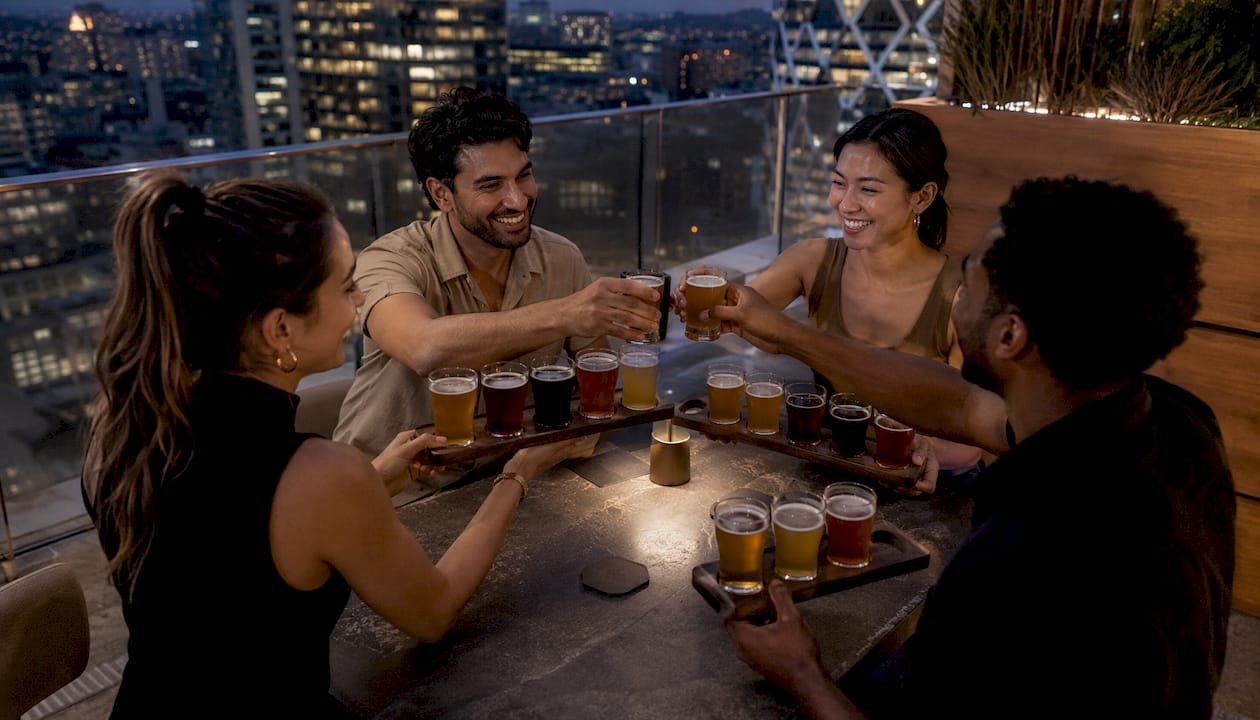
A beer flight is a curated selection of beer samples served together in small glasses, letting you explore multiple styles without committing to a full pint of each. Think of it as a tasting menu for beer. You get to compare, contrast, and discover without the commitment.
- Typically includes several individual samples per flight
- Each glass holds a small amount, putting total volume around the equivalent of one or two full pints
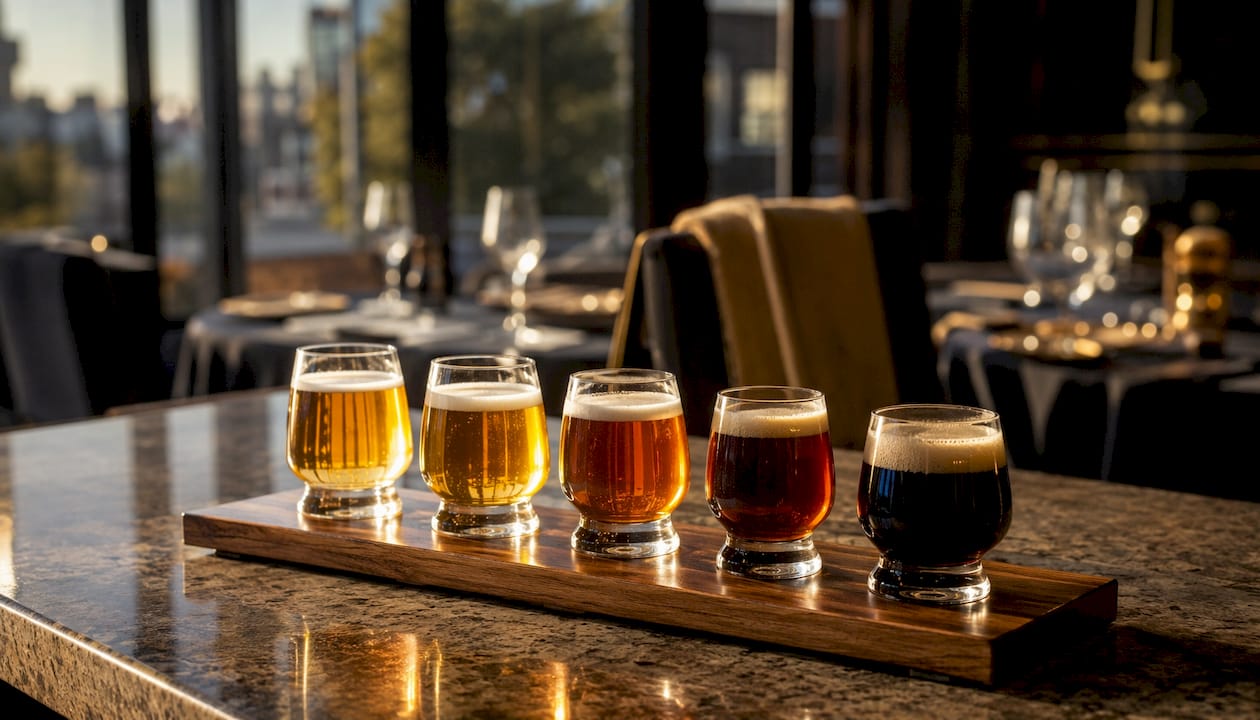
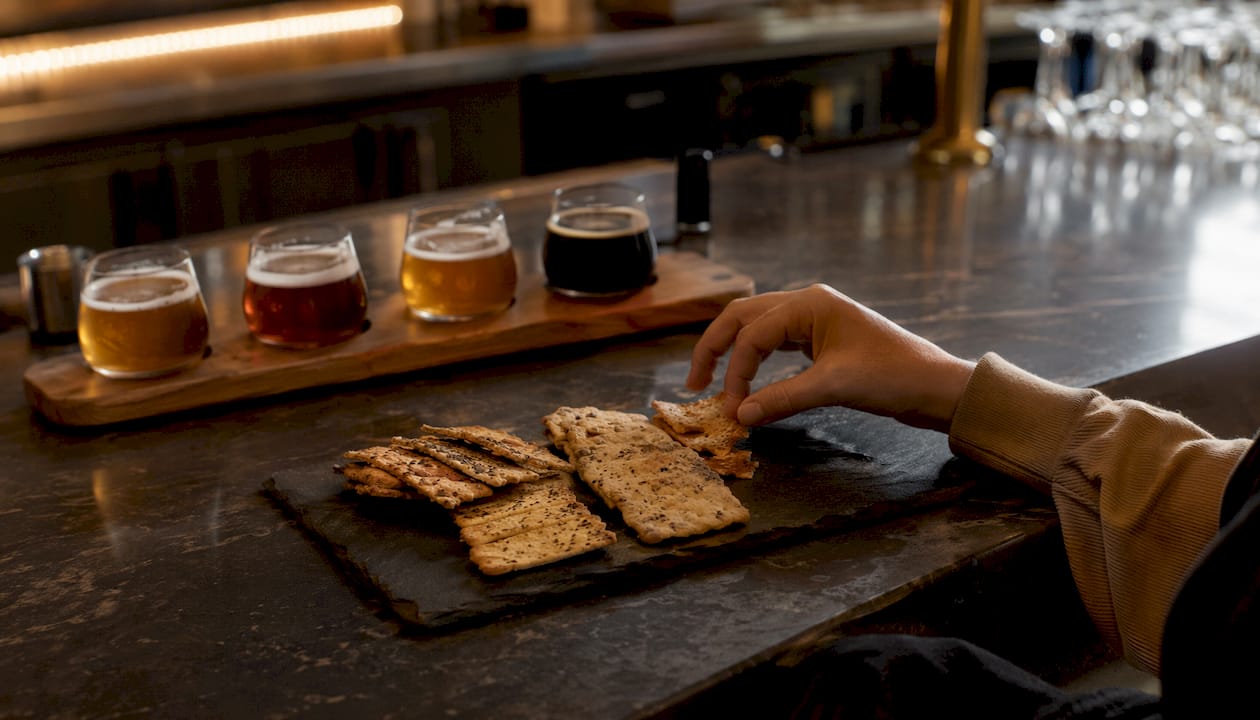
- Samples arrive on a wooden paddle, tray, or dedicated holder to keep them organized and in order
- The goal is exploration: different styles, different breweries, or different vintages all in one sitting
Flights show up on menus at taprooms, craft beer bars, and brewpubs across the United States. They work equally well for a first-timer trying to figure out what they like and for a seasoned drinker chasing something specific.
Where does the term “beer flight” come from?
The word “flight” carries more meaning than most people realize. Merriam-Webster traces the word’s roots to the idea of a group moving together through the air, and that sense of collective movement transferred naturally to beverages.
- The term emerged as a way to describe grouping multiple items together for tasting
- One popular explanation links it to a “flight of stairs,” where each step represents a progression through color, strength, or flavor
- The metaphor fits: you move through a sequence, ascending from light to dark, mild to intense
- Linguistically, “flight” already meant a group or series in English long before craft beer adopted it
The word stuck because it captures something real about the experience. You’re not just drinking beers side by side. You’re moving through them.
How are beer flights typically composed and sized?
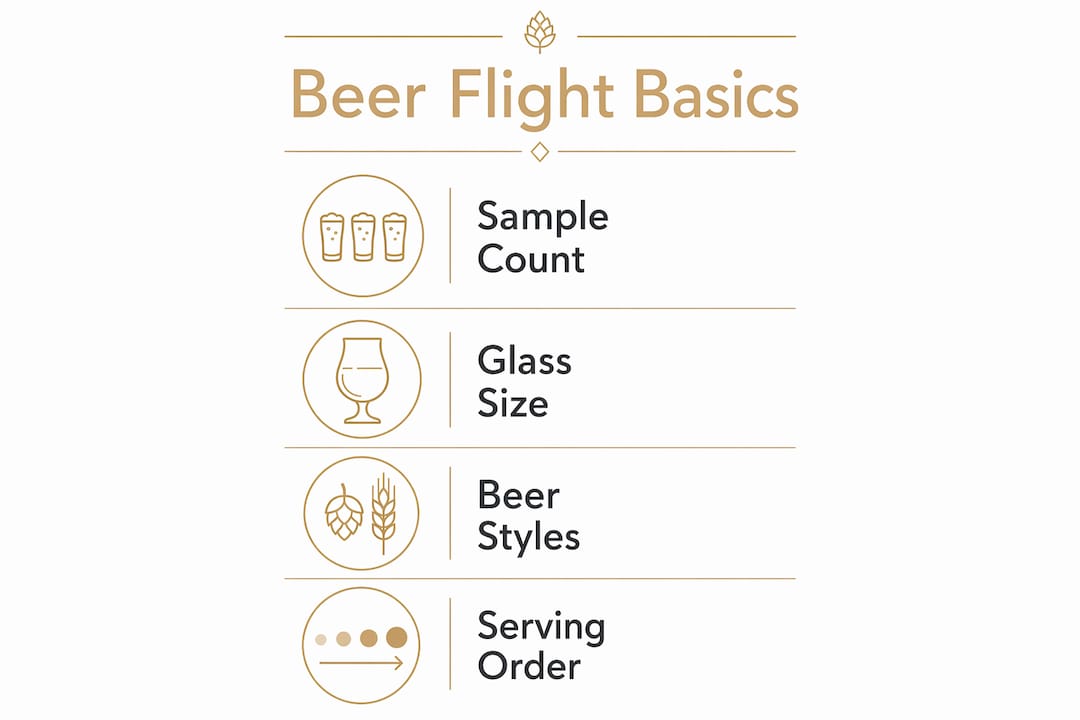
A standard craft beer flight runs three to six beers, with each glass holding 2–6 ounces and the whole flight landing somewhere around 16–24 ounces total. That’s roughly equivalent to one or two full pints spread across several styles.
| Flight Element | Typical Description |
|---|---|
| Number of samples | Several beers |
| Sample glass size | Small individual servings |
| Total volume | Equivalent to a moderate total quantity |
| Presentation | Wooden paddle or tray with glass holes |
| Style mix | One brewery, multiple breweries, or one style |
Flights can pull from a single brewery’s full lineup, focus on one style from several different producers, or mix both approaches. A Wikipedia overview of beer flights notes that a flight might include a pilsner, an IPA, and a stout from one brewery, or the same style from several breweries.
Pro Tip: Ask the staff to arrange your glasses left to right, lightest to darkest. It makes the tasting order obvious at a glance and keeps you from accidentally jumping ahead.
How do you actually taste a beer flight?
Sequence is everything. Start with the lightest, lowest-ABV beer and work toward the darkest, most intense styles at the end. Going out of order isn’t just a minor inconvenience; a big, boozy stout first will genuinely dull your ability to taste a delicate wheat beer that follows.
- Begin with lagers, pilsners, or light ales before moving to IPAs, ambers, and porters
- Sip water or eat a plain cracker between samples to reset your palate
- Pause between glasses rather than rushing through all six in ten minutes
- Notice aroma before you taste; smell accounts for a large part of what you perceive as flavor
Placing a high-ABV or heavily spiced beer early in the sequence is the single most common mistake. It doesn’t just affect the next beer. It can flatten everything that follows.
Pro Tip: Neutral crackers work better than bread for palate cleansing. Bread can leave a yeasty residue that interferes with the next sample.
What are the main types of beer flights?
Not all flights are built the same way, and the type you choose shapes what you actually learn from the experience.
- Horizontal flight: Different styles from a single brewery. Beer experts recommend this as the best way to understand a brewery’s range and house character across multiple styles.
- Vertical flight: Several vintages of the same beer, tasted in order. This is an advanced technique that reveals how aging changes a beer’s flavor, aroma, and body over time.
- Single style flight: Variations within one category, such as six different IPAs or four stouts from different producers. Great for developing a precise sense of what distinguishes breweries within the same style.
Horizontal flights suit curious newcomers. Vertical flights reward patience and a good memory. Single style flights are the choice when you already know what you like and want to go deeper.
Expert tips for getting the most from a beer flight
Planning your flight before you sit down makes a real difference. At Lostandfoundbrighton, you can browse the full beer and food menu online before you arrive, which means you can think through your selections rather than deciding under pressure at the bar.
- Mix styles deliberately: a flight of all IPAs tells you less than a flight that spans a lager, a saison, a pale ale, and a porter
- Keep total volume modest; palate fatigue is real, and the last beer in a heavy flight rarely gets a fair tasting
- Ask staff for recommendations. At Lostandfoundbrighton, the team is trained to help guests build custom flights tailored to their preferences
- Take notes, even rough ones. Writing down one word per beer helps you remember what you actually liked
Pro Tip: If you’re new to flights, ask for a range that includes at least one beer you already know you enjoy. It gives you a reference point for comparing everything else.
Where do beer flights get served?
Flights are most common at craft taprooms, brewpubs, and specialty beer bars, where rotating taps and knowledgeable staff make the format work well. You’ll also find them at beer festivals, brewery tours, and bottle shops with tasting areas. Some restaurants with serious beer programs offer them alongside food pairings. For anyone who wants to explore craft beer tasting in Brighton, Lostandfoundbrighton’s Fiveways taproom is a natural starting point, with a rotating lineup of local and UK independent brews available on-site or to take home.
Why order a flight instead of a single beer?
A flight costs roughly the same as a pint in many taprooms, but it gives you 3–6 data points instead of one. You learn what you like faster, you avoid committing a full pour to something that doesn’t suit you, and you get a much clearer picture of a brewery’s range in a single visit. For anyone new to craft beer, a flight is genuinely the most efficient way to build taste preferences. For experienced drinkers, it’s a way to stay curious without drinking more than intended.
Key Takeaways
A beer flight lets you sample 3–6 different beers in 2–6 oz pours, progressing from lightest to strongest for the best tasting experience.
| Point | Details |
|---|---|
| Core definition | A flight is 3–6 small beer samples served together on a paddle or tray. |
| Tasting order | Always start with the lightest, lowest-ABV beer and finish with the strongest. |
| Flight types | Horizontal explores one brewery’s range; vertical tracks one beer across vintages. |
| Palate care | Sip water or eat a plain cracker between samples to keep your palate fresh. |
| Planning ahead | Browse Lostandfoundbrighton’s online menu before visiting to build a thoughtful flight. |
Recommended
- Beer Tasting at Home: A Craft Enthusiast’s Guide
- Beer Glassware Guide: Which Glass for Every Style
- Why Everyone Is Talking About Proper Craft Lager (And You Should Too for Your Next Brighton Craft Beer Fix) – Lost And Found Craft Beer Taproom Brighton
- Taproom Brighton: 7 Food and Beer Pairing Mistakes You’re Making (And How to Fix Them) – Lost And Found Craft Beer Taproom Brighton