



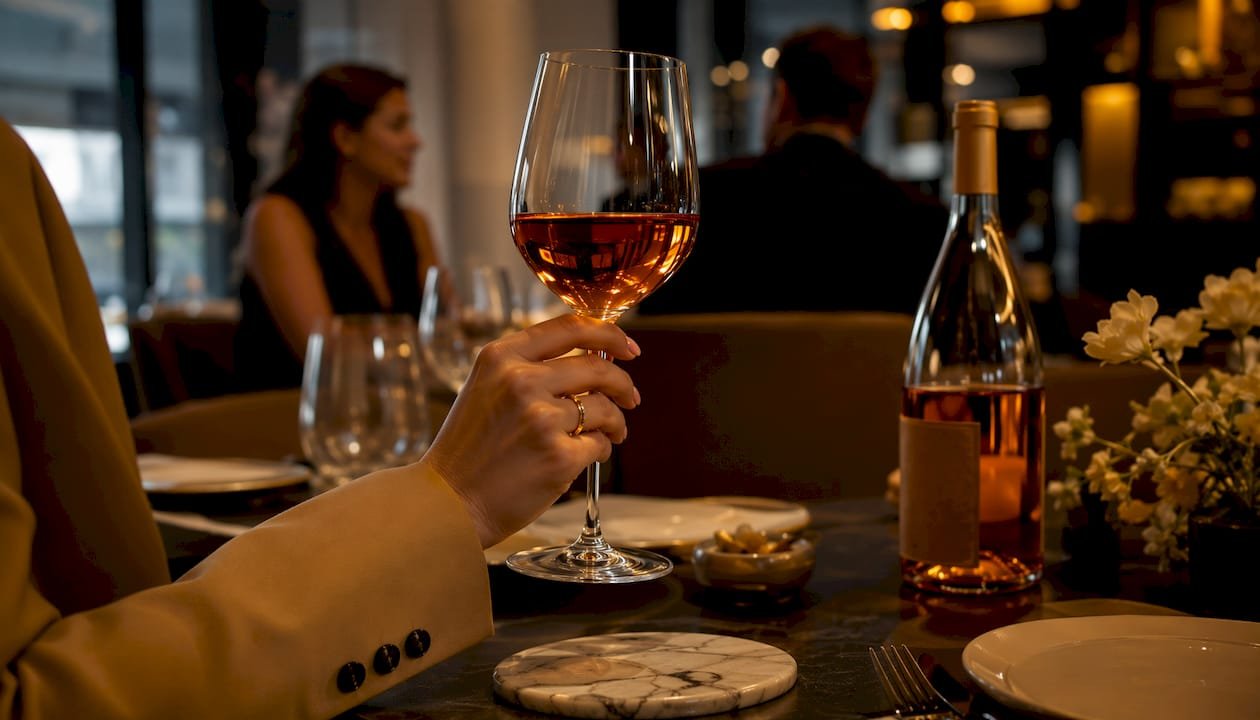
Orange Wine Explained: What It Is and Why It Matters
Orange wine is white wine made by leaving the grape skins in contact with the juice during fermentation, exactly the way red wine is made, but using white grape varieties. That single difference in technique produces a wine that looks nothing like a conventional white and tastes nothing like one either. The color ranges from pale amber to deep copper, and the texture carries a grip you simply do not get from a standard Sauvignon Blanc or Pinot Grigio.
A few things set it apart immediately:
- Color: Amber to orange hue from skin pigments, not from the grape flesh itself
- Texture: Tannins similar in structure to unsweetened iced tea, giving it body and grip
- Flavor: Dried orange rind, hazelnut, bruised apple, sourdough, and sometimes wood varnish
- Dryness: Almost always fully dry, with no residual sweetness
- Age: The technique dates back to at least 6000 BC, making it the oldest documented winemaking method
The style has ancient roots and a very recent revival, and it sits in a category of its own, distinct from white, red, and rosé wines in both production and character.
How orange wine is actually made
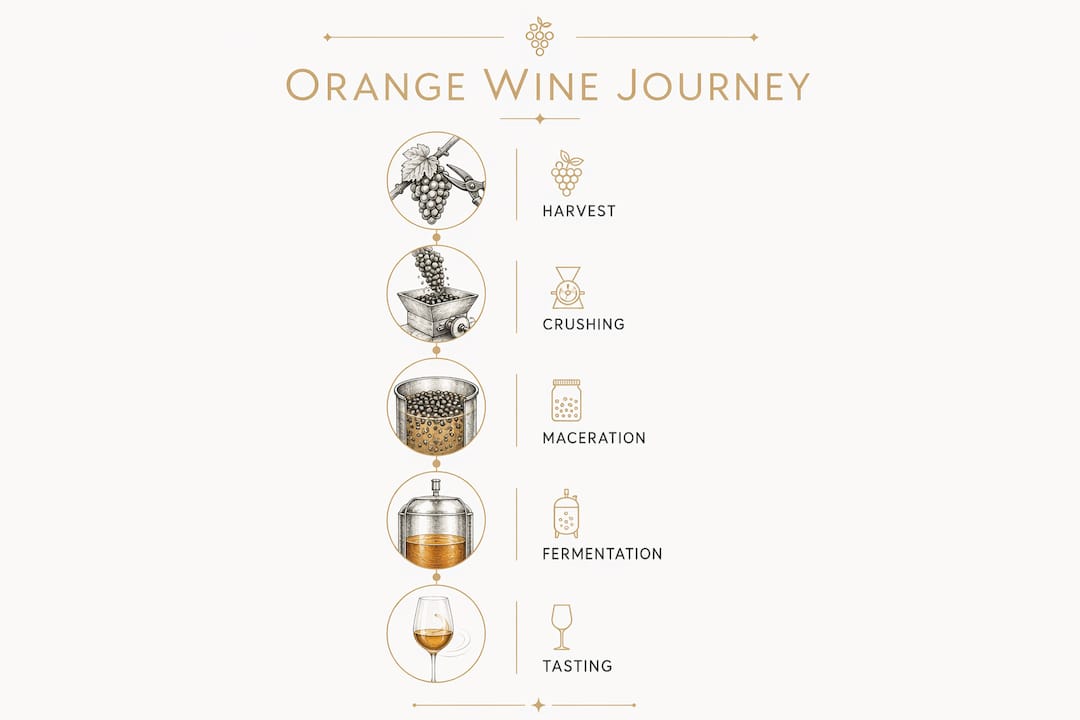
The core technique is called skin-contact maceration. After white grapes are crushed, the juice stays in contact with the skins and seeds for anywhere from a few days to several months, rather than being separated immediately as in conventional white wine production. That extended contact is what pulls tannins, polyphenols, and color pigments into the wine.
The choice of vessel shapes the final style considerably:
- Amphorae (qvevri): Traditional Georgian clay vessels, often buried underground, allow micro-oxygenation and produce deeply complex, earthy wines
- Stainless steel tanks: Preserve freshness and fruit character; used by producers who want cleaner, more precise results
- Oak barrels or large wooden vats: Add texture and secondary flavors; common in Friuli-Venezia Giulia
Fermentation can use ambient wild yeasts, which is common in natural wine production, or selected commercial yeasts for more predictable results. Neither approach is exclusive to orange wine. The skin-contact technique extracts tannins and polyphenols that conventional white winemaking deliberately avoids, producing a wine with the structural complexity of a red and the aromatic brightness of a white.
Grape varieties matter too. Ribolla Gialla, native to northeastern Italy and Slovenia, produces wines with firm acidity and golden color. Pinot Gris made with skin contact turns a striking copper tone, a style the Italians call ramato. Sauvignon Blanc, Gewürztraminer, and Rkatsiteli from Georgia are also widely used, each bringing different aromatic profiles to the maceration process.
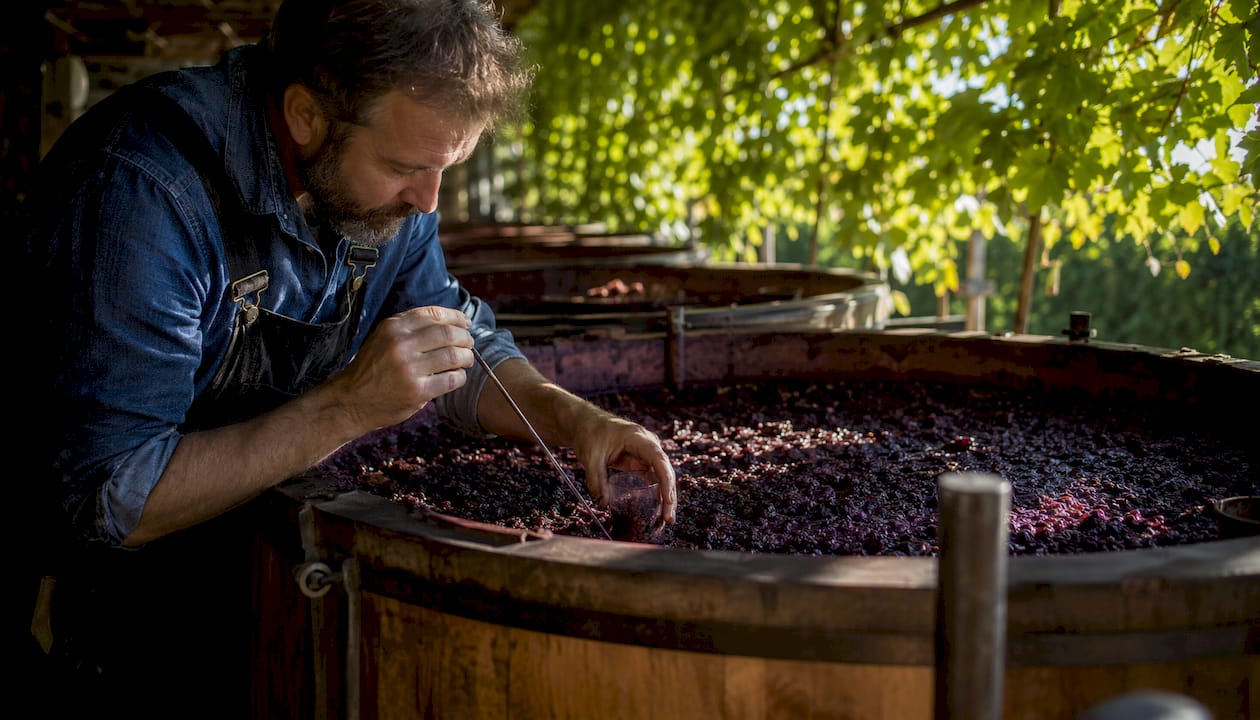
The International Organisation of Vine and Wine defines orange wine as “white wine with maceration” and sets the minimum maceration period at one month for a wine to carry that classification officially.
What orange wine tastes like, and what to eat with it
The flavor profile is bold, dry, and tannic in a way that catches most white wine drinkers off guard. Expect dried orange rind, hazelnut, bruised apple, sourdough, and sometimes a faint oxidative note like walnut or wood varnish. The texture is the real differentiator. Where a conventional white wine feels clean and slippery, an orange wine has grip, the kind of gentle astringency you get from a cup of black tea.
That tannic structure is actually what makes orange wine so useful at the table. Foods that overwhelm most whites, and clash with many reds, pair naturally here:
- Spicy Indian curries: The tannins cut through fat and heat without amplifying spice the way a high-alcohol red can
- Korean kimchi and fermented dishes: Umami-rich, acidic foods match the wine’s own savory depth
- Five-spiced duck or roasted pork: The wine’s grip handles the richness without getting lost
- Fresh herbs, miso, and aged cheeses: All benefit from the wine’s textural contrast and aromatic complexity
- Sourdough bread and charcuterie boards: A natural match given the wine’s own fermented, nutty character
The versatility in pairing comes from having red wine tannins combined with white wine brightness. It handles challenging foods that most wines cannot.
Pro Tip: Serve orange wine between 54°F and 57°F (12°C–14°C), slightly warmer than you would a conventional white. Colder temperatures mute the savory and nutty aromas that make the wine interesting. A larger bowl glass also helps open up the more complex, fuller-bodied styles.

One common misconception: orange wine does not pair well with sweet desserts. The tannins clash with sugar in the same way a tannic red would. Stick to savory, spicy, and fermented foods, and the wine performs at its best. For wine and food pairing guidance beyond orange wine, tools like Vinoperte help match specific bottles to dishes based on flavor profiles.
The history of orange wine and why the name is confusing
The technique is ancient. Archaeological evidence places skin-contact fermentation in the Caucasus region of Georgia as far back as 6000 BC. Georgian winemakers used qvevri, large clay vessels sealed with beeswax and buried in the earth, to ferment whole grape clusters with their skins for months at a time. The resulting wines, called amber wines in Georgia, were the norm for millennia before modern winemaking stripped the skins away in pursuit of lighter, cleaner styles.
The 20th century revival began quietly in northeastern Italy and Slovenia:
- Josko Gravner of Friuli-Venezia Giulia is widely credited as the key figure in the modern resurgence, returning to amphora fermentation in the late 1990s after a trip to Georgia
- Stanko Radikon, also from Friuli, pushed extended maceration times and minimal intervention alongside Gravner
- Slovenian producers across the border worked in parallel, sharing the same grape varieties and winemaking philosophy
The name itself has a complicated history. The term “orange wine” was coined in 2004 by British importer David A. Harvey, not because the wine tastes like oranges, but because the color reminded him of the fruit. The name stuck globally for its simplicity, even though it tells you nothing about the production method.
Other terms you will encounter:
- Amber wine: Preferred in Georgia, honors the original tradition
- Skin-contact wine: Technically accurate, describes the method directly
- Ramato: Italian term specific to Pinot Grigio made with skin contact, producing a copper tone
- Skin-fermented white wine: Used by producers who want to avoid the “orange” label entirely
Orange wine is also frequently confused with natural wine. They overlap, but they are not the same thing. Skin contact is a technique, not a philosophy. Some orange wines are made with zero additives and wild fermentation; others use selected yeasts and modern cellar equipment. The method does not determine the intervention level.
Where in the world orange wine comes from, including the United States
Georgia remains the spiritual home of the style. The qvevri tradition survived Soviet-era industrialization and is now recognized by UNESCO as an intangible cultural heritage. Georgian amber wines made from Rkatsiteli and Mtsvane grapes tend to be deeply colored, tannic, and earthy, the most extreme expression of the style.
Friuli-Venezia Giulia in northeastern Italy and the adjacent Slovenian wine regions of Brda and Vipava Valley produce what most Western drinkers encounter first. The style here ranges from lighter, more approachable skin-contact whites to the deeply macerated, amphora-aged wines of producers like Gravner. Ribolla Gialla dominates in Friuli; Rebula (the same grape, different name) in Slovenia.
Other regions producing notable skin-contact wines include:
- Alsace, France: Gewürztraminer and Pinot Gris with skin contact, often from biodynamic producers
- Austria: Grüner Veltliner and Riesling macerated for shorter periods, producing lighter amber styles
- Greece and Croatia: Ancient winemaking cultures returning to indigenous varieties with skin contact
The United States market has developed genuine momentum around orange wine, driven partly by the natural wine movement and partly by adventurous drinkers looking beyond conventional categories. American producers in California, Oregon, and New York have integrated skin-contact techniques using both imported varieties like Pinot Gris and local grapes. Consumer interest continues to grow as orange wine appears more frequently on restaurant wine lists and in specialty bottle shops across the country.
If you want to explore how skin-contact wines fit within the broader world of minimal intervention winemaking, the conversation around natural wine is a useful starting point. And if you are curious about how serving conditions affect what you taste, the same principles that apply to beverage storage and serving apply here: temperature, vessel, and freshness all shape the experience.
At Lostandfoundbrighton, the curated wine selection sits alongside the rotating craft beer lineup, and orange wine fits naturally into that mix. If you want to see what is currently pouring, the full menu is available online.

Key Takeaways
Orange wine is white wine made with extended skin contact, giving it tannins, amber color, and a bold flavor profile that makes it uniquely suited to spicy, fermented, and umami-rich foods.
| Point | Details |
|---|---|
| Skin contact defines it | White grapes fermented with skins produce tannins, color, and texture absent from conventional white wine. |
| Ancient origins | Skin-contact fermentation dates to at least 6000 BC in Georgia, using buried clay vessels called qvevri. |
| Serve warmer than white wine | 54°F–57°F (12°C–14°C) reveals the savory, nutty aromas that colder temperatures suppress. |
| Name coined in 2004 | British importer David A. Harvey popularized “orange wine” as a term; regional names like ramato predate it. |
| Pairs with challenging foods | Tannins cut through spice and umami, making it ideal for Indian curry, kimchi, and fermented dishes. |
Recommended
- Not Your Nan’s Chardonnay: The Fresh, Local Bottle You Need This Weekend – Lost And Found Craft Beer Taproom Brighton
- Taxed to the Hilt: How a 10% VAT Rate Could Save Your Favourite Brighton Taproom – Lost And Found Craft Beer Taproom Brighton
- Street Food Vs Traditional Pub Grub: Which Is Better For Your Brighton Craft Beer Experience? – Lost And Found Craft Beer Taproom Brighton
- A Mother’s Day Toast: Introduce Her to the Best of Sussex Craft Beer – Lost And Found Craft Beer Taproom Brighton