




Cask vs Keg: What Every Beer Drinker Should Know
Cask vs keg is the defining split in how beer is conditioned, carbonated, and served. Cask ale undergoes secondary fermentation inside the container, making it a live product with active yeast. Keg beer is filtered, pasteurized, and force-carbonated before it ever reaches the tap. That single difference shapes everything: the bubbles, the flavor, the temperature, and the culture surrounding each glass. Whether you are new to craft beer or a seasoned drinker, understanding this distinction changes how you order, taste, and appreciate what is in front of you.
What is the difference between cask and keg beer?
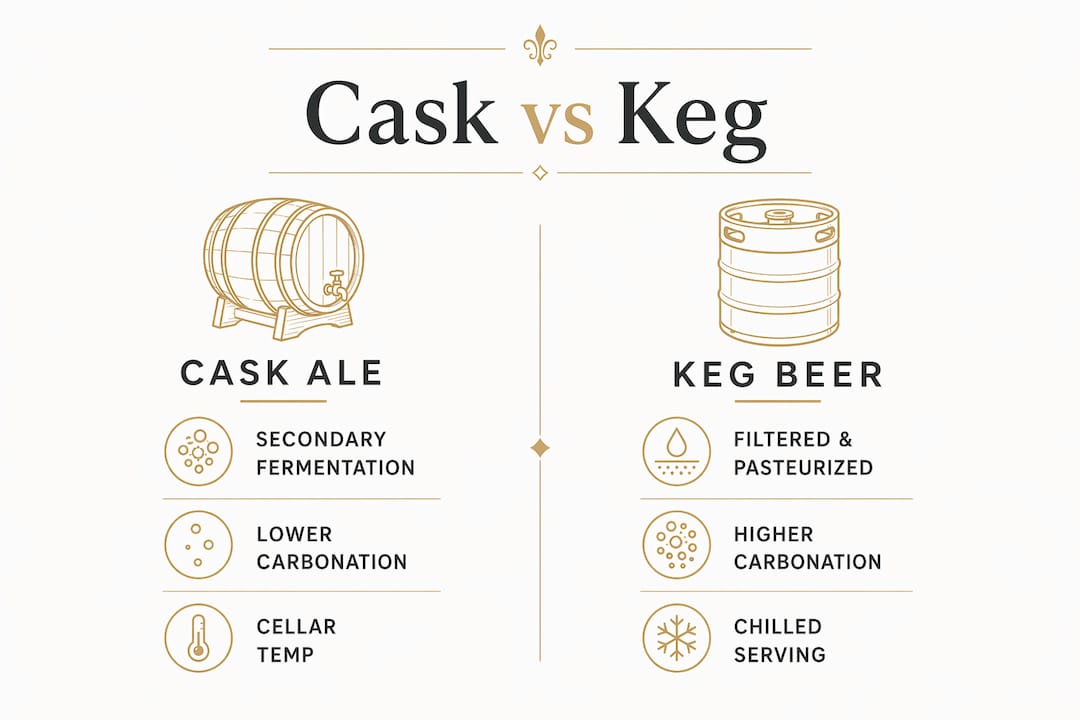
The core difference comes down to where and how carbonation happens. Cask ale finishes fermenting inside the vessel itself. Yeast remains active in the container, producing natural carbon dioxide and creating soft, gentle bubbles. No external gas is added. The beer is drawn to the tap using a hand pump, also called a beer engine, or served by gravity directly from the cask.
Keg beer takes a different path. Brewers filter out the yeast, pasteurize the beer to stop biological activity, and then force carbon dioxide or a nitrogen blend into the sealed keg under pressure. The result is a stable, consistent product that dispenses through a pressurized line. The carbonation process is mechanical rather than biological.

These two approaches produce noticeably different drinking experiences. Cask carbonation is lower and softer. Keg carbonation is higher and sharper. The bubbles in a cask pint are finer and less aggressive on the palate. Keg beer delivers a crisper, more effervescent sensation that many drinkers associate with lager and modern craft styles.
Key technical distinctions at a glance:
- Cask: live yeast present, natural CO2, served via hand pump or gravity, no added gas
- Keg: yeast removed, pasteurized, force-carbonated with CO2 or nitrogen, served under pressure
- Cask carbonation: soft and low, typically 1.0–1.5 volumes of CO2
- Keg carbonation: higher and consistent, typically 2.0–2.8 volumes of CO2
- Serving equipment: cask uses a beer engine or gravity tap; keg uses a pressurized font
Pro Tip: If you see a hand pump on the bar, that is a cask ale tap. The physical effort of pulling the pump is what draws the beer up without added gas pressure.
How does serving temperature affect flavor in cask and keg?
Temperature is where the sensory gap between the two systems becomes most obvious. Cask ale is served at cellar temperature, which sits between 52°F and 55°F (11°C–13°C). That is cooler than room temperature but noticeably warmer than a refrigerated keg pour. Serving cask too warm makes it taste flat and flabby. Serving it too cold masks the delicate flavors the brewer worked to create.
Keg beer is typically served much colder, often between 36°F and 42°F (2°C–6°C). That lower temperature sharpens the carbonation sensation and delivers a clean, consistent taste from the first sip to the last. The cold also suppresses some of the more subtle aromatic compounds, which is a trade-off worth knowing about.
| Feature | Cask ale | Keg beer |
|---|---|---|
| Serving temperature | 52–55°F (11–13°C) | 36–42°F (2–6°C) |
| Carbonation level | Low, natural, soft | High, forced, consistent |
| Mouthfeel | Creamy, round | Crisp, sharp |
| Flavor stability | Shifts over 3–5 days | Stable for weeks |
| Hop/malt expression | Nuanced, layered | Clean, defined |
Cask ale’s round, nuanced flavor comes directly from that lower carbonation and warmer serving temperature. Hop aromas open up more freely. Malt character comes through with more depth. Keg beer, by contrast, delivers a sharper, crisper profile that highlights clean bitterness and bright fruit notes in styles like IPAs and pale ales.
Flavor in a cask pint also changes over time. A freshly tapped cask on day one tastes different from the same cask on day three. That evolution is part of the appeal for enthusiasts. Keg beer stays uniform from the first pour to the last, which is exactly what many drinkers and operators want.
Pro Tip: Ask your bartender when the cask was tapped. A cask on its second day is often at its peak, with the yeast settled and the flavors fully integrated.
What are the operational challenges of serving cask beer?
Serving cask ale well requires real skill and consistent attention. Cellar management is the backbone of cask quality. The cask must be stored at the correct temperature, vented carefully to release excess CO2, and allowed to condition for the right amount of time before tapping. Get any of those steps wrong and the beer suffers.
Once tapped, a cask has a short window. Cask ale typically lasts just 3 to 5 days after opening due to exposure to air. Oxygen begins to degrade the beer almost immediately. That ticking clock means a pub or taproom needs to sell through a cask quickly or risk serving something flat, vinegary, or oxidized. For venues with lower footfall, that is a genuine operational risk.
Keg beer sidesteps most of those concerns. Sealed under CO2 pressure, a keg can stay fresh for weeks or even months. Dispensing is automated and consistent. Staff training requirements are lower. The system is more forgiving of slower sales volumes. For beer freshness and storage, keg systems offer a clear practical advantage in high-volume or mixed-format venues.
Operational realities for each system:
- Cask: requires temperature-controlled cellar, venting, fining, and careful timing before service
- Cask: must be sold within 3 to 5 days of tapping to maintain quality
- Keg: pressurized system maintains freshness for weeks without active management
- Keg: consistent dispense pressure means less variation between pours
- Both: dirty lines degrade beer quality regardless of vessel type
A well-kept cask in a clean cellar will outperform a poorly maintained keg system every time. The reverse is equally true. Equipment cleanliness and operator care matter more than the vessel itself when it comes to what ends up in your glass.
What is the cultural history behind cask and keg beer?
The term “real ale” was popularized by CAMRA in the 1970s. The Campaign for Real Ale formed in the United Kingdom specifically to protect cask-conditioned beer traditions during a period when keg beer was rapidly taking over British pubs. Keg beer offered breweries and pub chains a logistical solution: longer shelf life, easier transport, and no spoilage risk from oxygen exposure. CAMRA pushed back hard, and cask ale survived.
That history still shapes how many drinkers perceive the two formats. Cask carries a reputation for tradition, craft, and authenticity. Keg carries associations with mass production and uniformity. Neither reputation is entirely fair in 2026.
“The cask versus keg debate is really a debate about natural versus processed beer. But small craft breweries often choose keg precisely because it guarantees product consistency and protects the quality of beers they have worked hard to create.”
Modern craft breweries across the UK and the US use keg systems to deliver high-quality IPAs, stouts, and sours without the spoilage risk that comes with cask. The format does not determine the quality of the brewing. A well-made beer in a keg is far better than a poorly made beer in a cask.
One persistent myth is worth addressing directly. Beer ABV is independent of whether it is served on cask or keg. Both formats carry beers of widely varying strength. The vessel does not change the alcohol content. That misconception comes from the association of cask with traditional lower-strength British bitters, but it has no basis in brewing science. You can find a 7% double IPA on keg and a 3.5% session bitter on cask at the same bar. The local beer scene in Brighton reflects exactly that range, with independent breweries choosing formats based on the beer style and the venue, not tradition alone.
Key Takeaways
Cask and keg beer differ fundamentally in conditioning method, carbonation level, serving temperature, and shelf life, and understanding those differences helps you choose and appreciate each style on its own terms.
| Point | Details |
|---|---|
| Conditioning method | Cask uses live secondary fermentation; keg uses forced carbonation after pasteurization. |
| Serving temperature | Cask is served at 52–55°F for nuanced flavor; keg is served colder for crispness. |
| Shelf life after tapping | Cask lasts 3–5 days; keg stays fresh for weeks under CO2 pressure. |
| Flavor profile | Cask delivers soft, layered, evolving flavor; keg delivers consistent, clean taste. |
| Quality determinant | Operator skill and cleanliness matter more than the vessel type for final beer quality. |
Why I think the cask vs keg debate misses the point
The framing of cask as “good” and keg as “inferior” is one of the most stubborn myths in British pub culture. I have had transcendent pints from both systems and genuinely bad beer from both. The vessel is not the story. The story is the person managing it.
What I have found is that the best cask pints come from pubs with high turnover and a cellarman who treats the job seriously. A quiet pub with six casks on and low footfall is almost always going to serve you something past its best. That same pub with two well-chosen casks and a busy weekend crowd is a completely different experience. Freshness is everything with cask, and freshness requires volume.
Keg beer gets unfairly dismissed by traditionalists who associate it with fizzy, flavorless lager from the 1980s. That association is decades out of date. The craft keg beers coming out of independent UK breweries right now are genuinely exciting. They are consistent, well-made, and designed for the format. Dismissing them because they come from a pressurized vessel is like dismissing a record because it is digital.
My honest advice: order what the pub does well. If the cask is moving fast and the cellar looks clean, go for it. If the keg range features breweries you trust, that is your answer. Stop letting the container make the decision for you.
— Jon
What Lost And Found has on tap right now
Lostandfoundbrighton at Fiveways in Brighton stocks both cask and keg beers, with a rotating selection that changes regularly to reflect what independent UK breweries are doing best.
The team at Lost And Found knows the difference between a well-kept cask and a fresh keg pour, and they take both seriously. You can check the current beer menu online before you visit to see what is pouring. If you want to go deeper into local options, the Brighton beers guide covers 20 local brews worth trying. The taproom is open to everyone, whether you are a seasoned cask drinker or trying your first craft pour.
FAQ
What is the main difference between cask and keg beer?
Cask beer undergoes secondary fermentation inside the container with live yeast and no added gas. Keg beer is filtered, pasteurized, and force-carbonated before sealing.
Is cask ale always better than keg beer?
No. A well-managed cask outperforms a poorly maintained keg, but the reverse is equally true. Operator skill and cleanliness determine quality more than the vessel type.
What temperature is cask ale served at?
Cask ale is served at cellar temperature, between 52°F and 55°F (11°C–13°C). Serving it too warm makes it flat; serving it too cold masks its flavor.
Does cask beer have more alcohol than keg beer?
No. Beer ABV depends on the brewing process, not the serving vessel. Both cask and keg formats carry beers of widely varying strength.
How long does a cask last once tapped?
A tapped cask typically lasts 3 to 5 days before air exposure degrades the flavor. Keg beer, sealed under CO2 pressure, stays fresh for weeks or months.
Recommended
- Beer Glassware Guide: Which Glass for Every Style
- Beer Tasting at Home: A Craft Enthusiast’s Guide
- Beer Freshness Storage: Best Tips for Every Style
- Brighton Beers vs Big Brand: 5 Signs Your “Craft” Beer Isn’t Actually Independent (What to Look For Instead) – Lost And Found Craft Beer Taproom Brighton