




Beer Glassware Guide: Which Glass for Every Style
Beer glassware is defined as the category of drinking vessels specifically shaped to enhance aroma concentration, head retention, and flavor delivery for different beer styles. The glass you choose is not a formality. Shape controls how volatile aromatic compounds reach your nose, how foam develops, and how quickly heat transfers from your hand to the beer. Industry testing of 28,000+ consumer reviews ranks the Spiegelau Classic Tulip as the top recommendation for balance of aroma concentration, crystal clarity, and durability. A proper beer glassware guide starts with one principle: the right vessel makes a measurable difference in what you taste.
Which types of beer glasses best suit popular beer styles?
The most useful beer glass types map directly to the beer’s aroma intensity, carbonation level, and ABV. Matching glass to style is not about tradition. It is about physics and sensory experience.
Pint glasses
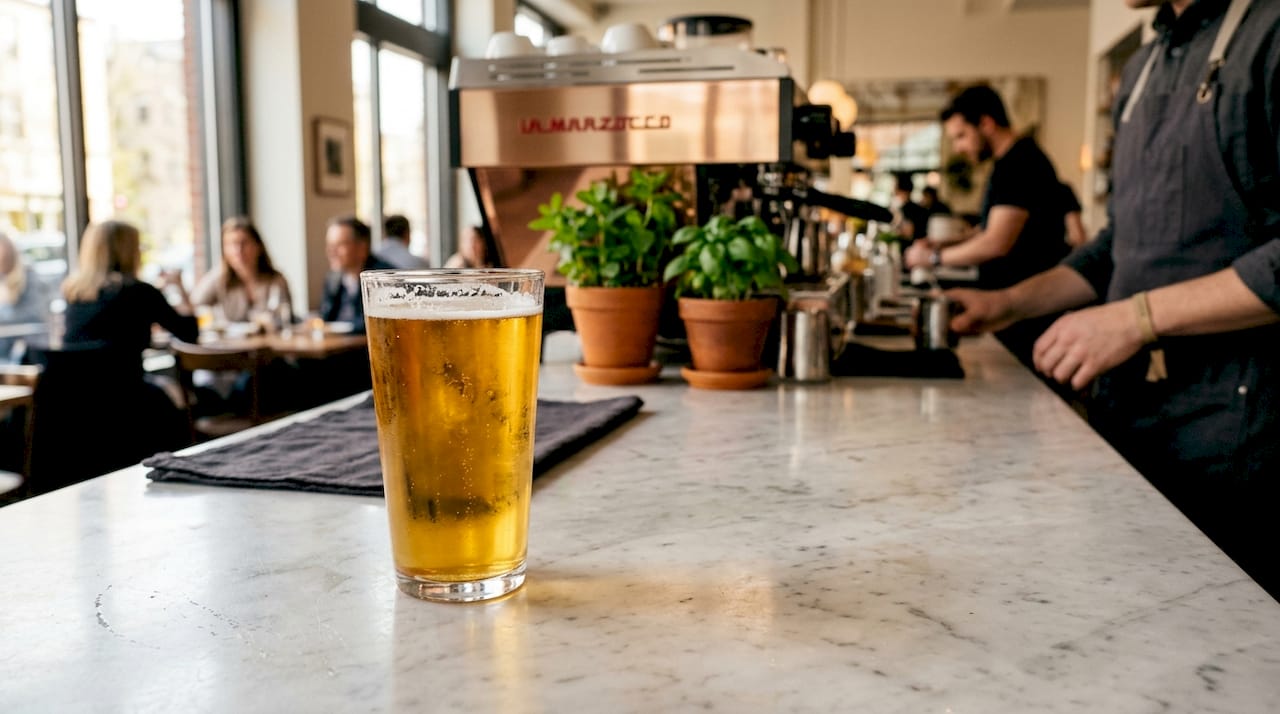
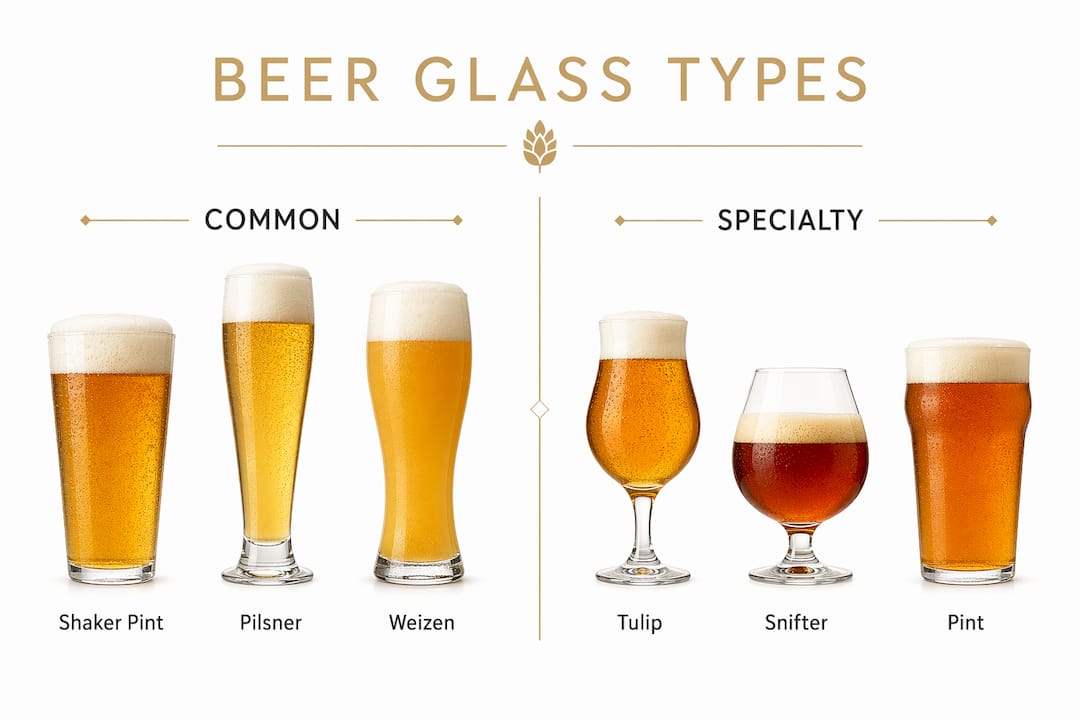
The American shaker pint is the most common beer drinking vessel in bars across the country. Its straight, wide walls make it easy to stack and clean, but that wide rim lets aroma escape before it reaches your nose. Pint glasses work acceptably for session ales and lagers where aroma complexity is low, but they underperform for craft beer. Shaker pints are widely considered the worst choice for aromatic craft beers because the shape actively disperses the volatile compounds you want to smell.
Tulip glasses
The tulip glass has a bulbous bowl that tapers inward at the rim before flaring slightly outward. That inward taper traps aromatic compounds and directs them toward your nose as you drink. Tulip and Teku glasses encourage swirling that releases volatile aromatics, making them the best glass for IPAs, Belgian ales, saisons, and any beer where hop or yeast character is the point. The Teku glass, a modern Italian design, follows the same principle with a longer stem and more pronounced taper.
Snifter glasses
Snifters are small, typically ranging 5–13 ounces, with a wide bowl that narrows sharply at the top. That shape concentrates aroma intensely, making snifters the right choice for high-ABV beers like barleywines, imperial stouts, and strong Belgian ales. The small volume also discourages drinking too fast, which suits beers meant to be sipped and evaluated.
Weizen glasses
Weizen glasses are tall, curved, and hold around 50cl (16.9 oz). The height accommodates the thick, fluffy head that wheat beers produce, and the curve near the top supports foam stability. Drinking a hefeweizen from a shaker pint collapses the head within minutes and mutes the banana and clove esters that define the style.
Pilsner glasses and specialty vessels
Pilsner glasses are tall and slender, designed to showcase the beer’s clarity and golden color while maintaining carbonation. Goblets and steins serve more traditional or cultural functions. Goblets suit malty Belgian styles like dubbels and tripels. Steins, typically ceramic, are built for durability at festivals rather than aroma enhancement.
| Glass Type | Best Beer Styles | Key Design Feature |
|---|---|---|
| Shaker pint | Session ales, lagers | Wide rim, stackable |
| Tulip / Teku | IPAs, Belgian ales, saisons | Tapered rim traps aroma |
| Snifter | Barleywines, imperial stouts | Narrow top, wide bowl |
| Weizen | Hefeweizens, wheat beers | Tall with curved top |
| Pilsner glass | Pilsners, lagers | Slender, showcases clarity |
| Goblet / Stein | Dubbels, tripels, festival use | Wide mouth, heavy build |
How does glass shape affect beer aroma, flavor, and temperature?
Glass shape controls three things that directly affect what you taste: aroma concentration, foam stability, and temperature management. Glassware functionality goes beyond aesthetics, playing critical roles in temperature retention and foam stability that influence the full flavor experience.
Aroma concentration is the most significant factor. Volatile aromatic compounds, the molecules responsible for hop, malt, and yeast character, evaporate quickly once beer hits the glass. A narrow opening traps those compounds in the headspace above the liquid. A wide opening, like a shaker pint, lets them disperse into the room before you smell them. This is why the primary reason to upgrade from a standard pint is to improve aroma concentration through glass design.
Foam stability matters more than most drinkers realize. A stable head of foam acts as a physical barrier that slows carbonation loss and oxidation. It also releases aroma compounds slowly as bubbles pop. Glass shape supports foam by giving the head a surface to cling to. Weizen glasses and tulips both have curves that anchor foam better than straight-walled pints.
Temperature control is where stemmed glasses earn their place. When you wrap your hand around a stemless glass, body heat transfers directly into the beer. A stem keeps your hand away from the bowl. This matters most for beers served at cellar temperature (around 50–55°F), where even a few degrees of warming changes the flavor profile noticeably.
- Narrow openings trap volatile aromatic compounds above the liquid.
- Curved bowl shapes anchor foam and slow carbonation loss.
- Stemmed designs reduce hand heat transfer to the beer.
- Swirling in tulip or Teku glasses actively releases additional aromatics.
- Shaker pints conduct heat and disperse aroma simultaneously, compounding the problem.
Pro Tip: Rinse your glass with cold water before pouring. A warm, dry glass causes foam to collapse faster and accelerates carbonation loss.
What practical pouring techniques optimize the beer experience?
Pouring technique determines head formation, aroma release, and carbonation balance from the first sip. The glass shape sets the conditions. Your pour executes them.
-
Standard pour for most styles. Hold the glass at a 45-degree angle. Pour gently down the side of the glass until it is half full. Straighten the glass and pour down the center to build a one-inch head. This two-stage approach controls foam without losing carbonation.
-
Wheat beer pour. Pour at a 45-degree angle until roughly 85–90% of the bottle is empty. Swirl the remaining liquid in the bottle to rouse the yeast sediment. Leave 10–15% of the liquid in the bottle and pour that final portion straight down the center. The yeast-rich liquid creates the classic thick, fluffy head that defines a properly served hefeweizen.
-
Pilsner and lager pour. Pour slowly and steadily at a low angle. These beers are highly carbonated, and a fast pour produces an unmanageable foam spike. A controlled pour builds a stable, lasting head that preserves carbonation through the glass.
-
Clean glass handling. Soap residue is the enemy of head retention. Even a trace of dish soap destroys foam on contact. Rinse glasses thoroughly and let them air dry upright. Never dry the inside of a beer glass with a cloth, as fibers leave residue that also kills foam.
Pro Tip: Avoid chilling your glassware in the freezer. Ice-cold glasses cause excessive foaming on pour and suppress the aromatic compounds you want to smell. A glass at room temperature or lightly rinsed with cold water performs better.
Pairing the right pour with the right glass compounds the benefit. If you are serving a complex IPA, the tulip glass plus a proper two-stage pour delivers the full hop aroma the brewer intended. For guidance on matching beer styles to food, the food and beer pairing guide at Lostandfoundbrighton covers the most common mistakes drinkers make at the table.
How to curate a practical beer glass collection
A curated collection of 2–3 versatile glasses covers most beer styles effectively. You do not need a dedicated glass for every style. You need the right three.
- Tulip glass. This is the single most versatile glass in any collection. It handles IPAs, pale ales, saisons, Belgian ales, and sour beers. The Spiegelau Classic Tulip is the top-rated option across consumer testing for its balance of aroma performance and durability.
- Pint glass. Keep one for session beers, lagers, and casual drinking where aroma complexity is not the focus. It is also the most practical glass for high-volume situations.
- Snifter. Add this for high-ABV and barrel-aged beers. It doubles as a tasting glass for any beer you want to evaluate closely.
Glass material and durability
Lead-free crystal offers better clarity and a thinner rim than standard glass, which improves the drinking experience noticeably. The tradeoff is fragility. Crystal chips and cracks more easily than thick-walled standard glass. Durable thick-walled or insulated glasses suit outdoor use better than fragile crystal. If you drink outside regularly or take glasses to events, prioritize durability over optical quality.
Storage and care
Store glasses upright, not inverted on a shelf. Inverting traps stale air inside the bowl, which transfers an off-flavor to the next pour. Wash by hand with hot water and minimal soap. If you use a dishwasher, skip the rinse-aid cycle, as rinse-aid leaves a film that suppresses foam. A small investment in quality glasses pays off over years of use. Buying three excellent glasses outperforms buying a set of twelve mediocre ones.
Key Takeaways
The right beer glass directly controls aroma concentration, foam stability, and temperature, making glassware the single most impactful variable in how a beer tastes outside of the beer itself.
| Point | Details |
|---|---|
| Glass shape controls aroma | Narrow openings trap volatile aromatics; wide rims like shaker pints let them escape. |
| Three glasses cover most styles | A tulip, pint, and snifter address the full range of beer styles effectively. |
| Pouring technique compounds glass benefits | A two-stage pour and proper angle maximize head formation and aroma release. |
| Avoid freezer-chilled glasses | Cold glasses suppress aroma and cause excessive foaming on the pour. |
| Durability vs. crystal is a lifestyle choice | Crystal improves clarity and rim feel; thick-walled glass suits outdoor and casual use. |
Why I stopped defending the shaker pint years ago
The shaker pint won on convenience, not performance. Bars adopted it because it stacks, survives drops, and costs almost nothing to replace. Drinkers accepted it because it was everywhere. Neither of those reasons has anything to do with how beer tastes.
The first time I poured a well-made IPA into a proper tulip glass, the difference was not subtle. The hop aroma hit before the glass reached my lips. That does not happen with a pint glass. The aromatic compounds simply escape before you get there. Switching glasses did not change the beer. It changed how much of the beer I actually experienced.
The counter-argument I hear most often is that glassware is pretentious. That argument confuses aesthetics with function. A tulip glass is not a status symbol. It is a tool that does a specific job better than the alternative. You would not use a colander to serve soup, regardless of what the colander costs.
My honest advice: start with one good tulip glass. Drink the same beer from a pint glass first, then from the tulip. The comparison makes the case better than any explanation. After that, add a snifter for your stronger beers and keep a pint glass for the sessions where you are not thinking about aroma at all. That is a complete collection for most drinkers. Expand only when a specific style demands it, not because a display cabinet looks impressive.
— Jon
Craft beer tastes better when the glass is right
At Lostandfoundbrighton, the connection between great glassware and great beer is something the team lives every day. The taproom in Brighton’s Fiveways neighborhood pours a rotating selection of independent local brews, and the staff know which glass suits each style on the board.
Whether you are building your first glass collection or refining what you already own, the top Brighton beers guide at Lostandfoundbrighton gives you a starting point for pairing the right glass with the right local brew. The taproom also carries a curated selection of craft styles from across the UK, so you can taste the difference glassware makes in person. If you want to go deeper on specific styles, the craft lager deep dive covers why proper lager deserves more attention and a better glass than it usually gets.
FAQ
What is the best glass for an IPA?
The tulip glass is the best glass for an IPA. Its tapered rim concentrates hop aromatics and supports swirling, which releases additional volatile compounds before each sip.
Why does glassware matter for craft beer?
Glass shape controls aroma concentration, foam stability, and temperature. A narrow-opening glass traps aromatic compounds that a wide-rimmed shaker pint lets escape into the room.
How many beer glasses do I actually need?
Three glasses cover almost every style: a tulip for aromatic ales, a pint for session beers and lagers, and a snifter for high-ABV and barrel-aged beers.
Should I chill my beer glasses before pouring?
No. Freezer-chilled glasses suppress aroma compounds and cause excessive foaming on the pour. A glass at room temperature, or lightly rinsed with cold water, performs better.
What is the correct way to pour a wheat beer?
Pour at a 45-degree angle until 85–90% of the bottle is empty, then swirl the remaining liquid to rouse the yeast. Pour that final 10–15% straight down the center to build the classic fluffy head.
Recommended
- Top 10 Brighton Beers Ideas: What to Drink at Your Next Fiveways Visit – Lost And Found Craft Beer Taproom Brighton
- Why Everyone Is Talking About Proper Craft Lager (And You Should Too for Your Next Brighton Craft Beer Fix) – Lost And Found Craft Beer Taproom Brighton
- Party Venue Brighton: 5 Steps to Choose the Perfect Taproom for Your Celebration (Easy Guide) – Lost And Found Craft Beer Taproom Brighton
- Brighton Beers: 20 Local Brews to Get You Started – Lost And Found Craft Beer Taproom Brighton